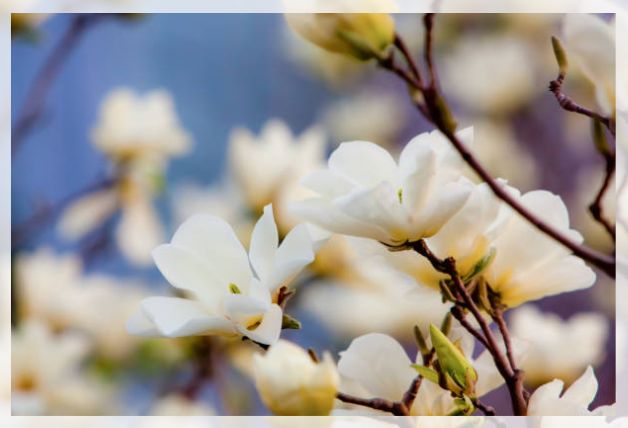
Do you know that the magnolia flower is a great addition to your landscape?
It is a stunning addition to your ornamental landscape, the majestic magnolia tree and flower are low maintenance.
While it is almost impossible to resist the allure of the storied blossoms, their dramatic form, and their intoxicating fragrance, the tree itself is hardy.
Moreover, the dense, waxy magnolia foliage tends to provide an attractive contrast to the stunning blooms while also creating shelter for migratory birds.
The fall-borne seeds cones tend to burst with vibrant red seeds that seasonal visitors gobble up.
In case you are hesitating to have a magnolia flower and tree in your garden, then know that you will need little effort to grow.
Though most of the 200-plus species will need tropical and subtropical climates, there are cultivators adapting to nearly every growing zone.
With its size ranging from shrubs to dwarf trees, this tree is up to 100 feet tall.
Keep on reading.
Magnolia Flower
The Magnolia flower and tree is a classic tree and shrub symbolizing the South.
magnolia is a remarkably diverse genus of plants that includes a number of species that are suitable for colder climates.
These trees are popular for having large, leathery leaves, and impressive white or pink flowers that appear early in spring, often before the leaves even emerge.
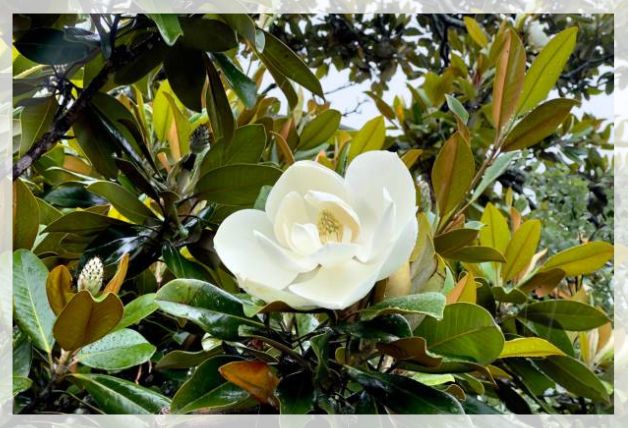
Moreover, a magnolia flower and tree can be evergreen or deciduous, depending on where you are growing them.
Some species tend to be multi-stemmed shrubby plants while others are classic upright trees that are quite massive in size.
Some species tend to change their growth habits depending on the climate and environment.
Furthermore, flowering magnolia is popular for its fragrance.
Though a magnolia is not fast-growing, your patience will be rewarded.
Caring for Magnolia Trees
Magnolia flower and tree is not hard to grow and they tend to be somewhat unique among flowering trees and shrubs in their tolerance for shady conditions.
However, if you plan to plant this tree in your yard, the magnolia tree will best grow in soil that tends to have good drainage.
These plants generally will not do well with wet feet in boggy soil.
A spring feeding of slow-release fertilizer is best to help this tree flourish.
Moreover, magnolia often like acidic soil, and if you have neutral or alkaline soil, you can heavily amen it with the help of peat moss to lower the pH before planting.
However, you will need to continue adjusting the pH periodically by mulching around the plant with pine needles or another acidic mulch.
Or you can feed the plant with an acid fertilizer to keep the plant healthy.
The following are the 12 most common species to help you identify the types of magnolia flowers and trees along with some basic tips on how you can grow them.
Anise Magnolia, Magnolia salicifolia
The anise magnolia tends to have leaves that look somewhat like those of willow trees or shrubs.
Though they are wider than willow leaves, they are not as wide as the usual magnolia leaf which is another common name for willow-leaf magnolia.
This deciduous tree tends to produce white magnolia flowers with strappy petals before the leaves unfurl in the spring.
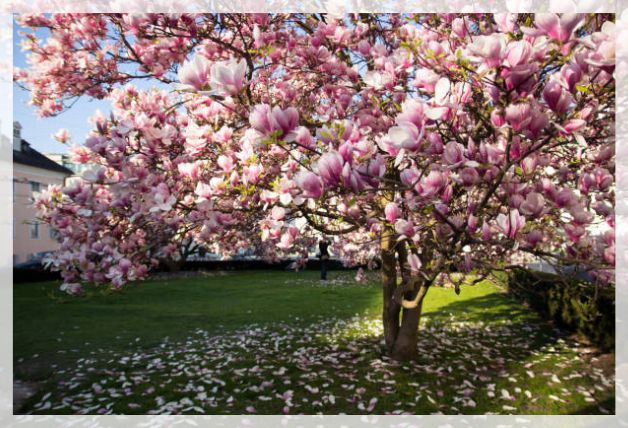
Moreover, the fall color is a pleasing golden yellow.
- Native Area: Japan
- USDA Hardiness Zones: 6 to 9
- Height: Up to 30 feet
- Sun Exposure: Full sun to part shade
Bigleaf Magnolia, Magnolia macrophylla
Bigleaf magnolia tends to live up to its name and produces leaves that can be at least 32 inches long.
Like most magnolias, it is normally a deciduous tree.
Though it may be evergreen in the warmer zones.
Moreover, the bloom which often appears in May is as much as 10 inches across and is white with a purple petal base.
- Native Area: Southeastern U.S., Mexico
- USDA Hardiness Zones: 5 to 8
- Height: 30 to 40 feet; occasionally to 60 feet
- Sun Exposure: Full sun to part shade
Ashe’s Magnolia, Magnolia ashei
This specie of magnolia can either be a large shrub or a small tree, depending on how you prune it.
In some cases, it is also treated as a subspecies of the bigleaf magnolia, as its leaves are as much as 2 feet long.
Moreover, its name was given in honor of Willian Willard Ashe of the United States Forest Service.
The white flower of this one tends to have petals up to 1 foot long.
They bloom after the light-green leaves emerge in the spring.
- Native Area: Florida
- USDA Hardiness Zones: 6 to 9
- Height: Up to 30 feet
- Sun Exposure: Full sun to part shade
Cucumber Tree, Magnolia acuminata
The cucumber tree magnolia is named so that the fruits of this tree look somewhat like vegetables.
This is the most cold-hardy of the magnolia.
But while it has large glossy leaves that are up to 10 inches long and a large growth habit of the classic southern magnolia. the greenish, tulip-shaped magnolia flowers are much less showy.
They are only about 2 inches across.
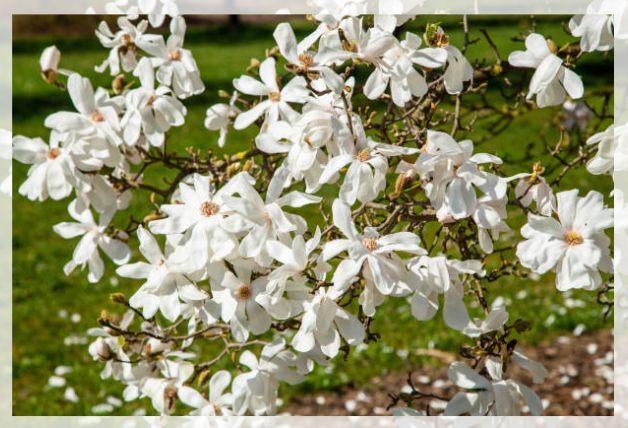
Moreover, the fruits that follow the flower tend to turn from green to red as they mature.
This can be a great good shade tree or specimen tree for colder climates, provided you are willing to tolerate the mess that goes with the large leaves.
- Native Area: Appalachian regions of the U.S., southern Ontario
- USDA Hardiness Zones: 3 to 8
- Height: 60 to 80 feet
- Sun Exposure: Full sun to part shade
Lily Magnolia, Magnolia liliiflora
The lily magnolia is one of the smaller species.
It tends to grow as a shrub or small tree.
In early spring, before the leaves open, this shrub tends to put out a huge flush of lightly perfumed reddish-purple or pink magnolia flowers shaped like lilies.
Moreover, a favorite cultivator, ‘Nigra’ is popular for deeply colored flowers.
After the flowers, you can see dark green elliptical leaves.
This species is a parent of the saucer magnolia.
- Native Area: Southwest China
- USDA Hardiness Zones: 7 to 10
- Height: 8 to 12 feet
- Sun Exposure: Full sun to part shade
Kobus Magnolia, Magnolia kubos
The Kobus magnolia is a slow-growing tree that tends to exhibit many of the classic magnolia traits.
Its fragrant white flowers are tinged with pink that appear before the leaves open, and large, dark-green leaves.
Moreover, it is also known as the Japanese magnolia or northern Japanese magnolia.
You can plant it as a specimen tree when early flowers are desired.
This specie tends to form multiple trunks, but when you prune it back to a central leader, it will give it a more traditional tree-like shape.
Furthermore, kobs magnolia is one of the parent species, and Stella magnolia is the other one, that together produces the Loebner magnolia.
- Native Area: Japan, Korea
- USDA Hardiness Zones: 5 to 8
- Height: 25 to 50 feet, occasionally 75 feet with very old trees
- Sun Exposure: Full sun to part shade
Loebner Magnolia, Magnolia x loebneri
The loebner magnolia is a hybrid that is produced by crossing the Kobus magnolia and star magnolia.
Moreover, this small tree often has multiple stems.
However, you can create a central leader by pruning.
Fragrant star-shaped pink and white flowers 4 to 6 inches wide tend to appear in spring before the foliage emerges.
The dark green oval leaves tend to be smaller than other magnolias, no more than 5 inches long.
- Native Area: hybrid plant; no natural range
- USDA Hardiness Zones: 5 to 9
- Height: 20 to 30 feet; occasionally as tall as 60 feet
- Sun Exposure: Full sun to part shade
Saucer Magnolia, Magnolia x soulangiana
This one is created by crossing the lily magnolia and the Yulan magnolia.
The saucer magnolia can either be a large shrub with multiple stems or a small tree.
Moreover, the white blooms with pink interiors often appear in early spring before the leaves appear.
A number of cultivars are available offering different flower colors in the purple range.
This is the most commonly grown magnolia in the United States.
- Native Area: hybrid plant; no natural range
- USDA Hardiness Zones: 4 to 9
- Height: 20 to 25 feet
- Sun Exposure: Full sun to part shade
Southern Magnolia, Magnolia grandiflora
The southern magnolia is one of the most common trees that come to mind when you think of magnolias or read about them in novels of the antebellum south.
The flowers of the magnolia tree are the state flower of Louisiana and Mississippi.
Moreover, this plant is a large evergreen tree that needs a lot of space.
The elliptical leaves are large and leathery, up to 10 inches long.
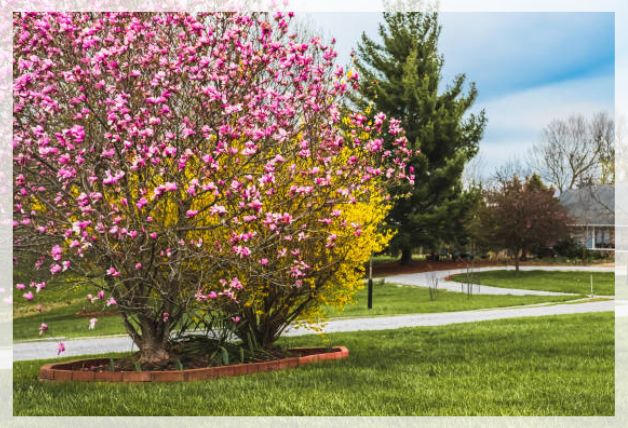
And its white flowers appear in mid-summer to early autumn and can be as much as 12 inches across.
While most magnolias prefer full sun, most can tolerate some shade.
This magnolia will actually thrive well in part shade.
- Native Area: Southeastern U.S.
- USDA Hardiness Zones: 7 to 9
- Height: 60 to 80 feet
- Sun Exposure: Full sun to part shade
Star Magnolia, Magnolia stellata
This one is a deciduous small tree or large shrub that tends to produce star-shaped white flowers in later winter or early spring, before any other flowering tree, before most spring bulbs.
When possible, you can plant this one in a sheltered location to help it flower in the spring, as the buds are damaged by frost.
- Native Area: Japan
- USDA Hardiness Zones: 4 to 8
- Height: 15 to 20 feet
- Sun Exposure: Full sun to part shade
Sweetbag Magnolia, Magnolia virginiana
Regionally, this plant is also known as the beaver tree, swamp magnolia, or laurel magnolia.
In cooler locations, the sweetbay magnolia is often a deciduous shrubby plant with multiple stems.
While in warmer zones it tends to be an upright tree that remains evergreen.
Moreover, it is an excellent plant for boggy locations or clay soils.
Waxy white flowers appear in midsummer to early autumn, the shiny green oblong leaves have silvery undersides.
- Native Area: Eastern U.S.
- USDA Hardiness Zones: 5 to 10
- Height: 10 to 35 feet
- Sun Exposure: Full sun to part shade

Leave a Reply