Cosmos Flowers: Complete Growing, Care & Troubleshooting Guide
Why Grow Cosmos?
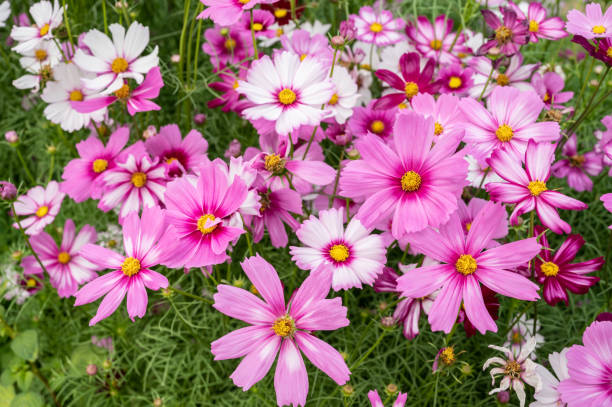
Cosmos flowers are the unsung heroes of summer gardens. They germinate quickly, tolerate heat and low fertility, and shower beds with daisy-like blooms in reds, pinks, whites, oranges, and even chocolate brown. Because most varieties reach 1–4 ft tall, a single packet of seeds can yield a tiered backdrop for mixed borders, a pollinator strip beside the vegetable patch, or armfuls of cut flowers for indoor vases. Better yet, cosmos thrive on neglect; after they take hold, you can forget the fertiliser spreader and irrigation timer for weeks at a time.
Garden designers also value cosmos for their fine, fern-like foliage, which adds feathery texture between bolder leaves such as coneflowers or cannas. Because they bloom until frost, cosmos extend colour well into autumn, long after many annuals fade. And if you live in an area where deer nibble everything, you’ll appreciate that cosmos—while attractive to bees and butterflies—are usually ignored by browsing wildlife.
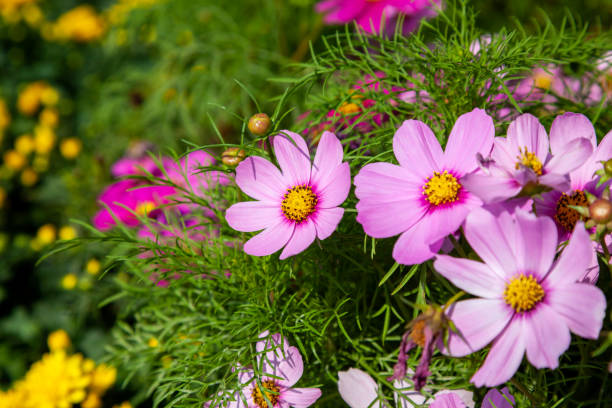
Whether you tuck a few seedlings into cottage-style drifts or sow entire rows for farmers-market bouquets, cosmos reward minimal effort with maximum colour.
What Is a Cosmos Flower?
Cosmos is a genus of the daisy family (Asteraceae) native to Mexico, Central America, and parts of South America. The plants produce single, semi-double, or double discs of petals atop wiry stems that sway in the slightest breeze—an effect that softens formal plantings and invites motion into static beds. Botanically, the two annual species most gardeners grow are Cosmos bipinnatus (the classic pastel or white Mexican aster) and C. sulphureus (the heat-loving, gold-to-orange sulphur cosmos). A third species, Cosmos atrosanguineus, bears velvety maroon “chocolate” blooms and behaves as a tender perennial in USDA zones 7–11.
Cosmos plants germinate in warm soil—ideally above 70 °F (21 °C)—and reach flowering stage in roughly 8 weeks, making them perfect for quick colour in new gardens or succession plantings after spring crops. Because the seeds need light to sprout, you can broadcast them over loosened soil and press gently without burying; Mother Nature handles the rest.
Quick Facts
| Common Names | Cosmos, Mexican aster, cut-leaf cosmos |
|---|---|
| Botanical Names | Cosmos sulphureus, Cosmos bipinnatus |
| Family | Asteraceae |
| Plant Type | Annual (tender perennial for C. atrosanguineus) |
| Mature Size | 1–6 ft tall × 1–3 ft wide (variety dependent) |
| Sun Exposure | Full sun (>6 h) |
| Soil Preference | Well-drained, average fertility, pH 6.0–7.0 |
| Bloom Period | Late spring / early summer until frost |
| Flower Colours | White, pink, magenta, red, orange, yellow, chocolate |
| USDA Zones | 2–11 as annuals; 7–11 for chocolate cosmos |
| Wildlife Value | Attracts bees, hoverflies, butterflies, seed-eating birds |
Cosmos Care Essentials
What makes cosmos beloved by beginners and pros alike is their tough-love tolerance: they flower best in lean soil, shrug off drought once established, and bounce back after a hard rain better than many annuals. Below are core care guidelines, plus tips for integrating cosmos into mixed beds alongside anchor plants such as black-eyed Susans or goat’s beards.
- Drought tolerance: Once seedlings root, cosmos require watering only during extended drought. In fact, excess irrigation leads to lanky stems and fewer flowers.
- Feeding: Skip high-nitrogen fertilisers. Rich soil prompts leaf growth at the expense of blooms. A modest top-dressing of green leaf manure or finished compost at sowing is plenty.
- Air circulation: Space plants 12–18 inches apart (tall varieties up to 24 in) to reduce humidity-loving diseases such as powdery mildew. In humid regions, morning sun and afternoon airflow are your best allies.
- Deadheading: Snip spent blooms every few days to keep new buds coming. If time is short, shear the top third of a plant to trigger fresh branching.
- Staking: Plants taller than 3 ft may lean in wind or heavy rain. Insert slender bamboo canes or a pea-netting grid at planting time so stems grow through the support invisibly.

If pests appear—typically aphids or thrips—knock them off with a sharp blast of water or apply a mild, homemade insecticidal soap. Serious infestations are rare because cosmos’ aromatic foliage repels many chewing insects.
Light & Soil Requirements
Sunlight
Cosmos bloom profusely only under full-sun conditions: a minimum of six, and ideally eight, hours of direct light daily. In bright but partial shade—such as the east side of a fence—the plants survive yet produce fewer and smaller flowers. If your garden lacks open sun, consider planting cosmos in movable containers you can wheel into the brightest spot.
Soil
Unlike roses or dahlias that crave manure-rich beds, cosmos actually prefer moderately lean soil. Too much fertility triggers soft shoots that flop and delay flowering. A loose, sandy loam or even gravelly soil is perfectly acceptable as long as drainage is good. Aim for a pH between 6.0 and 7.0, but do not fuss if your soil drifts slightly outside that window; cosmos are adaptable.
For heavy clay areas, lighten the planting zone with coarse sand or aged leaf mould. Raised beds filled with a 50-50 mix of native soil and organic planting mix also work well.
Water, Temperature & Feeding
Watering
Cosmos seedlings need consistent moisture for the first two weeks. Thereafter, water deeply only when the top inch of soil dries out. Mulching with straw or shredded leaves holds moisture in sandy beds but is optional in cool climates.
Temperature & Humidity
Native to arid plateaus of Mexico, cosmos relish daytime highs from 80 °F to 95 °F (27–35 °C). They shrug off dry, hot winds that send lettuce bolting. High humidity does not faze cosmos either, as long as air circulates freely.
Feeding
Hold the fertiliser—especially high-nitrogen formulas. If leaves yellow mid-season, top-dress with a thin layer of worm castings or dilute fish emulsion once, then observe. Overfeeding leads to towering plants that bloom sparsely.
Popular Species & Cultivars
More than 25 species answer to the name Cosmos, but home gardeners usually meet only three: Cosmos bipinnatus, Cosmos sulphureus, and the tuber-forming Cosmos atrosanguineus. Each offers an ever-expanding palette of colours and plant habits, thanks to breeders in Japan, the Netherlands, and North America.
- Cosmos bipinnatus — Classic “Mexican aster.” Ferny foliage and pastel petals in white, rose, carmine, and bi-colour blends. Garden stalwarts such as ‘Sensation Mix’ and the fluted-petal ‘Sea Shells’ thrive in full sun from USDA zones 2-11.
- C. sulphureus — Heat-loving sulphur cosmos in gold, flame-orange, or pumpkin. The compact ‘Cosmic Orange’ holds up in humid climates, while ‘Bright Lights’ mixes sunset shades for pollinator strips.
- C. atrosanguineus — The famed chocolate cosmos. Velvety maroon petals release a cocoa scent on warm evenings. Grow it in containers north of zone 7 and store tubers like dahlias over winter.
Newer breeding lines widen the options:
‘Xanthos’ — First true pale-yellow Cosmos bipinnatus; only 20 inches tall, ideal for patio pots.
‘Apricotta’ — Rosy-peach petals with an amber halo, beloved by florists.
‘Cupcakes & Saucers’ — Shallow bowl-shaped petals that hold up in rain, perfect for cut-flower conditioning.
Pruning and Propagation Tips
Deadheading for Endless Blooms
Snip spent blossoms every three days to redirect energy into new buds. If a busy week passes, shear the top third of each plant; cosmos respond by pushing up a second flush of stems within 10 days.
Shearing for Bushier Plants
When seedlings reach 12 inches, pinch the central tip just above a leaf node. Lateral shoots soon multiply, producing sturdier, bouquet-length stems.
Propagating by Stem Cuttings
- Clip a non-flowering shoot with three to five leaf nodes.
- Remove lower leaves; dip the cut end in organic rooting gel.
- Insert into a 3-inch pot of moist, sterile mix (50 % coco coir, 50 % perlite).
- Cover with a clear dome or zip bag for humidity; keep at 70 °F.
- Roots form in 14–21 days. Acclimate, then transplant into the garden.
This method guarantees identical colour matches to favourite hybrids that do not grow true from seed.
Growing Cosmos from Seeds
Sow indoors four to six weeks before your last frost date, pressing seeds onto the surface of moistened mix—do not bury; they need light to sprout. Maintain 70–75 °F and expect germination in 7–10 days. Provide a fan or gently brush seedlings daily to strengthen stems.
Direct-sow outdoors after danger of frost. Loosen soil to 8 inches with a garden fork, scatter seeds, and tamp lightly. Keep moist until emergence. Thin to 12–18 inches for border varieties or 6 inches for mass meadow plantings.
For continuous colour, succession-sow a fresh strip every three weeks until midsummer. The final sowing will bloom into autumn, providing late nectar when few other annuals remain.
Potting, Repotting and Overwintering
Container size: A 12-inch wide pot suits dwarf cosmos; tall types need at least a 5-gallon container with a heavy base to resist wind. Use an airy mix (40 % compost, 40 % coconut coir, 20 % pumice) to mimic the loose soils they favour in the wild.
Fertiliser caution: Skip slow-release pellets blended into commercial potting soils. Instead, water with a diluted organic tea only if leaves pale mid-season.
Staking: Push bamboo canes into the pot at planting; tie stems loosely with soft jute twine as they elongate.
Overwintering chocolate cosmos: In zones 6 and colder, unpot tubers after the first frost blackens foliage. Dry for 24 hours, pack in slightly damp peat or vermiculite, and store at 45–50 °F until spring.
Getting Your Cosmos to Bloom
- Full sun is non-negotiable. Even light afternoon shade can cut bloom count in half.
- Moderate moisture. Water deeply, then allow the top inch of soil to dry. Over-watering promotes foliage, not flowers.
- Avoid excess nitrogen. If you must feed, choose a low-N, high-P flower fertiliser at quarter strength.
- Deadhead relentlessly. Each removed blossom triggers two new side buds.
- Pinch low. Cutting back to a four-inch stub after mid-summer heat waves encourages a fresh, autumn flush.
Common Problems with Cosmos Flowers
Fungal Wilts and Leaf Discolouration
If stems collapse despite good moisture, dig up one plant. Pink or orange fungal mats on roots indicate fusarium wilt—discard plants and solarise soil. Healthy roots but floppy stems often mean bacterial wilt; dispose of affected specimens and rotate the bed with non-aster crops next season.
Powdery Mildew
White, dusty patches on leaves appear in humid shade. Improve spacing, water at the base, and spray a 50-50 solution of milk and water every five days until clear.
Aster Yellows
Flower heads turn green and distorted; leafhoppers spread the phytoplasma. Pull infected plants and control hoppers with reflective mulch or insecticidal soap.
Aphids and Thrips
Clusters of sap-suckers distort new growth. Blast with a hose or treat with neem oil. Encourage predators like lady beetles by interplanting dill and yarrow.
Final Thoughts
Cosmos earn their place in gardens by combining effortless culture with months-long colour. Choose sun, keep soil lean, and remember to deadhead—those three rules deliver armloads of airy blooms for pollinators and bouquets alike. Experiment with new dwarf or tubular-petal cultivars each year, and allow a few seed heads to mature for free seedlings next spring. With a sprinkle of seed and a splash of sunshine, cosmos repay you ten-fold in beauty.





Leave a Reply