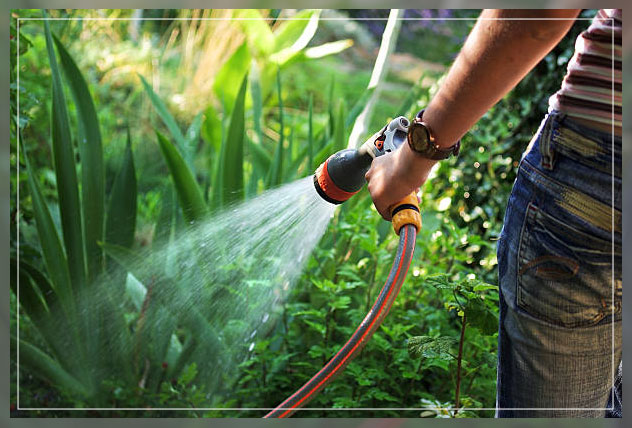
With a lot of options to choose from and few visible differences in a garden hose, you may find it tempting to simply choose the cheapest one.
However, a small difference can make a huge impact on how long your garden hose will last and how easy it is to use.
A good garden hose should last at least 5 to 10 years.
But some homeowners who tend to buy lower-quality hoses end up replacing them each year due to leaks, cracks, or rots.
Though some problems can be prepared, it is often more cost-effective to buy a good quality hose, to begin with.
Keep on reading to learn more about a garden hose, factors to consider, and more.
Types of a Garden Hose
All garden hoses are not equal.
You can find them in a number of different sizes, colors, and styles.
While some hoses are made of different materials and serve different purposes, some have even water control flow.
Therefore, the type of garden hose you select will depend on the type of work you plan to do in your garden.
Light/Medical-duty garden hoses are types of hoses that are designed for light use in the garden and low-pressure watering needs in your garden.
Most of them will be vinyl, however, they can last through a number of the gardening seasons when you care for them.
Moreover, this is a type of hose you need in case of watering delicate plants or simply filling the water dish for your pets.
The standard light-duty garden hose diameter is about 1/2″ and most range between 50′ and 100′ in length.
On the other hand, are heavy-duty garden hoses.
These will have a larger diameter which means more water pressure and these hoses will have thicker construction and more durable materials.
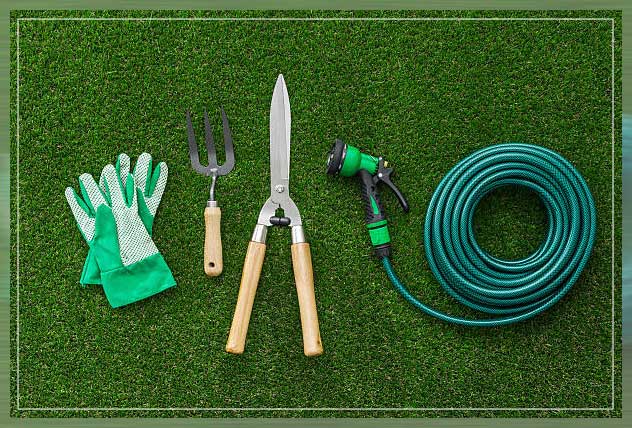
It is important to note that these are for the cleanup jobs in addition to watering the plants in your garden.
However, you can also find them with extra features like kink resistance and crush-proof couplings.
Another option is premium-duty hoses to tackle the large, tough jobs with heavyweight reinforcement to withstand greater water pressure.
Furthermore, these hoses are preferred by commercial users and professional landscapers.
It is important to note that these types of hoses are good for everything from pressure washing to crop watering, and tend to be extremely durable.
Rubber hoses tend to last under the harshest conditions, are twice as strong, and are 40% lighter. While they are also flexible at extreme temperatures.
A soaker hose will work well when you need to saturate your vegetable garden with a nice, low-pressure form of application.
Learn more about Cleaning Garden Tools here.
Garden Hose Sizes
The size of a garden hose refers to its diameter.
It is one of the most important considerations when choosing the right garden hose for your home.
However, the wrong size means that you may not have enough water pressure to get the job done properly.
A 5/8” vs. 3/4″ hose means a huge difference in the amount of water pressure the hose will generate.
Moreover, pressure is a factor that you need to consider especially if you intend to use the hose for outdoor cleaning projects.
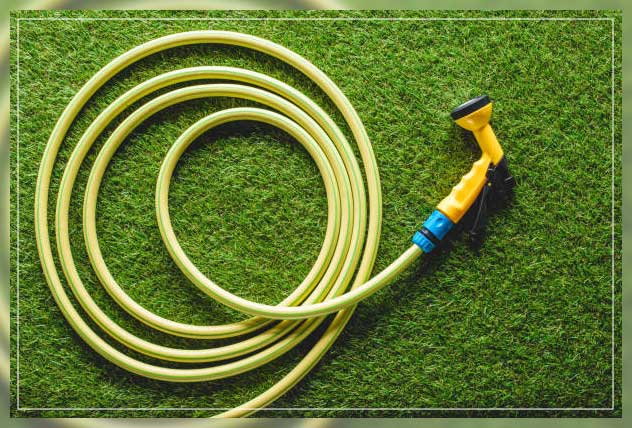
A 1/2″ diameter hose may be fine for basic watering while you may need a standard garden hose diameter that is larger to cover a bigger area or clean your driveway.
Thus, you can consider choosing a hose with a diameter that comes in both 5/8” and 3/4”.
One thing to remember is hose dimensions.
A larger diameter of the hose carries more water per minute.
Furthermore, a larger diameter hose can also be useful in handling differences in water pressure.
For instance, if you are pushing water uphill through a hose, it will be beneficial to consider using a hose with a large diameter.
Length to Consider
The length of the garden hose you consider while buying should also be depending on your personal need.
You can find hoses in lengths 25′, 50′, or 100′.
Moreover, choosing a hose that is too short will prevent you from getting the right coverage you need in your garden.
Selecting a hose that is too long, will result in frustration, especially if you are trying to navigate confined areas.
It is important to note that a shorter hose will be great for watering plants in containers or filling pet dishes.
it will work best when you have a small coverage area and do not need a lot of water pressure.
A longer garden hose, on the other hand, is more efficient at covering larger areas and tackling cleaning projects.
If you select a long garden hose, make sure to choose one that provides kink resistance.
You will also want to make sure to get that hose that does not kink at the spigot.
One important thing to remember is that it is more efficient to get the garden hose dimensions you need than it is to couple multiple hoses together.
using multiple hoses can create more wear and tear and makes the process of watering more tedious and tiresome when you need to move it.
Other Factors to Consider when buying a Garden Hose
Some other important factors to consider when buying a garden hose are:
Strength
Experts measure the strength of a garden hose in terms of “Burst pressure”.
It means the water pressure at which it is likely to rupture.
If you are using a hose nozzle, or a sprinkler, look for a hose that provides a burst pressure of about 350 psi.
For pressure washer use, check the manual before buying a hose, and you may need an even higher psi.
Flexibility
You will need a garden hose that is flexible for easy storage, going around the garden corners, etc.
However, not so flexible one this kinks easily will create a problem.
Kinking leads to splitting and will shorten the life of the hose.
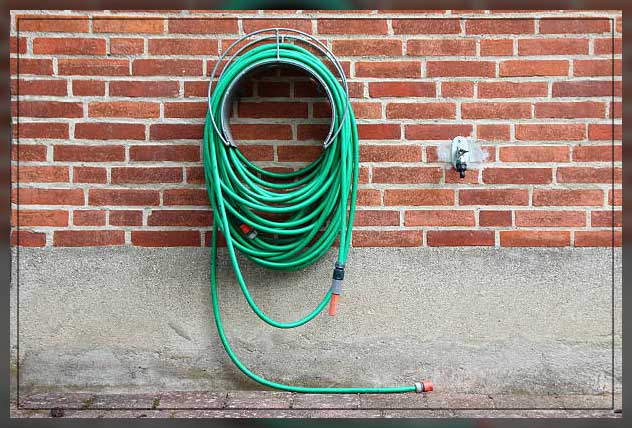
While all garden hoses will kink if you twist them, some tend to be better than others.
When reinforcing, rubber hoses are less likely to kink than other kinds of hoses.
Therefore, when buying a hose, bend it into a U, if it kinks, picks another one.
Couplings
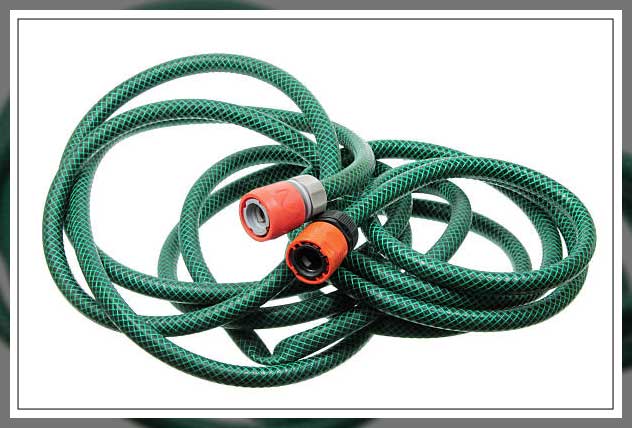
Garden hose couplings are pieces of spigots, sprinklers, and nozzles.
In case you buy less expensive hoses, like plastic couplings, they are prone to leaks, cracks, and breakage. And you cannot tighten them properly.
Moreover, plastic also breaks down quickly, especially when you leave it in the sun.
Metal couplings like that of brass are either stamped or cast.
You can identify the cast brass because it is thicker than sheet metal and is often in octagonal shape.
Though brass couplings are durable and leak-resistance, they can be difficult to tighten at a spigot, bend easily, and break down over time.
Furthermore, a large octagon-shaped coupling is easier to tighten, especially for those with stiff fingers or lower grip strength.
While many hoses come with a washer within them, these are often thin plastic washers that quickly break down.
Therefore, experts always recommend buying quality rubber washers at the connection point between the hose fitting and the spigot or nozzle.
What are the other Options?
Though some areas require using a hose, most do not.
There are a number of other alternatives that will help nourish plants and conserve water.
Some can even help save time, in comparison to spraying everything with a hose.
Watering Can: One of the oldest and simplest ways to water plants is using a watering can.
It has a number of advantages of directly adding water onto the roots, which in turn minimizes weeds.
Rose Waterers: Fitting a rose attachment to a watering can, can help disperse water over a wider area.
Rather than buying one, you can also make one by poking holes in the top of a plastic jug.
Drip Irrigators: Long tubes attached to a spigot will help deliver a small but steady stream of water.
However, drip irrigators prevent overwatering, minimize evaporation, and are flexible.
If they appear unsightly, you can bury or cover them with mulch.
Bottle and Clay pot Reservoirs: A great solution for plants that need constant watering is to use bottle and clay pot reservoirs.
Take an empty wine bottle, poke a hole in the top, fill it with water, then insert it into the ground next to the plant.
Then water will gradually dribble out throughout the day.
Furthermore, clay pots will work just as well, however, will take a bit more effort.
Are there any Drawbacks to using a Garden Hose?
Though using a garden hose is simple and convenient, there can be some drawbacks to using them.
These are:
Wastes Water: Hoses that have an average flow of 9 to 17 gallons per minute.
half an hour of water and you can use more than 500 gallons.
To conserve water, you can use an adjustable nozzle that will help control water flow.
Encourages Weeds: By their nature, hoses can distribute water widely over the ground.
As a result, they will also nourish weeks as well as the plants.
Though targeted watering takes a long time, however, it will help weeds die on the vine.
Leads to Overwatering: Plants have different water requirements, some needs a lot of water, while other will need less.
Hoses can make it hard to give each plant exactly what they need.
Creates Runoff: Too much water in your garden can cause fertilizers and pesticides to drain into nearby lakes, rivers, and streams, or soak into the groundwater.
Keeping in view the above drawbacks, you can consider using alternatives like using watering cans, rose waterers, drip irrigation, etc.

Leave a Reply