
Do you know that green plants play a vital role in the carbon cycle? They absorb atmospheric carbon dioxide from the atmosphere and produce oxygen. Carbon dioxide is the earth’s most important greenhouse gas that absorbs and radiates heat, unlike nitrogen or oxygen. Hence, we see a close connection between plants and carbon dioxide.

CO2 is an atmospheric constituent as it plays several vital roles in the env. It is a greenhouse gas that can trap infrared radiation heat in the atmosphere. Moreover, CO2 plays a crucial role in the weathering of rocks. It is also a carbon source for plants. The gas is stored in biomass, organic matter in sediments, and carbonate rocks like limestone. So you find carbon everywhere on the earth.
How Do Plants Use Carbon Dioxide
The role of carbon dioxide play in plant life processes are:
1 The fixing of carbon in natural form occurs within plants and organisms like producers – through photosynthesis. The process converts energy from sunlight into a chemical form that plants can use.
2 In the photosynthesis process, light energy combines carbon dioxide and water – to create the simplest of sugars. These simple sugars are the carbohydrate molecules known as glucose (C6H12O6).

3 The carbohydrates produced in the plant then become the source of chemical energy. Which finally fuels the living cells in all plants and animals.
In plants, some of this carbon remains as simple glucose for short-term energy use. In contrast, the others are converted to large complex molecules like starch for longer-term energy storage.
Plants Use Carbon During Photosynthesis
As you might know, all plants use carbon dioxide during photosynthesis. It is the process whereby the plant converts the energy from the sun into a chemical carbohydrate molecule. The process only happens in the presence of sunlight.

Plants use this carbon chemical to grow. Once the plant completes its life cycle and decomposes, the carbon dioxide forms again to return to the atmosphere and begin the cycle anew.
Carbon and Plant Growth
During photosynthesis, plants take in carbon dioxide and convert it to energy – required for their growth. When the plant dies, carbon dioxide is given off from the decomposition of the plant.
The primary role of carbon in plants is to foster healthier and more productive growth of the plants. Adding organic matter, such as manure or decomposing plant parts, fertilizes the soil surrounding the plant. The organic matter feeds the plants and nourishes them. Making the plant vigorous and lush. It means carbon and plant growth are closely linked.
What is the Source of Carbon in Plants?
Some of this source of carbon in plants – helps create healthier specimens. Some parts of the plant’s carbon are converted into carbon dioxide and then released into the atmosphere. But some other part of the plant carbon is locked into the soil.
The stored carbon in the soil helps to combat global warming by binding to minerals. They slowly break down over time, aiding in the reduction of atmospheric carbon. Do you know that global warming results from the carbon cycle being out of sync – primarily due to the burning of coal, oil, and natural gas in large quantities? When these gasses burn, they result in vast amounts of gas.

These gasses are generally released from the ancient carbon stored in the ground for ages. Amending soil with organic carbon facilitates healthier plant life. But at the same time, it also drains well, preventing water pollution. The process is beneficial to helpful microbes and insects.
The above option eliminates the need for synthetic fertilizers, often derived from fossil fuels. Yes, our dependence upon those very fossil fuels got us into this mess in the first place. Moreover, utilizing organic gardening techniques is one way to combat the global warming debacle.
Whether carbon dioxide from the air or organic carbon in the soil, the role of carbon and plant growth is precious. Without this process, life as we know it would not exist.
Carbon Dioxide and Climate Change
Plants Produce Food
Do you know what organic means? It means compounds containing the element carbon, often referred to as “organic.” These compounds are essential. These carbon compounds are present in all living things.
The carbon element continually moves among the earth’s lithosphere, hydrosphere, biosphere, and atmosphere in various forms. We know it as carbon dioxide (CO2), sugars or carbohydrates (CnH2nOn), and calcium carbonate (CaCO3), to name just a few. The movement of carbon among the earth’s spheres, as diagrammed below, is known as the carbon cycle.

As you might know, green plants play a crucial role in the carbon cycle. They absorb carbon dioxide from the air and produce carbon-containing sugars. They do this through the process of photosynthesis. The process has two main steps.
First, plants trap the sun’s light energy in a compound called chlorophyll. It is what provides its green color. This energy is converted to a chemical form – chemically known as adenosine triphosphate (ATP).
In the second step, plants use the energy from ATP they have produced to produce sugar (C6H1206) further. The process of photosynthesis requires lots of water. The process also produces water, as well as oxygen (O2). The net chemical reaction for photosynthesis is:
6 CO2 + 6 H2O + sunlight ——> C6H12O6 + 6 O2.
Carbon Compounds Passed From Plants to Animals
All animals eat plants to obtain the energy trapped during photosynthesis. After this, the animal bodies start to break down the carbohydrates in the plant tissue, releasing CO2 into the atmosphere. This process is called respiration. It means the net chemical reaction of the respiration process is the opposite of photosynthesis.
6 O2 + C6H12O6 ——> 6 H2O + 6 CO2.
Yes, even plants respire as they break down the organic molecules in themselves to release the stored energy. Plants and animals release CO2 into the atmosphere when they decay or decompose. The chemical reaction for this process remains the same as that for respiration.
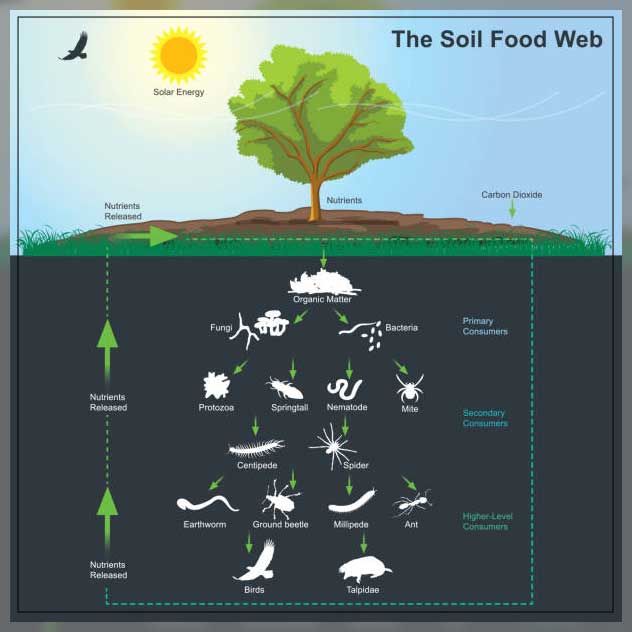
When dead plants and animals slowly decay under high pressure and temperatures, they may form pools of energy known as fossil fuels. Coal, oil, and natural gas are all a type of fossil fuel.
People burn fossil fuels and fresh vegetation that may release the energy stored in them. The energy is used for heat, operating automobiles, etc. This chemical process of burning fuel is what we know as combustion. It is the same as respiration and decomposition.
6 O2 + C6H12O6 ——> 6 H2O + 6 CO2.
Depletion of Fossil Fuel
Since the Industrial Revolution, humans have burned increasingly significant amounts of fossil fuels to produce more energy. As you know, as the practice of burning fossil fuels grows, so does the amount of carbon dioxide emitted into the air.
As per the data and growing evidence, the increase in atmospheric concentrations of carbon dioxide may increase the rate of global climate change, mainly due to the greenhouse effect. The reason being CO2 contributes to nearly 55 percent of the greenhouse effect. It also increases the atmospheric concentrations of CO2, which may significantly impact plant growth by affecting the rates of photosynthesis.
Carbon Dioxide In Greenhouses
The benefits of carbon dioxide on plant growth and production within the greenhouse env have been well understood for many years. Carbon dioxide is an essential component of photosynthesis. These sugars produced during photosynthesis are used for plant growth through the respiration process.

The difference between the rate of photosynthesis and the rate of respiration forms the basis for dry-matter accumulation or growth in the plant. In greenhouse production, the farmers aim to increase this dry-matter content.
By increasing dry matter content in plants, farmers can economically optimize crop yield. CO2 increases productivity as it improves plant growth. Some ways in which productivity is increased by carbon dioxide include higher fruit yields and earlier flowering. It also reduces bud abortion in roses, improves stem strength, and increases flower size. Therefore, farmers should regard CO2 as a nutrient.
Carbon dioxide enters the plant through the stomatal openings in the leaves through the process of diffusion. In plants, stomata are specialized cells. These cells are located mainly on the underside of the leaves in the epidermal layer.
These stomata cells open and close, which allows gas exchange to occur. The concentration of CO2 just outside the leaf strongly influences the rate of CO2 uptake by the plant. If the CO2 concentration is higher outside the leaf, the greater uptake of CO2 by the plant will happen.
The opening and closing of the stomata depend on many factors. Air temperatures, relative humidity, and water stress are some factors. CO2 and oxygen concentration in the air is also the primary factor that controls the stomata’s functioning.
Read related topics on sprinkler system, ground water, vegetable farm, sprinkler irrigation, water sprinkler, drip irrigation, cruciferous vegetables, plant nursery, and more.





Leave a Reply