
Do you know that the lavender flower is one of the most popular flowers and plants around the world?
If you want to grow a lavender flower or lavender oil as an essential oil in your home, you will need to take a few cuttings before fall and keep them through the winter, and into next year.
The commonly cultivated lavender is the common or English lavender Lavandula angustifolia, formerly named L. officinalis.
You can plant them in USDA zone 5.
Moreover, called “English” due to its proliferation in the English climate, the main requirements of the lavender flowers are to have lots of sunlight and good drainage.
It is not fussy about the type of soil you grow it in and its presence can help attract butterflies and different other pollinators to the garden.
Planting lavender along a walkway or near the seating area provides great aesthetics.
Dried lavender is popular for a number of things like it helps you to sleep peacefully.
Keep on reading to learn more about herbes de provence here.
Quick Facts about Lavender Flower
The Lavender flower of Lavendula spp. is a popular, well-known, and fragrant perennial plant that tends to come back every year with gray-green foliage, upright flower spiles, and a compact shrub form.
Moreover, planting lavender flowers in the color purple is best in spring, after the risk of frost passes away and the soil has warmed up.
It will grow at a moderate pace, often adding a few inches to its size each year, and this plant in the mint family.
However, it can be toxic to pets like dogs and animals.
| Common Name | Lavender |
| Botanical Name | Lavandula spp. |
| Family | Lamiaceae |
| Plant Type | Herbaceous perennial |
| Mature Size | 2–3 ft. tall, 2–4 ft. wide |
| Sun Exposure | Full sun |
| Soil Type | Dry, well-draining |
| Soil pH | Alkaline |
| Bloom Time | Summer |
| Flower Color | Purple |
| Hardiness Zones | 5a–9a, USDA |
| Native Areas | Europe |
| Toxicity | Toxic to dogs, toxic to cats |
Learn more about Pet-Friendly Gardens! here.
Planting Lavender Flower
In order to plant lavender flowers, you will have to choose the sunniest spots in your garden.
It is important to note that lavender plants tend to tolerate many growing conditions, however, they thrive best in warm, well-draining soil and full sun.
In the garden, lavender tends to make an excellent companion plant for almost anything from roses to cabbage.
Moreover, it is one of the aromatic, gray herbs that deer tend to avoid, thus, making it a great choice to plant lavender as a decoy in your bed.

Lavender-growing USDA zones are 5a through 9a, however, this is not a plant dependable enough to use a hedge.
You can expect them to do well in the weather cooperates, however, make sure to prepare to experience the occasional loss of a plant or two after severe winter or a wet, humid summer.
While you can keep starting new plants to make sure you have a beautiful harvest for years to come.
Pro Tip
Lavender has a large, spreading root system.
However, make sure to not plant them in shady spots where trees or other large plants can overshadow them.
Lavender flowers will grow best in full sun.
Lavender Care
As with most plants, your success in growing lavender tends to depend both on the kind of growing conditions you provide and which varieties you select to grow.
Even if you do everything right, and your lavender plants appear to happen, the genus is generally not long-lived.
And most lavender plants will begin to decline in 10 years or less.
Moreover, the popular garden varieties tend to grow to a height of two to three feet and reach maturity in three years.
They feature foliage that is narrow and needle-like or lightly tooted in shades of cool, silvery green.
Light and Soil Requirments
Lavender plants tend to grow best in full sunlight and are the best way to guarantee a lot of buds and big, full bushes.
Lean soil, i.e. soil without a lot of organic matter in it tends to encourage a higher concentration of oils and good smells.
Therefore, it is important to go easy on organic matter and fertilizer.
Lavender plants prefer well-drained soil that tends to be on the drier side, so if you are using a traditional potting mix, make sure to add some sand for drainage.
Moreover, an alkaline or particularly chalky soil will enhance the fragrance of lavender, while any pH below about 6.5 will likely cause them to be short-lived.
Water, Temperature, and other Requirments
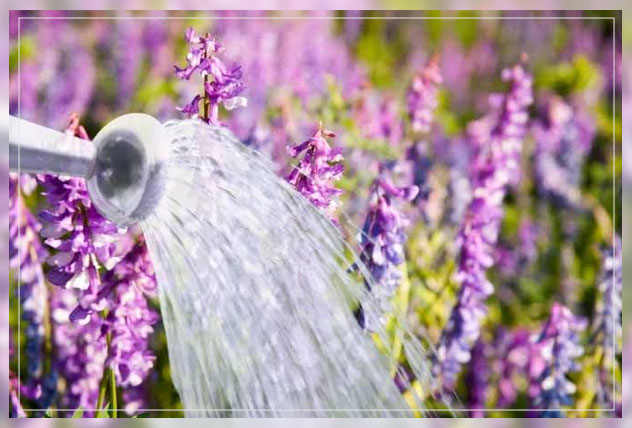
Lavender is one the resilient plants that are extremely drought tolerant, once established.
When starting your lavender plants, make sure to regularly water them during their first growing season.
After that, they can handle long periods of drought, in fact, too much water can lead to fungal diseases and root rot.
Moreover, lavender can withstand a wide range of temperatures and in most cases, dampness more than cold tends to be responsible for killing lavender flowers.
It is important to note that dampness can come in the form of wet roots during the winter months or high humidity in the summer.
However, if humidity is an issue, make sure you have plenty of space between your plants for airflow, and always plant your lavender in a sunny location.
Furthermore, protect them from harsh winter winds by planting them next to a stone or brick wall to provide additional heat and protection.
If you are living in an area where the ground tends to routinely freeze and thaw throughout the winter, the plant will benefit from a layer of mulch.
You can apply it after the ground initially freezes to protect the roots.
It is a good idea to add a handful of compost into the hole when you first start lavender plants.
Beyond that, feeding is not necessary with these plants and can detect from the overall potency of the lavender.
Types of Lavender
There are a number of varieties of lavender, each boasting benefits, and perks.
Some of the most popular are:
English Lavender (Lavandula angustifolia)
A varietal this is available in a number of cultivators including:
- Munstead, an old-fashioned standard with blue-purple flowers
- Hidcote, a version favored for dark purple flowers
- Jean Davis is a unique blend that produces pale pink flower spikes
Lavandin (Lavandula x intermedia)
This varietal comes with a number of cultivators including Provence which is especially popular for drying, Grosso, a highly disease-resistant and fragrant standard.
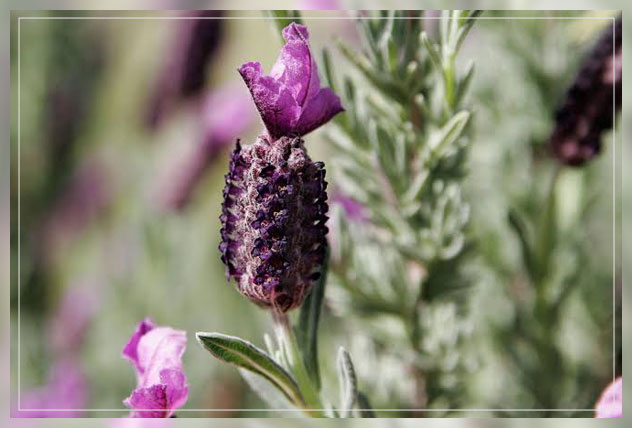
Fringed lavender(Lavandula dentata)
A bushy, spreading shrub varietal that tends to produce dense purple-blue flower spikes that are mildly fragrant.
Fringed lavender(Lavandula dentata)
A beautiful Mediterranean varietal that is compact and bushy with fragrant dark purple flowers.
Pruning Lavender Flowers
Though lavender plants will get regularly pruned by harvesting the flowers, a bit of spring pruning can help to keep your plant well-shaped and to encourage new growth.
Moreover, taller lavender varieties can be cut back by approximately one-third of their height, while also lowering varieties can be pruned back by a couple of inches or cut down to new growth.
However, if you live in an area where lavender suffers winter die-back, do not prune plants until you see new green growth at the base of the plant.
If you disturb the plants too soon in the season, they are likely to develop new growth.
Learn more about Pruning Tips and Techniques here.
Harvesting Lavender
One of the major reasons why lavender is so prized is that its flowers keep their fragrance once dried.
Moreover, for best drying results, you will need to harvest flowers as the buds first begin to open.
You will need to hand them in small bunches upside down in a warm spot with good air circulation until they dry.
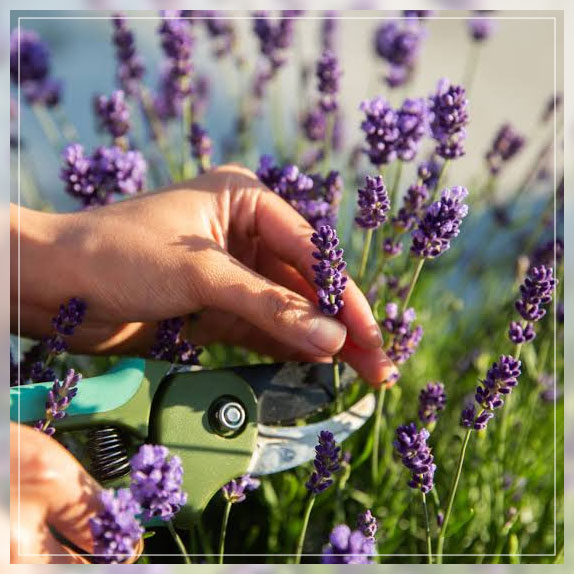
Besides being beautiful and aromatic, lavender flowers are also edible.
You can use them in raw salads, soups, and stews, as a seasoning, baked into cookies, and brewed into tea.
Furthermore, you can also use them sparingly, to add a little flavor that goes a long way.
Propagation Tips
The best way to propagate lavender plants is either by softwood cuttings, i.e. soft, flexible tips of shoots, or hardwood cuttings, i.e. segments of shoots with woody stems.
Softwood cuttings are available in spring while hardwood cuttings are available in the fall.
Moreover, both processes can be done relatively the same. Here’s how:
- use a sterilized, sharp knife to cut a 3-inch segment of a healthy shoot from the plant
- hardwood cuttings should be severed just below a bump that identifies a leaf node
- remove the leaves from the bottom 2 inches of the stem and scrape off the skin from the bottom of the stem along one side
- fill a small pot with a seed-starting mix that is moistened with a bit of water
- dip the stipped side of the cutting in rooting hormone, and bury it into the seed-starting mix
- cover the pot with plastic and place is somewhere warm with ample filtered light
- however, in the case of softwood cuttings, they will take two to four weeks to begin rootin, while hardwoods cuttings can take a bit longer
- feed the plant once a week with a liquid plant fertilizer diluted to 25% strength
- after two or three weeks, you can transplant the plant outdoors or into a larger pot with standard potting soil,
- while commercial potting soil has enough nutrients to nourish the plants without any more feeding
Learn more about Plant Nutrients for Crop Production here.
Potting and Repotting Lavender
In case outdoor planting is not practical, growing lavender in a ceramic, clay, or terra cotta pot and moving it to follow the fun or even bringing it indoors for winter can be most efficient.
It is important to note that lavender prefers to row in a tight space.
Moreover, a pot that can accommodate the root ball with a couple of inches to spare is good enough, while a pot that is too large with encourage excessive dampness.
Make sure that your container has plenty of holes at its base for drainage.
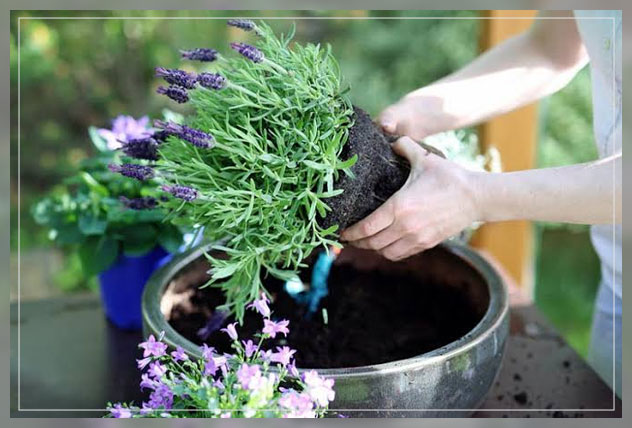
This is because root rot is one of the few problems that lavender plants can experience due to dampness.
Additionally, you can plant lavender in a clay or terracotta pot to help wick moisture away from the soil and keep it from getting too wet.
Furthermore, use a loose, soilless mix for planting, and remember that container-grown lavender will need more water than garden-grown plants.
A good rule of thumb is to water the plant when it appears dry.
Watering at the base of the plant can help limit dampness on the foliage.
Common Pests and Plant Diseases
It is important to note that lavender plants are affected by many diseases.
They may, however, develop Phytophthora, which is a soil-borne fungal disease that can cause root and stem rot.
Moreover, lavender can also succumb to septoria leaf spot which occurs due to a fungus and is commonly found on tomato plants.
But a number of common pests are attracted to lavender including:
- whiteflies
- spider mites
- leafhoppers
- spittlebugs
Water spray, insecticidal soaps, and neem oil can help to eliminate pests.
The four-lined plant bug, FLPB is another pest that can be found sucking on your plant leaves and you can control it with the help of pesticides.
How to get Lavender to Bloom?
When growing a lavender plant prized for its blooms, try to do all you can to get it to flower profusely.
If you are having a difficult time, there can be a few issues that could be to blame.
Soil that is too fertile can result in fewer blooms, as highly fertile soil tends to promote a lot of green growth at the expense of bud production.
You can either relocate your plants or amend the soil with sand or gravel to aerate it and make it less nutrient-dense.
Moreover, you should also make sure that your lavender flower receives at least 6 to 8 hours of sunlight daily.
This will result in the most productive bloom.
However, if the plant is not getting that much light in its current location, you can cut back nearby foliage that may be overshadowing the plant.
Or you can replant your lavender in containers so that you can have them around and “chase” the light.
Lastly, pruning your plant every spring, even when the size is suitable for your space can result in more frequent and fuller blooming.
The reason is that lavender sets buds on new growth, so stimulating that can be a helpful signal to the plant that it should get growing.
Common Problems with Lavender
Lavender flower is often trouble-free, however, problems can still occur.
The following are common issues you may encounter when growing lavender indoors or outdoors:
Leaves Turning Yellow
In case the soil is too wet, the leaves will turn yellow.
If the lower leaves are yellow, this means that you are overwatering the plant.
A number of lavender plants tend to perish if their soil gets too wet over the winter month.
Plant Smells Bad
When you overwater your lavender flower, it may cause root rot.
If you have a potted lavender plant that you think has root rot, prune the dead or affected roots with a sharp and sterilized cutting tool and repot the plant.
Drooping Leaves
In case you underwater your plant, you will have drooping leaves.
In addition, the soil will also feel parched.
Soil is always Wet
In such a case, you have overwatered your lavender plant.
See if you can remove any root rot and replant the lavender in new soil.

Leave a Reply