
If you are looking for big, glamorous houseplants you can have banana plants.
In most cases, they are one of those houseplants that comes to your mind when you think about them.
Elephant ears, monsteras, or snake plants are one of these plants that may already have a spot at your home.
However, there is always room for more plants.
The banana plant will help add a tropical feeling to any room due to its huge, shiny leaves.
But do not expect to have of the bunch that hangs out in your living room.
When you grow them indoors, these plants will hardly produce fruit.
So get a big planter and make sure room, as the banana plants are going to be the next addition to your houseplant collection.
Keep on reading.
Banana Plants
There are a lot of species and varieties of banana and plantain tres Musa spp.
While these tropical fruit plantings include banana plants, gardeners refer to them as trees.
However, they are technically huge herbaceous plants which means that they do not have a woody stem.
Instead, they tend to have fleshy, upright stalks from which large, oblong bright green leaves grow.
Moreover, showy flowers tend to appear in spring, which gives them a way to the fleshy, elongated, green, or yellow fruit.
No matter what the size of your yard or home is, there is a banana tree to fit.
Furthermore, these trees can make good indoor plants with enough light.
Though they often do not bear fruits, they have a fast growth rate and you should plant them in the spring.
Quick Facts about Banana Plant
Some quick facts about the banana tree are:
| Common Names | Banana tree, plantain tree |
| Botanical Name | Musa spp. |
| Family | Musaceae |
| Plant Type | Herbaceous, perennial |
| Mature Size | 2–30 ft. tall, 1–15 ft. wide (varies widely by species) |
| Sun Exposure | Full |
| Soil Type | Loamy, well-drained |
| Soil pH | Acidic |
| Bloom Time | Spring |
| Flower Color | White, purple, orange |
| Hardiness Zones | 9–11 (USDA) |
| Native Area | Asia, Africa, Australia |
Banana Plants Care
Though most species of banana trees tend to grow in warm climates, there are somewhat cold-hardy trees.
If you are planting them outdoors, it is important to choose the right planting areas which is the key to easy care.
Moreover, you will need to grow this plant at a spot where it will be sheltered from strong winds, as it is often susceptible to damaged leaves.
Make sure to prepare the plating site by mixing some fresh compost into the soil.
It is important to note that you should have enough space for the height and spread of your particular species.
During the growing season, i.e. spring to fall, these trees are water hogs.

You may have to water daily, especially during hot weather, to maintain enough soil moisture.
Furthermore, these plants also need regular fertilization throughout the growing seasons.
Bananas tend to form in the late summer in a cluster called a hand.
Once the fruit is green but plumped up, you can cut off the stalk and place it in a cool, dry space to finish ripening.
Growth Requirments
Growth requirements by banana plants are:
Light: Most types of banana plants tend to thrive best in full sun.
This means that they should receive at least six hours of direct sunlight on most days.
However, it is important to note that some varieties can scorch easily and will do better in partial shade.
Soil: These plants tend to thrive best in rich, deep soil with good drainage and a slightly acidic soil pH.
Moreover, they often have a poor tolerance for salt in the soil.
Water: As these trees are tropical plants and originate in rainforests, they will need a lot of water and plenty of moisture in the air.
They tend to thrive best when you plant them fairly close together, as it will help them to retain moisture in the leaves.
Make sure to water regularly to make sure that the soil remains evenly moist but not soggy.
It is important that you avoid overwatering, as it can often lead to root rot.

Temperature and Humidity: It is important to note that these plants tend to thrive in warm, humid conditions.
However, they do not like temperature extremes.
Even the hardy, cold-tolerant banana tree varieties tend to prefer consistent temperatures ranging between 75 to 95 degrees Fahrenheit.
While cold temperatures and dry conditions can cause the plant to die back quickly.
To increase humidity level, you can mist the leaves of your plant daily.
Fertilizer: It is important to note that these plants are heavy feeders.
You will need to apply a balanced fertilizer regularly throughout the growing season and make sure to follow label instructions.
Moreover, you can mix compost into the soil annually to raise the level of organic matter.
Learn more about Organic Fertilizer An Overview here.
Types of Banana Trees
One of the important things to note is that the banana tree has roughly 70 species and even more varieties including:
Musa Acuminata
These species tend to reach about 12 to 20 feet tall and you can grow them with ornamental foliage thanks to their paddle-shaped leaves.
These can reach around 6 to 10 inches long.
Mua Ornata
Also knowns as the flowering banana tree, this species is often grown for its ornamental value.
Moreover, it is important to note that you cannot eat its small fruit.
Musa Basjoo
Also known as the Japanese Banana.
This variety is popular and has a fairly good cold tolerance and reaches around 6 to 14 feet tall.
Pruning and Propagating Tips and Techniques
You will need to prune your plant before the banana tree fruits when there is only one main stem.
After your plant grows to about 6 to 8 months, leave one sucker, i.e. small shoot at the base of the stem.
This plant will replace the main stem in the next growing season.
After removing the fruit, you will need to cut down the main stem to 2.5 feet.
Then remove the rest of the stem in a few weeks, leaving the replacement sucker intact.
The best way to propagate your plant is through division.
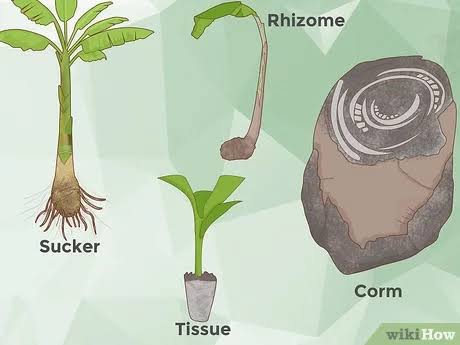
To divide your plant, separate the suckers from the rhizome, i.e. horizontal underground stem with the help of a sharp spade.
Before you perform this, wait until the suckers are at least 3 feet tall and have their own roots.
Once you separate a sucker from the parent plant, allow the surface of the rhizome section to dry for a day or so,
At that point, your plant will be ready for replanting in an appropriate location.
Potting and Repotting your Plant
You can grow banana trees in containers, however, they often will need at least a 15-gallon pot at minimum for optimal growth.
Make sure that the pot has drainage holes and use a loose, organically rich potting mix.
When you plant your banana plants in both, one benefit you can have is that you easily bring them indoors to shelter them from cold and inclement weather.
However, when the plant is in a container, it tends to have a higher watering and watering need, as the will use all that is in its limited soil faster than banana trees in the ground.
Additionally, they likely will not reach their maximum size and may also not bear fruit.
Still, a lot of people prefer them for their foliage.
You often will need to divide and repot container bananas every three years, separating any suckers on the parent plant.
Learn more about Container Gardening: Everything you need to Know here.
Common Pests and Plant Diseases
As an owner of the banana plant, you need to stay vigilant of a number of pests and diseases that can afflict a banana tree. Pests are:
Aphid Insects: These can cause curled and shriveled foliage and can transmit other diseases that can affect any fruit the plant produces.
Black Weevils: If you see jelly-like sap oozing from the plant, you may have this disease that you can eliminate with the help of pesticides.
Nematodes: These are one of the common pests that will rot the plant and fruit.

Sap-Sucking Insects: Small white mealybugs and red spider mites are also common to this plant.
Scarring Bettle: This pest tends to invade the bunches of the fruit of your plant and you can eliminate them with pesticide.
Tiny Thrips: This pest will stain and split the peel of the fruit of your plant.
Moreover, there is a number of diseases that are common to banana trees in large orchards and you can take care of them with the help of commercial fungicides and pesticides.
As in the case of indoor potted banana trees, you should be on the lookout for root rot, leaf spot disease, wilt, and powdery mildew.
Final Thoughts
Banana plants are easy to care for if you grow them in the right conditions both indoors and outdoors. It is important to give your plant a lot of water and light which are the key to helping them grow strong.
These trees can grow quite large, so you can also try the dwarf Cavendish banana which grows to about 8 to 10 feet tall. It is important to note that to make your plant bear fruit, you will need to provide it with tropical conditions outdoors. With the right conditions, the tree may bear fruit in around a year.



Leave a Reply