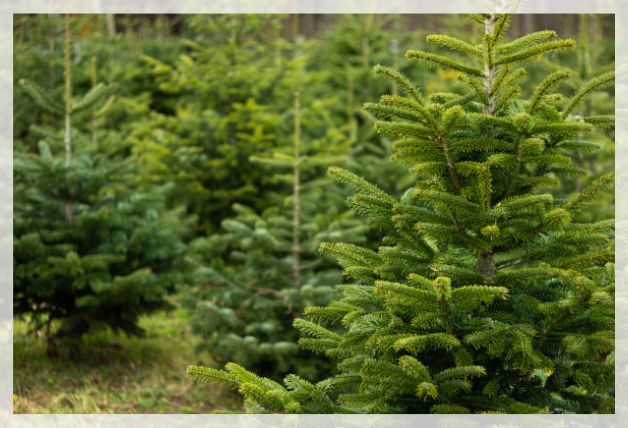
Do you know that the famous choice for the Christmas tree is the fir tree?
The Fir tree is a part of the pine family.
It brings a pyramidal form and regal mountain magnificence to your landscape.
Moreover, what makes them valued is their soft needles, upright cones, graceful branches, and strong fragrance.
It is no wonder that fir cultivators are frequently chosen by the American Conifer Society as Conifer of the Year.
This tree is native to cool, mountainous regions across the globe and tends to thrive in moderate climates.
They will need adequate moisture and fertile soil to grow.
Plant them in their ideal conditions and you can enjoy slow-growing, long-lasting trees for decades.
Furthermore, this tree is tall which makes them an excellent evergreen tree in large landscapes due to their dense needled branches.
However, if you do not have a lot of space, you can choose to grow shrub varieties that add year-round color to perennial beds, foundation plantings, and low-maintenance shrub borders.
Keep on reading.
Fir Tree
The Fir tree belongs to the genus Abies, one of the several evergreen conifer genera in the Pinacea family of woody plants.
The most common Abies species that you can use for traditional Christmas trees are the balsam fir, Fraser fir, noble fir, and Nordmann fir.
What distinguishes the fir tree from other pines is needle-like leaves that attach singly to the branches.
This is in contrast to spruce trees which tend to have paired needles with a hinge-like base and pine needles which are bunched in clusters.
Moreover, these trees are also different as their cones tend to stand upright on the branches like candles.

Fir cones are softer than others of coniferous trees and they come apart at the end of the season to spread their seeds.
It is important to note that a number of trees in the Abies genus come in dwarf varieties which makes them especially suited as potted living Christmas trees that can continue to be grown in pots or moved into the landscape after the holiday.
These trees thrive best in relatively cool, moist conditions and the soil should be fertile and well-drained.
You can loosen compacted soil by digging in compost or other organic amendments before planting the tree.
When the tree is dormant, it is the best time to plant it in late autumn, winter, or early spring.
Fir Tree Care
Fir trees and shrubs tend to grow best in full sun or part shade and moist fertile soil.
It is important to note that sandy loam soil is best for the growth of this plant.
Fir tends to occasionally adapt to poor, compacted soils and planting spaces that are prone to heat and drought.
However, it will often languish in such conditions and grows slowly.
Moreover, fir is not a good choice to grow in gardening zones 8 and above, so look for other options in hot, dry regions of zones 7.
Make sure to plant fir in early spring, as this tree and shrubs do not thrive well in the heat and dry conditions of summer.
Also, resist autumn plants as young fir trees will not get enough time to acclimate before drying winters damage them.
Water your tree after planting and continue to water it regularly so that it receives at least one inch of water from rainfall or irrigation each week during the first growing season.
Regular watering tends to encourage a strong root system.
Spread a 2-inch thick layer of mulch over the root zones to help conserve soil moisture.
The following are 12 popular types of fir trees that you can grow in your landscape:
1# Balsam Fir, Abies balsamea
This one is a popular choice as a Christmas tree that also yields aromatic oils and resins.
Moreover, balsam fir is also used for making paper.
This narrow tree tends to grow in a symmetrical, pyramidal to conical shape with flat, shiny dark green needles up to one inch long.
It is important to note that this tree is sensitive to heat and often struggles in climates than in zone 5.
Furthermore, it is not tolerant of urban climates, however, remains a common choice as a landscape tree.
- Native area: North America
- USDA growing zones: 4 to 7
- Height: 40 to 90 feet
- Sun exposure: Full sun to partial shade
2# Fraser Fir, Abies fraseri
John Fraser, a Scottish botanist was the inspiration for the name of this fir tree.
The tree tends to have flattened, shiny, dark green needles up to one inch long.
And it has white bands on the undersides.

Moreover, it is important to note that this tree is similar in appearance to the balsam fir.
The Fraser fir is also a popular Christmas tree.
It is also, in some cases, known as the she-balsam.
- Native area: Eastern United States
- USDA growing zones: 4 to 7
- Height: 30 to 50 feet tall
- Sun exposure: Full sun to part shade
3# Grand Fir, Abies grandis
One of the fastest-growing fir tree species is the grand fir, as well as one of the tallest.
The 3-inch cones tend to turn reddish-brown as they mature.
Moreover, the two-and-a-half-inch flat needles are shiny dark green on the top of two white lines on the undersides and release an orange fragrance when you crush them.
The bark of this tree is smooth and grey.
This tree has a number of regional names that include great silver fir, giant fir, Oregon fir, lowland white fir, Vancouver fir, western white fir, yellow fir, and great fir.
- Native area: Northwest U.S.
- USDA growing zones: 7 to 9
- Height: 100 to 250 feet
- Sun exposure: Full sun to part shade
4# Himalayan Fir, Abies spectabilis
The West Himalayan fir tends to be a stunning evergreen.
Moreover, it happens to be a rare and beautiful variety.
It is classified by its long, shining-green needles which droop to the sides of the branches.
- Native areas: Afghanistan, China, India, and Nepal
- USDA growing zones: 7 to 9
- Height: up to 100 feet
- Sun exposure: Part shade to full shade
5# Korean Fir, Abies koreana
This one is one of the smallest fir species and grows slowly.
Korean fir tends to fit into most landscapes.
This conifer starts to produce cones when the tree tends to be less than 3 feet tall.
Moreover, the distinctive cones appear in late spring and come in shades of blue or purple.
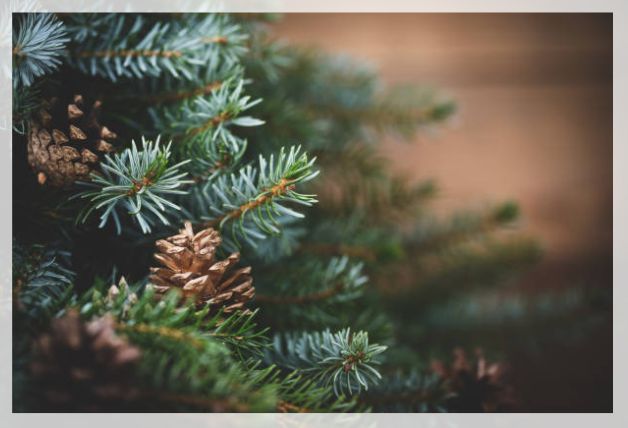
The short, broad needles tend to be about 3/4 inch long, shiny, dark green on the top surfaces, and silver on the undersides.
This species makes a good living Christmas tree due to its small size.
- Native area: South Korea
- USDA growing zones: 4 to 8
- Height: 15 to 30 feet tall; occasionally 50 feet
- Sun exposure: Full sun to part shade
6# Noble Fir, Abies procera
This one is also known as red fir or white fir and is a popular choice for a Christmas tree.
It has distinct tiers of branches with open spaces and allows you to showcase ornaments while avoiding the appearance of bare spots.
Noble fir tends to show attractive, smooth, silvery-grey bark with 1-inch grey-green or bright blue-grey leaves.
Moreover, the cones are 5 to 10 inches long and are purple-brown when they ripen.
- Native areas: Western Oregon, Washington, and northwest California
- USDA growing zones: 6 to 8
- Height: Standard height is around 50 feet but some varieties can be over 240 feet tall; some have grown to 300 feet tall.
- Sun exposure: Full sun to part shade
7# Caucasian Fir, Abies nordmanniana
Also known as the Nordmann fir, it is named after Alexander von Nordmann a Finnish zoologist.
The braches tend to be densely packed with flattened, glossy dark-green needles up to 1 1/4 inches long and have two white bands on the undersides.
The bark of this tree tends to be charcoal gray.
Moreover, the cylindrical seed cones are 6 inches long and are dark reddish-brown in color.
Its cones are blue-green when immature with brown bracts peeping out between the scales.
It is important to note that this species can tolerate living in a container as long as it starts in one, so it can be a good choice for a living Christmas tree.
- Native areas: Northern Armenia, Russian Caucasus, Georgia, and Turkey
- USDA growing zones: 5 to 7
- Height: 40 to 80 feet; occasionally over 200 feet
- Sun exposure: Full sun to part shade
8# Red Fir, Abies magnifica
This one is also known as California red fir, Shasta fir, or silvertip, regionally.
The red fir gets its principal common names as the bark of this tree tends to turn dark red as it matures.
The smooth, gray, gray bark of young trees becomes rough and orange-red on older trees.
Its blue-green needles are 3/4 to 1 1/4 inches long.
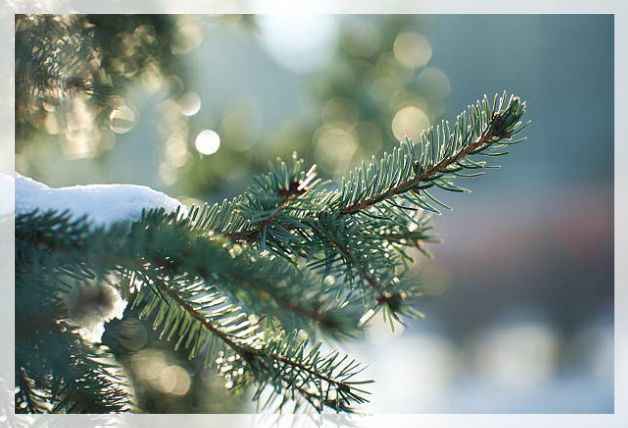
Moreover, the seed cones are 3 1/2 to 8 1/2 inches long, yellow-green in color, ripening to browns and this tree does not handle drought well.
However, it tends to have good frost tolerance.
- Native areas: Southwest California and Oregon
- USDA growing zones: 4 to 8
- Height: Up to 200 tall
- Sun exposure: Full sun to part shade
9# Silver Fir, Abies alba
This fir species tend to have flattened needles that are 3/4 to 1 1/2 inches long, a glossy dark green with two whitish bands on the bottom sides.
The seeds cones tend to be about 3 1/2 to about 7 inches long.
They are greenish when young and dark brown when they mature.
Historically, this was the first species to be used as Christmas trees in Europe.
- Native area: Southern and Central Europe
- USDA growing zones: 5 to 8
- Height: 50 to 80 feet
- Sun exposure: Full sun to part shade
10# Spanis Fir, Abies pinsapo
The female cones on this species look like raspberries.
Moreover, the needles tend to be sharp, inspiring another common name, hedgehog fir.
The smooth bark is dark gray, which gradually turns rough and scaly as the tree ages.
The needles tend to be short, about 1/2 inch long, and pale green-blue in color.
Furthermore, the cylindrical cones of this fir tree are 3 1/2 to 12 inches long.
- Native area: Morocco and southern Spain
- USDA growing zones: 6 to 8
- Height: Typically 25 to 75 feet, possibly up to 100 feet
- Sun exposure: Full sun to part shade

Leave a Reply