
Ultimate Guide to Building an Apothecary Garden
(Calendula • Motherwort • Tulsi)
Herbal medicine is back in the spotlight—but unlike most wellness fads, planting your own apothecary garden gives you a health upgrade that compounds every season. Grow skin-soothing calendula, heart-steadying motherwort, and brain-boosting tulsi side-by-side and you’ll harvest kilos of potent botanicals for pennies. You’ll slash packaging waste, invite pollinators, and reconnect with soil science every time you pick a leaf.
This field-tested blueprint shows you how to:
- Select three foundation herbs that thrive from hot UAE balconies to cool temperate backyards.
- Design beds and containers for nonstop blooms, airy foliage, and low maintenance—no horticulture degree required.
- Harvest & store your plants so their therapeutic compounds stay bio-active for 12 months +.
Why Build an Apothecary Garden?
Drug-store tubes save lives, but they rarely cultivate connection—to seasons, soil microbes, or the miracle of plant chemistry. A backyard apothecary flips that script: every bed becomes a science lab, a stress-relief booth, and a bee buffet. Freshly dried herbs can deliver up to 40 × more volatile oils than supermarket shakers, giving you maximal therapeutic kick per teaspoon.
Triple Win Snapshot
- Financial ROI — One calendula patch yields enough petals for dozens of €15 salve tins—year after year.
- Ecosystem Services — Flowering herbs feed bees, hoverflies, and parasitic wasps—living pest control that lowers pesticide bills.
- Personal Resilience — Knowing how to calm burns, palpitations, or brain fog with backyard botanicals brings real peace of mind.
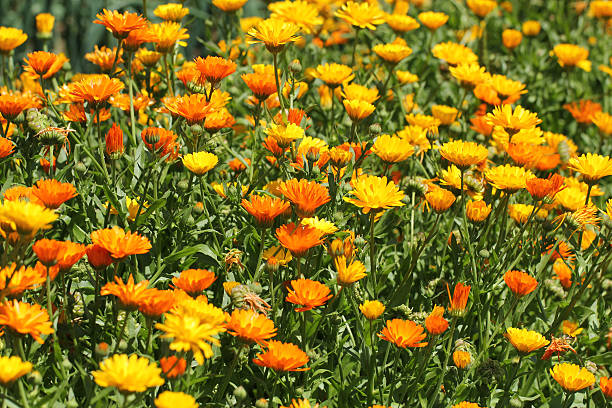
1. Calendula (Pot Marigold)
Calendula officinalis is the golden workhorse of herbalism. Folk healers used it for wounds long before modern trials proved it can speed second-degree burn recovery and curb inflammation [1]. Recent porcine studies show a calendula nano-emulsion can rival—sometimes outperform—silver sulfadiazine, the hospital gold standard for burn care [2].

Calendula Benefits at a Glance
- Medicinal — Antifungal, antibacterial, lymphagogue, and gastro-protective.
- Culinary — Petals add saffron-like colour to rice, compound butters, and salads.
- Agro-ecology — Blooms lure ladybugs & hoverflies that decimate aphids on tomatoes.
How to Plant & Care
Sow seeds 5 mm deep when soil hits 15 °C. Full sun is perfect in temperate zones; give afternoon shade in scorching climates. Thin seedlings to 25–30 cm. Calendula can flower 50 days from sprout if temps stay near 20 °C.
Pro tip — Pick sticky blooms every 2–3 days; each harvest triggers new buds.
Companion Plants & Pests
- Great under tomatoes, peppers, and brassicas.
- Repels tomato hornworm; attracts lacewings.
- Watch for powdery mildew—space plants for airflow.
Rapid Calendula Salve (3-Step)
- Infuse 1 cup dried petals in 300 ml olive oil (double-boiler, 40 °C, 3 h).
- Strain; whisk in 25 g beeswax until melted.
- Pour, cool, label. Shelf-life ≈ 12 months.
Contra-indications
Generally safe. Patch-test if ragweed-allergic.
2. Motherwort (Leonurus cardiaca)
Nicknamed “heart of the lion,” motherwort steadies both emotional and physical palpitations. A pilot trial found its oil extract eased stage-1 hypertension and anxiety within one month [3]. A broader review credits its alkaloid leonurine with cardio-protection during ischemia [4].
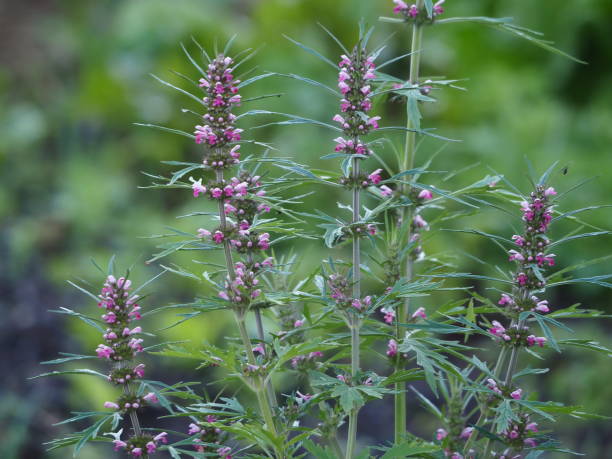
Motherwort Benefits at a Glance
- Nervine tonic — Supports GABA pathways for calm without grogginess.
- Cardio-protective — Leonurine modulates calcium channels; pre-clinical studies note anti-arrhythmic effects.
- Endocrine ally — Combats PMS irritability & menopausal flashes.
How to Grow
- Hardiness: Zone 4 (–28 °C) perennial.
- Stratify: Chill seeds 2 wks in moist sand → 80 % germination.
- Spacing: 45–60 cm; mature height 1–1.5 m.
Containment Tips
Ring plants with stones or harvest seed heads early—self-sowers pull easily but multiply fast.

Tincture Recipe (Fresh Plant)
- Fill a jar with chopped flowering tops.
- Cover 1 : 2 (w/v) with 40 % vodka; shake daily 30 days.
- Strain; dose ≍ 1 ml (≈ 30 drops) up to 3 × daily.
Contra-indications
Not for pregnancy (uterine stimulant). Use cautiously with heart meds—consult a clinician.
3. Holy Basil (Tulsi, Ocimum tenuiflorum)
Revered in Ayurveda as “the incomparable one,” tulsi is both culinary star and adaptogen. A 2022 RCT showed 250 mg of tulsi extract lowered hair cortisol ≈ 16 % after eight weeks [5]. A sister study found parallel drops in perceived stress and better sleep [6].
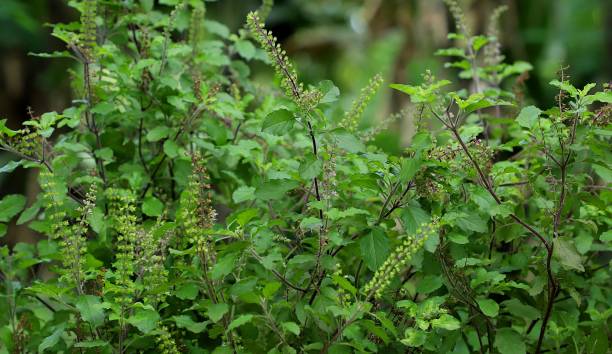
Tulsi Benefits at a Glance
- Respiratory soother — thins mucus and eases cough.
- Cognitive clarity — eugenol & rosmarinic acid give gentle nootropic lift.
- Mosquito shield — volatile oils repel Aedes within ~1 m.
Seed → Harvest Roadmap
- Surface-sow at 25 °C; light triggers germination.
- Harden off when nights > 12 °C; space 30 cm.
- Pinch flower spikes until mid-summer for lush leaves.
Kitchen & Apothecary Uses
Blend fresh tulsi, cashews, garlic, and a drizzle of raw honey for peppery pesto. For tea, steep 1 tsp dried tulsi + ginger slice in 250 ml hot water (10 min).
Folklore Fun-Fact
In Hindu homes tulsi is planted near the front door; legend says its scent keeps negative energy at bay.
Contra-indications
May lower blood glucose. Monitor if diabetic.
Design & Layout Tips
Permaculture Zones (Mini Scale)
- Zone 0 (Grab-n-go): Pots by the kitchen—tulsi, mint, chives.
- Zone 1: Raised bed 3–5 steps away—calendula, thyme, parsley.
- Zone 2: Farther bed—motherwort, echinacea, comfrey.
Companion Combos
- Calendula + tomatoes → fewer whiteflies.
- Tulsi + peppers → anecdotal flavour boost.
- Motherwort + yarrow → beneficial-insect corridor.
Small-Space Hacks
Try vertical pocket planters, hanging gutters, or self-watering towers—yield per m² can jump 300 %.
Soil, Water & Organic Care
Soil = Medicine. Calendula’s essential-oil content can rise 30 % when organic matter tops 5 %. Aim for crumbly loam, pH 6–7, with 2–3 cm of green-leaf manure or compost worked in each spring.
Core Checklist
- Water rhythm: ~2.5 cm / week via drip lines; wet foliage invites mildew.
- Mulch: 5 cm straw → 40 % evaporation drop + weed smothering.
- Fertiliser: Swap synthetics for monthly compost tea.
Harvesting & Storage
Active compounds peak just before full bloom or when vegetative growth tops out. Time your cuts for max potency:
| Herb | Best Harvest Window | Drying Method | Shelf Life |
|---|---|---|---|
| Calendula | Mid-morning, petals open | Dehydrate ≤ 35 °C | ≈ 12 mo |
| Motherwort | Early bloom, pre-seed | Bundle stems; hang airy loft | ≈ 18 mo |
| Tulsi | 20 cm height, pre-flower | Screen-dry leaves; flip daily | ≈ 12 mo |
Store each batch in dark-glass jars labelled with harvest date and bed location—tracking “terroir” lets you refine cultivation next year.
Frequently Asked Questions
Can I grow these herbs indoors all year?
Calendula and tulsi thrive in 20 cm-deep pots under south-facing windows or full-spectrum LEDs. Motherwort needs a bigger pot and winter dormancy—treat it as an annual indoors.
Are they safe for kids and pets?
Calendula is universally gentle. Tulsi is non-toxic yet stimulating—keep doses small for children. Motherwort is contraindicated during pregnancy and should be used cautiously with kids; consult a qualified herbalist.
Where can I buy seeds in the UAE?
Check Dubai Garden Centre for seedlings. For specialty varieties, order from Strictly Medicinal Seeds—they ship internationally with phytosanitary certificates.
Next Steps
Your apothecary journey doesn’t have to be perfect—just planted. Choose one herb, prepare a 30 cm pot with rich compost, and sow seeds this weekend. In four weeks you’ll spot sprouts; in eight you’ll sip your first home-grown remedy. For deeper dives, explore soil texture, manual irrigation, and organic farming methods. Happy planting—and may your garden be as generous as your curiosity!
References
- Rezai S et al. Effect of oral Calendula officinalis on second-degree burn healing. Scars Burns Healing. 2023.
- Dolgachev VA et al. Dermal nano-emulsion treatment reduces burn-wound conversion in a porcine model. J Burn Care Res. 2021.
- Spasov AA et al. Leonurus cardiaca oil extract for arterial hypertension. Phytother Res. 2010.
- Ivanov I et al. Leonurus cardiaca as a source of bioactive compounds. Molecules. 2019.
- Stough C et al. Ocimum tenuiflorum lowers hair cortisol in stressed adults. Front Nutr. 2022.
- McFarland-Lewis K et al. Tulsi supplementation improves stress & sleep. Nutrients. 2022.

Leave a Reply