
If you are looking for a guide to pergola designs, you have landed on the right page.
Pergolas are a failsafe way to bring a wow factor to your yard.
Thus, if you are looking for an outdoor update this summer, one of these can be the solution for you.
Moreover, pergola designs are ideal for zoning space while also providing much-needed shade in sunny spots.
Pergolas are also versatile which means you can add your personality and match the theme of your garden design ideas.
From painting to planting to styling with lighter, there are a lot of ways to customize the style of the pergola.
And they are not just for patios either, you can use pergolas to create enchanting canopies over pathways.
Keep on reading.
Pergola Designs
What used to be a patio roof is commonly referred to as a pergola nowadays.
It provides shelter from the sun, rain, and wind while also extending the living space of your home.
A major architectural structure, pergolas consists of rafters, beams, and posts, and you can attach or detach them from your house.
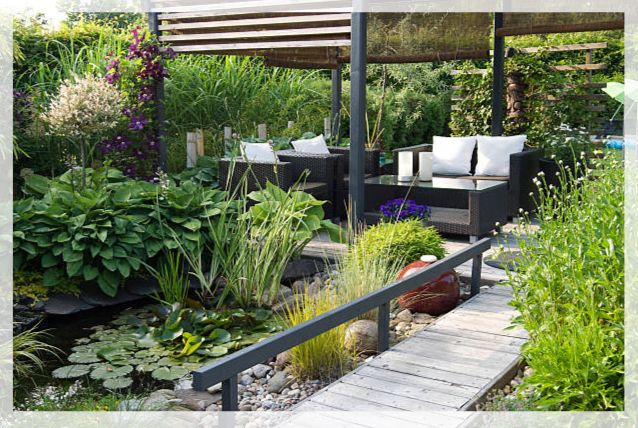
Moreover, though opinions vary on what differentiates them from a gazebo, it is a structure that is freestanding and tends to have a pitched roof.
On the other hand, the roof of the pergola is flat.
The terms arbor and pergola are often used interchangeably.
However, an arbor is a structure you can use to support vines or to direct foot traffic within a garden.
Learn more about Digital Camera: Its Use in Agriculture here.
Things to Consider
If you have a patio or deck, a roof-like structure that will extend the amount of time you spend outdoors, entertaining guests, or relaxing, you can have a pergola.
With the growing popularity of outdoor living spaces, it will increase the value of your home.
Before jumping into a pergola design project, consider the following:
Orientation: Whether you want the design to be north, south, east, or west facing.
Materials: These can include hardwood to plywood, metals, prefabricated materials, fabrics, and glass
Budget: The two significant expenses will be labor and materials.
If you budget is limited, you can use your resourcefullness, small planning, DIY skills, and creativity.
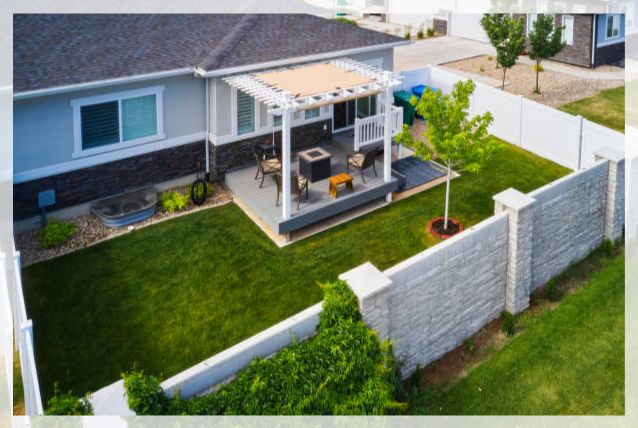
Contractor vs. DIY: Who will be building the design?
Will it be a do-it-yourself project or will you hire a contractor?
On the other hand, you can get a prefab pergola kit as an alternative.
Building Codes: Who is going to design the structure?
Most outdoor structures will need the approval of a building inspector or a planning commissioner.
Moreover, your local government officials will have guidelines on setbacks and height restrictions.
Zoning Laws: Will you need to have city, county, or regional zoning laws and approvals?
Depending on where you live, this process can take a long time and you will need to stay on top of it if you want to complete your project in a few months or even years.
In some cases, committees meet sporadically and applications can also fall through the cracks.
Learn more about No-Till Gardening: Overview here.
Rules for Pergolas
You won’t be surprised to hear that rules for pergolas are more like guidelines than actual rules.
Pergolas are a collection of vertical and horizontal supports with little or a lot of space between each post and each beam.
Though minimalism reigns here, however, you can push the boundaries in many areas.
Generally, a pergola is a structure that provides partial or complete shade with a slatted or minimalist roof.
Moreover, it will not have shingles and may provide little or no protection from weather conditions like rain or snow.
It can either be a stand-alone structure, or you can attach it to the outer wall of your home.
Though a porch always connects to the house and a gazebo never is.
In such cases, both a porch and a gazebo will have more than a minimalist root and they may have elaborate walls as well.
On that note, a pergola design will have no walls, minimalist walls, or three or a few sides.
The main goal or purpose of these walls will be to provide shade rather than actual cover from the elements.
Today, you can add outdoor curtains, glass panels, and Loggia panels, to turn the pergolas into backyard oases.
Furthermore, you can also add outdoor technologies like LED lighting to accommodate nighttime use or sensors to detect rain.
It is important to note that a pergola is larger than an awning, however, there is no limit to how large it can be.
Some tend to stretch between buildings or even cross parks to offer a covered walkway.
Pergola vs. Gazebo
It is important to note that both pergolas and gazebo are an outdoor structure that offers shade and shelter from sunshine and rain in your backyard.
As your physical surroundings have a lot of effect on your mental and emotional well-being, it is important that you not only consider the practicality of your backyard space but also the aesthetic appeal.
If you are looking for a little shade and protection from the weather to enjoy your backyard under any conditions, you can either have a pergola or a gazebo.
However, it is important to note that these two terms are not interchangeable.
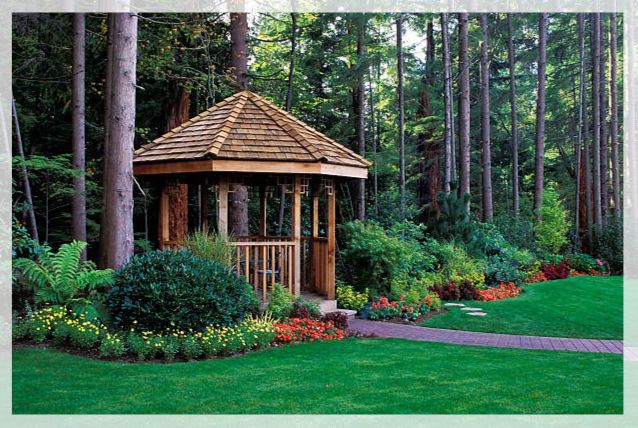
Gazebo: Gazebos have been around for much longer as compared to pergolas.
They were found in garden plans in Egypt dating back to 1400 BC.
Structurally, these come in the shape of a polygon with six or eight sides.
And these can be completly open to the air include a half wall or railing, or have full wall.
Moreover, these strcutures will have a roof just like that of a house or a smaller one, and you can build them in a style that mimics or compliments your house.
Depending on the foundation, they will have a floor that is raised above the ground level that offers a vantage point.
To make sure the surface remains dry after rainfall the floor is made to be raised.
Furthermore, the overall feel of a gazebo aligns with the setting of a Victorian garden, ornate and burdened with layers.
Pergola: Pergolas, on the other hand, are more modern, in comparison to gazebos.
These were first used in the Medieval period in the 1640s, the Latin root of the word pergola means ‘protecting eave’.
Pergolas are less cluttered and more elegant, in comparison to gazebos.
Moreover, they can have a full or retractable roof if you want the pergola for shade.
However, they offer only partial shade with intermitted beams present across the top.
You can have plants or vines growing on or hanging from the beams to enhance the cover pergolas offer.
It is important to note that you can build a pergola design on your own or use a patio surface.
Benefits of a Pergola
The benefits of having a pergola in your garden are:
Outdoor Dining and Entertainment: A custom pergola design tends to offer a respite from the sun, a defined area you can use to eat, talk, and relax.
If you love showing off improvements to your yard, a pergola with a roof is a great conversation starter.
Moreover, it provides a welcoming space to point out the beauty of outdoor living space.
Poolside Lounge: If you like enjoying drinks, sunbathing, and keeping an eye on swimmers, you can have deck chairs and umbrellas to create a visually pleasing space.
You can carve out a designated space for a bar, couches, and tables under a pergola patio without retreating to the pool house.
Moreover, set the mood with curtains, string lighting, lanterns, or hanging plants to create an outdoor oasis.
Graceful Garden: Pergolas and gardens have intertwined histories.
You can keep the tradition alive and create a stunning space in your backyard or garden.
Install a small or large wooden pergola or aluminum pergola to extend over winding walkways.
And you can tuck away the gardening tools or keep work tables for pots or seedling under them for a rustic look.
It also provides a lot of space for climbing vines, roses, and other plants to cover the sides and tops of a pergola canopy.
This will help you add shade and privacy.
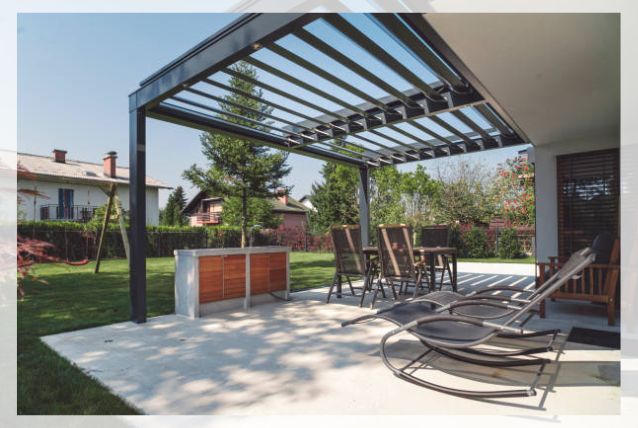
Extension to the Outdoors: Open-style, modern homes allow you to move indoors to outdoors.
You can continue the natural flow of your home by adding a pergola adjacent to the exterior of your home.
Moreover, place a pergola with a roof over a flat, uncovered patio to a walkway for a visually pleasing patio.
Deck Worthy: If you have a deck, and you do not want to cover it fully, you can have pergola designs added.
You can choose to install a custom pergola on the deck that is lightweight, strong, and covers certain areas of the deck.
Or you can choose a pergola with a retractable root.
Create a place for a swing, a barbeque grill, or a long area under it.
Hidden Getaway: You can enjoy the health benefits of spending time outdoors without having to leave far from home.
You can get a peaceful, relaxing space to lounge, enjoy the rain, rad, or have drinks under a pergola canopy.
However, do not forget to have lights, hanging plants, and curtains for an extra layer of privacy and adjust for personal comfort.
Final Thoughts
Adding pergola designs to your yard or garden is a great way to create defined areas for relaxing, entertaining, and gatherings.
However, you can also choose pergola kits to install along a walkway, in a garden, or over a porch, and the structure will fit your budget and lifestyle.
You can have pergola designs that are lightweight, strong, and customizable to fit your aesthetics and vision.




Leave a Reply