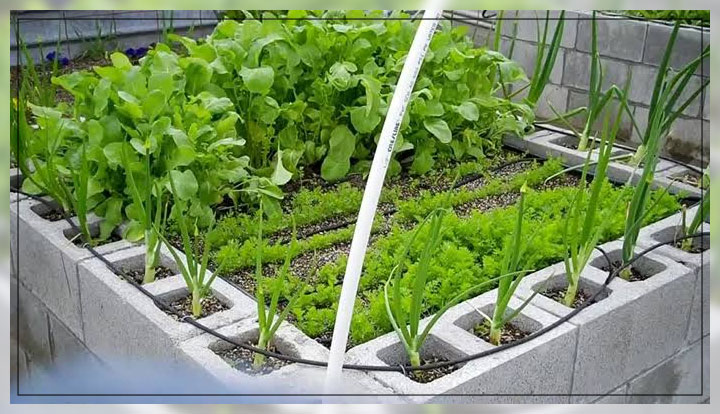
Do you know that you can make a cheap raised garden bed with the help of concrete blocks?
A concrete block raised bed is cheap, easy to build, and a great way to quickly add DIY raised garden beds to your yard.
Moreover, the best part is that you can build them over the top of the grass.
You may want to consider using wooden fences in your backyard for raised garden beds.
However, they can be expensive to make on your own.
Concrete solid blocks tend to be a convenient, and affordable option and are more durable than wood and have cheaper metal alternatives.
Unlike old-fashioned cider blocks, which contain coal ask, these hollow blocks consist of stone or sand aggregate and are safe for gardening.
Keep on reading.
Beenfits of Concrete Blocks
You may have seen concrete blocks for load bearing walls along with using Portland cement. Reasons, why you would want to consider concrete blocks for raised garden beds, are;
Safe to Use
You may find a lot of people debating about the relative merits and safety of concrete blocks.
They will often suggest that concrete blocks may leach harmful chemicals into the soil, making vegetables potentially unsafe.
Moreover, they may also claim the concrete blocks may leach lime into the soil.
This will change the pH balance and require testing and added amendments to return the soil to its normal pH level.
However, it is true for cider blocks that contain fly ash, a byproduct of burned coal, and can potentially be harmful to build raised garden beds.
Today, crushed stones and sand are the most commonly used aggregate materials.
Therefore, you can say that concrete blocks are safe to use for your vegetables.
Customizable
One of the main beenfits of gardening with concrete blocks is that you can easily customize the dimensions of your garden bed without having to do much.
You will only need to arrange and rearrange your concrete blocks.
Moreover, you will not need tools like saws, drills, tie plates, wood joiners, or screws of any kind.
Simply, place your blocks, make sure they are level, fill them will soil, and get to work.
Cheap
Another benefit of getting concrete blocks for your garden is that they are cheap and incredibly durable.
Though the price may change with the dimension of the block you are buying, they are still cheaper than other alternatives.
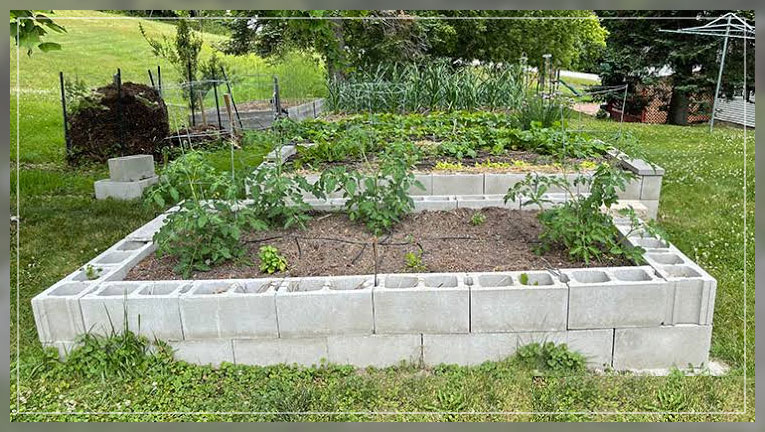
A typical raised garden with a concrete block is about 24 inches to 64 inches wide.
Moreover, depending on the width, and how you build it, the cost may vary slightly.
For comfort and to keep pests like rabbits away from your garden beds, you can make them tall.
Long-Lasting
It is important to note that these blocks will last for years as they contain stone and sand aggregate which are both heavy and strong, unlike antique cider blocks.
Depending on annual weather conditions, they can last anywhere from 50 to 100 years before they crumble.
However, wooden beds take about 10 or so years to decompose, concrete beds are an affordable option if you want to create raised garden beds.
Sturdy
If you design the garden beds correctly, these will provide sturdy structures.
However, there are certain factors you need to consider to make sure the sturdiness of garden beds.
These factors include the shape and evenness of the ground or land, water runoff, weeds growing around the garden beds, etc.
Other Benefits
Some other benefits are:
Provide plenty of Space for Gardening
If you have preset measurements of concrete holes in each block, you can easily find the planting space you will have for different settings and how much soil you will need.
Consider the following example:
You are using standard 8-foot-long bed dimensions. So the total volume will be:
| Style | Dimensions | Cubic Feet | Cubic Yards |
|---|---|---|---|
| 1 | 24 in. x 96 in. | 6.7 | .25 |
| 2 | 32 in. x 96 in. | 9.9 | .4 |
| 3 | 40 in. x 96 in. | 13.19 | .49 |
| 4 | 48 in. x 96 in. | 16.47 | .61 |
| 5 | 56 in. x 96 in. | 19.7 | .73 |
| 6 | 64 in. x 96 in. | 22.98 | .85 |
Good for Tall Raised beds
It is important to note that these blocks are good options for creating tall raised beds, however, there are a few things you will need to keep in mind.
First is the cost, the higher you go, the more you will need to increase the overall cost of your project.
If you want to build a bed that is 2, 3, or 4 concrete blocks tall, you will need to make sure it is level.
Moreover, if the first row is unlevel, the second, third, and later levels will create unsturdy and dangerous garden beds.
Therefore, experts do not recommend going for more than 4 blocks for garden beds.
Block Holes are good for Plants
Concrete block garden beds give you the opportunity to grow plants that surround the main planting area in your landscape.
There are a number of plants that can thrive in block holes like herbs.
However, larger plants like okra and sunflowers will do just fine. The same is true for all kinds of flowers.
Moreover, you can intersperse larger plants with smaller ones to make the most of block holes.
You can plant beans, peas, and other climbing plants next to okra and sunflowers.
Good for Supports
These will also provide a natural space for adding support to your garden.
Let’s say you want to add fences to your garden bed to provide more stability for climbing plants.
For this, you will simply need to hammer the post into the concrete hole at two corners of the be.
Then hand netting between the two posts or run twine or rope from one post to another.
Disadvantages of using Concrete Blocks
There are some drawbacks that are worth considering if you are trying to decide whether to use concrete blocks, wood, or metal for garden beds.
Concrete is Heavy
There is no getting around this. If you have back, shoulder, or knee problems, it is not worth using them.
Though you can use a vehicle to transport the blocks, however, experts recommend using a truck or trailer.
Neither Practical nor Pretty
Unless you want to apply paint by the end of the hard work, the exterior of the blocks will look dull gray which is not exactly eye-catching.
Moreover, if you value aesthetics over practicality, you will need to paint the bricks or you can opt for wood or metal garden beds.
Can get Hot
If you live in an area where summer tends to be very hot, it is important to be careful when designing a garden bed.
Moreover, in such cases, you can build a garden bed in an east-facing area of your property that will get some shade in the latter part of the day.
However, if your raised beds are in areas where they get full sun throughout the day, you will need to water your plants more frequently.
For this, you can use drip irrigation systems during extremely hot summers.
May affect pH levels
Over time, concrete blocks can affect the pH levels of the soil.
Whether you are using these blocks, or any other option, it is important to get your soil tested.
Therefore, it can help you make the right decision to get these blocks or not.
Things you need for Raised Beds
The following are the supplies you will need to make concrete block garden beds:
- concrete blocks
- soil for garden beds
- tape measure
- marking paint or spray paint(optional)
- think cardboard or newspaper (if you are using it over grass)
- tamper tool
- level (options, use it if you want to make sure that the blocks are level)
- square garden spade (if you want to remove the sod under the blocks to level them)
- work gloves
Steps to make Raised Beds with Concrete Blocks
The following steps can help you make garden beds with concrete blocks:
Step 1: Lay out the blocks
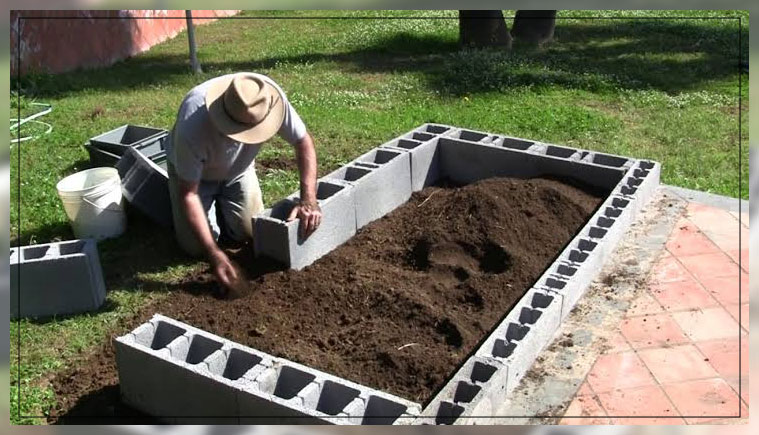
The first thing you need to do is to lay out the design so that you can make sure that everything fits into the space you have.
Moreover, it will be easy for you to move the blocks or change the design if you need to then make changes later on in the project.
Step 2: Blocks should be Straight and Square
Once you lay the blocks, use the tape to measure to create a straight line.
Moreover, mark the line with marking paint, as this line will act as a guide to make sure you are keeping everything straight.
Step 3: Remove the Grass
If you the area where you are making garden beds, the land is level and the blocks lay flat, you can skip this step.
However, if you are building it on top of th grass and it is uneven, take it as a good idea to take this extra step to remove the grass.
Furthermore, you do not have to remove all of the grass, just the section that is directly below the blocks.
Use a square garden space to remove the sod and use a tamper tool to level the ground.
Step 4: Lay Cardboard
Though an additional step, you can put down cardboard under the blocks to smother the grass and keep it from growing into the bed.
However, if you do not have it, you can use a thick layer of newspaper.
Step 5: Fill the Beds
Next, fill the garden beds with soil.
However, don’t forget to fill the holes with soil so that you can also use them as planters.
If you do not like the idea, you can fill them with rocks or cheap-fill dirt.
Step 6: Planting the Plants
Lastly, plant your veggies, plants, etc, in the garden beds.
However, make sure to give plenty of water to the plants.
Also, keep in mind the soil in the garden beds will settle over the first few days and weeks so that you will need to add more to fill in the spaces.
Final Thoughts
A concrete block for garden beds, though is a cheap and affordable DIY project, there are things you should keep in mind before getting them.
These blocks come in different shapes and sizes and you can customize one to fit into any garden space. However, you can keep the budget in check y using inexpensive materials, or reusing items you already have.



Leave a Reply