
Your garden’s soil often needs adjustment. There can be consistency or pH problems. For that, you can add substances like garden lime to raise the pH levels of the soil.
Garden lime is an amendment that can improve your soil.
However, it should not be applied just like that, because there is also a risk of it harming your plants.
This article discusses how you should be using garden lime in your soil and how to avoid harm to your plants.
Let’s find out below!
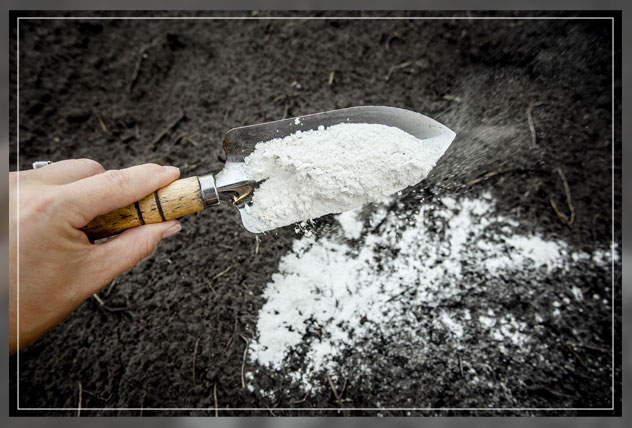
What is Garden Lime?
Essentially garden lime is a rock powder that is made from pulverized natural dolomite rock or limestone.
Hence, it is a rock powder soil amendment that contains magnesium carbonate and calcium carbonate.
There are different kinds of lime in the market and not all are suitable for your garden.
Hence, it is important to look for tags such as garden lime, agricultural lime and dolomitic lime.
Agricultural lime that comes from calcium carbonate is in common use in gardens.
Whereas dolomitic lime is made up of dolomite.
Dolomite is a rock that is similar to limestone containing calcium and magnesium.
Do not confuse them with slaked lime, hydrated lime, or non-agricultural lime as these do not apply to your soil.
So why does your garden need it?
In order to have a healthy garden, you need to improve the soil occasionally.
This is done through fertilizers that add the much-needed nutrient boost of nitrogen, phosphorus, potassium and other minerals.
Other soil amendments such as compost or mulch can improve the soil structure and its organic content.
Mulch and compost enable the soil to handle water and also act as a nutrient buffer.
Besides that, these penetrate the plant’s roots deep in the soil.
Garden lime comes into use when it is about the soil’s pH.
The soil’s pH levels are equally important in ensuring your plants are growing healthy.
When the plant’s soil is too acidic, some of its elements are chemically locked.
Hence, the plant cannot take up the nutrients in the soil, even if there are enough nutrients in the soil.
Thus, even if you amend the soil, the plant will be without sufficient nutrients.
Here the best solution for your plants is to apply garden lime.
Let’s find out what are the reasons for adding it.
Reasons to Add Garden Lime
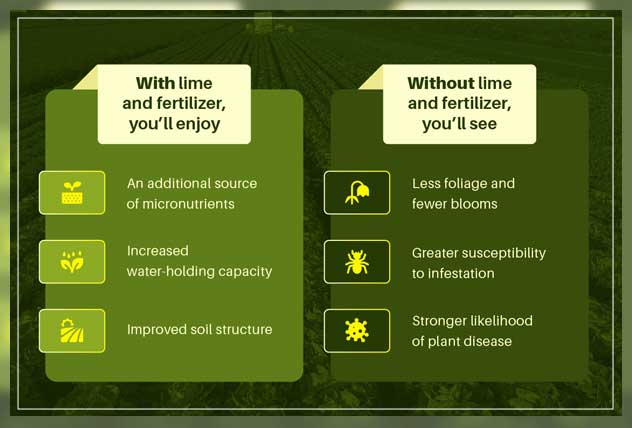
Adding lime to your garden can make a difference between a highly productive yield and a low insufficient one.
Improves Water Penetration
Adding garden lime can increase the pH of acidic soil.
That helps in improving the water penetration of the soil as raising the alkalinity helps in rehydrating it.
As a result, your plants rehydrate too and it prevents them from drying out.
Adds Nutrients to the Plants and Soil
As the main purpose of the lime is to raise the pH levels, which enables the plants to take up nutrients as well.
It also encourages the growth of good bacteria in the soil by the addition of nutrients such as zinc and phosphorus.
However, you need to be mindful of raising the soil pH too high that it causes chlorosis. More on that later.
Therefore, if the soil’s pH is already above 6.5, it is better to leave the lime out.
A high pH can also cause stunted growth through nutrition deficiency the same way a low pH affects results in a nutrient deficiency in the plant.
Make the Soil Alkaline
Several vegetables grow well in alkaline conditions, even if most vegetables, fruits and ornamental plants usually thrive between pH levels of 5.5 to 6.5.
Therefore, if the soil’s pH levels are below that, they will not grow well.
A neutral pH of 7 also works for many vegetables and flowers so raising soil up to that may be a good option.
In fact, you may have to test before raising the pH, if it is below 6.5, you will have to consider raising it.
However, keep in mind that there are also some acid-loving vegetables such as potatoes and parsley.
Hence, before deciding to lime the soil, check if your plants will even need it.
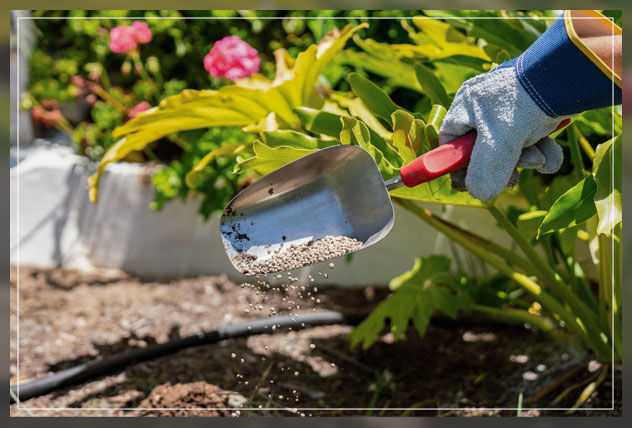
Soil Testing
Before you add garden lime to your soil, it is important to test its pH.
After all, whatever the soil needs, can only be known by testing it.
You can use an OTC soil pH test kit or a multi-use soil kit from your nearby garden center.
Using that, check the pH of the soil in multiple spots in the garden.
These should be the places where you are planning to plant the vegetable garden, fruits or flowers.
You can also make use of a pH meter to get an idea about the soil’s pH but it is even better to have the entire soil tested.
that will be able to tell you the amount of lime needed as well as other lacking nutrients that you need in the amendments.
It will give guidelines for long-term soil improvement.
The kits are good for a short timeline and can help you with regular testing between the annual detailed lab tests.
If you know any local professionals, sending them a soil sample may also be a feasible option.
After all, they can guide you in detail about the quantity of lime you would require.
They will be able to tell you about liming the flower beds, lawns or gardens specifically.
After this, you will know the exact amount of lime that will help reach the preferred pH level.
The type of your soil and the pH of the soil will determine the amount of lime you will need.
Loam soil does not need as much lime as clay soil so the type of soil matters.
What also matters is the time of the application.
In what seasons you should be applying the lime and how to apply it properly? Let’s find out below!
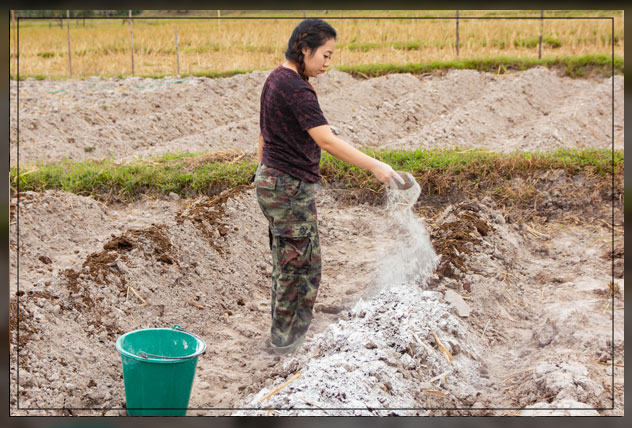
How to Apply Garden Lime?
The Best Time
Application time for garden lime should be either fall or spring.
Changing the pH of the soil takes time.
Therefore, adding it in the fall gives enough time before the growing season for the lime to change its pH.
Moreover, the freeze and thaw cycle allows it to mix in the soil properly.
Liming in the fall should be done immediately afterward the harvest of the season.
The results will become more evident in the next growing season.
For liming in spring, give the lime as much time to work into the soil.
Therefore, add it only before transplanting the seedlings or sowing seeds.
Spread it all over evenly
It should be spread all over with a shovel.
You may also use a fertilizer spreader machine so that there is easy application.
When you are spreading lime, be mindful to wear protective gear such as goggles and gloves.
Mix it in the soil with tilling
After spreading and broadcasting lime make sure that it mixes well with the soil.
You should dig down at least 12 inches to make sure the lime has incorporated deep enough.
Hence, your plants’ root systems will grow.
Keep watering it
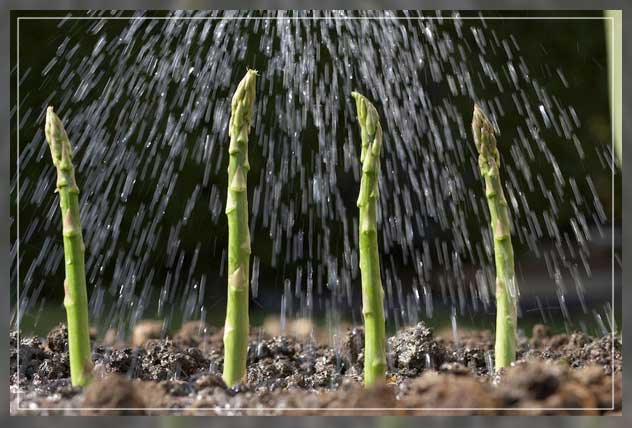
Adding water to the soil will activate the lime hence you need to water it plenty.
You may opt to go for soaker hoses.
These help in slowly saturating the soil but effectively so.
Wait to sow
When liming in spring, wait for at least three weeks after tilling to sow the seeds or transplant the seedlings.
It allows lime time to better distribute and evenly set in the soil in order to change its pH.
Thus, a better option is to lime in the fall as there will be enough time for the soil to change.
Usage Warnings
Erring on the side of caution is important when using garden lime. This is because:
- Excessive use of garden lime can make soil alkaline. Thus plants will still suffer from nutrient deficiencies unable to take sufficient nutrients.
- Lime contains calcium and too much of that in the soil blocks nutrient uptake.
- Adding garden lime too quickly can dry out the soil. The chemical reaction that adjusts the pH of the soil also causes water to evaporate rapidly. Thus, you should avoid applying lime when the weather is hot and dry.
- Lime’s capacity to sweeten the soil helps it combat outdoor pet odors, however, too much sweetness can result in chlorosis. Chlorosis occurs because of an iron deficiency in high pH soils. The iron present in the soil becomes unavailable to the plant hence its leaves do not produce enough chlorophyll. It hinders the plant’s ability to produce carbohydrates. Hence, the plant may end up dying soon.
- Lime does not provide a quick fix, hence the best time to use it in your garden is autumn.
- Finally, remember that adding minerals present in lime alters the chemistry of the soil. Therefore, you should be sure of what you are doing.
Summing Up
Garden lime is essential in restoring the pH values of your soil.
However, you should only use it when you are certain about what you are doing otherwise your risk destroying your soil and several plants.



Leave a Reply