
Clay soil can be one of the most frustrating challenges in farming. Home gardeners and farmers of thousands of acres alike struggle with this difficult growing medium. It becomes sticky when wet and dry like a rock when dry (ibid). Even the most patient person will lose their patience completely when working with it.
Clay soil is actually rich in nutrients; it requires a lot of effort to make it workable. Its dense structure often causes problems of poor drainage, inadequate aeration, and the free movement of plant roots. Using proper methods, clay soil can be improved to sustain healthy plants and better harvests.
What is clay, and where does it come from?
The three major types of soil particles include sand, silt, and clay, with clay being the smallest. The size of each clay particle is less than 0.002 millimeters. When wet, they become sticky and can be formed into a ball. Individual clay particles are not visible to the naked eye. By the time the clay particles have fully settled or mechanically segregated through the topsoil, they usually end up in the subsoil or lower soil layers. Sand, silt, organic substances, and microorganisms are more abundant in topsoil. Subsoil has a higher concentration of clay and salts. These pans are formed when the flat clay particles bond to each other.

Surface soils with an abundance of clay are always present around newly built construction areas. That occurs when topsoil is removed for the construction of a foundation, and the subsoil (which is rich in clay) is left exposed and used as a surface material. Once the construction activities have been completed, it is critical that the original topsoil be restored and any compacted subsoil be broken up to enable proper rooting by plants.
Common Problems with Clay Soil:
Poor Drainage in Clay Soil:
Clay soil retains water for a long period because its particles are tightly packed and the spaces between them are very narrow. This causes water to drain slowly, leading to pooling on the surface, especially after rainfall or overwatering.
The soil becomes saturated, which can choke plant roots. It also exaggerates the possibility of plant disease caused by root rot and further impairs plant health.
Ultimately, poor drainage leads to poor plant growth and crop yields.
Poor Workability:
Clay is hard to work with. When it is wet, it becomes sticky and heavy, and difficult to dig. When it dries out, it forms dense, lasting clods that are difficult to break up.
Seasonal Shrink-Swell:
When clay absorbs water, it expands, and when it dries, it shrinks.
This creates deep cracks on the surface during dry seasons.
These cracks can harm plant roots and even crack the edges of patios or walkways.
Compaction Risks:
Walking on or tilling clay soil when it’s wet leads to serious compaction.
This makes the soil as hard as concrete, blocking water and air from penetrating it, making it even harder for plants to grow.
Waterlogging in Clay Soil:
Clay soil has very minute spaces between its particles, leading to very slow drainage of water.
The combination stays on the surface and forms wet, soggy spots after heavy rains or overwatering.
This excess water blocks the way for air to reach the roots, limiting their capacity to work properly.
This also creates ideal conditions for fungal infections like root rot.
The plants become weak, yellow, and unhealthy.
Lack of Oxygen in Soil:
For plant roots to grow and assimilate nutrients, oxygen is a necessity.
There are limited spaces for air in dense, waterlogged soil, and therefore, the roots can only get limited oxygen.
This results in poor root development and encourages slow plant growth.
Without sufficient oxygen, the roots are not able to effectively absorb nutrients, thereby limiting the growth and development of plants. Over time, this leads to shallow root systems and weak plants.
Effective Solutions to Improve Clay Soil:

Add Organic Matter:
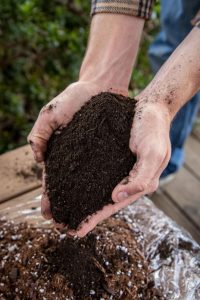
Organic amendments such as bark, manure, leaf mold, and compost are the gardener’s best tools, Brewer said.
Litter applied to the soil surface also slows down evaporation and reduces soil hardening. The organic matter also provides food for earthworms, fungi, insects, and bacteria.
As they decompose material, they release natural “glues” that bind soil particles together, improving tilth and drainage. Because microorganisms consume the same nutrients as plants, fresh organic matter may temporarily ‘tie’ nitrogen.
Solutions include;
Application of low-nitrogen materials like wood chips in the fall.
Adding small quantities in the spring as the decomposition process accelerates.
Supplementing with an organic fertilizer. Because of its high content of nitrogen, manure should only be applied when there are actively growing roots to absorb it.
In high-rainfall areas, fall applications get washed away before the spring.
Soil Conditioners:
Soil conditioners alter a soil’s structure, meaning how nicely the soil holds itself together, how properly it holds or drains the water, and how without problems oxygen is capable of penetrate. It does not, however, exchange soil texture, which refers back to the proportions of sand, silt, and clay in the soil. Organic soil amendments can also substantially boost the cation exchange ability (CEC) of soils. This refers back to the relative capability of soils to hold nutrients in the shape of definitely charged particles called cations. The maximum not unusual soil cations encompass calcium, magnesium, potassium, and ammonium. The total quantity of cations a soil can keep (in any other case put, its general poor fee) is the soil’s cation exchange ability.
The higher the CEC, the more cations that can be held and exchanged with plant roots, presenting them with the vitamins they need. Soil conditioners may also be used to enhance water preserving capability, in particular in droughty coarse soils, which include sandy soils that drain fast.
Mulching:
Clay soils can generally tend to speed up water runoff because water isn’t absorbed as fast into clay as it is in other soils. Clay soils also tend to stick to the bottoms of your footwear, which could make a large amount while you move indoors.
But, you may solve those troubles, and make the maximum of the fantastic properties in enhancing clay soil, by means of covering the exposed soil with a thick layer of tree bark, rough compost, shredded wood, or any of the alternative natural mulches that can be available.
Including mulch in clay soil not only maintains the house clean but also has many different advantages:
Mulch can reduce the quantity of weeds that sprout.
Because it decomposes, mulch will beautify nutrients and water retention for better plant growth.
Mulch will slow down water run-off, permitting clay soil extra time to take in water, and save water.
A layer of mulch is cooler than uncovered soil, which reduces temperatures generally inside the lawn.
Improve Watering Practices:
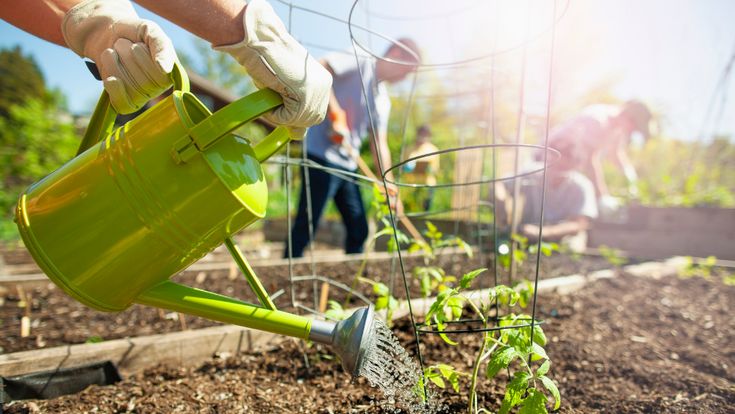
Spots in your backyard that stay moist almost continuously are a positive signal that you want to reduce the amount of water you are making use of. Take a look at it with your neighborhood county extension provider to locate the endorsed watering fees for your place.
Most landscapes and garden plants need to be watered simply as vegetation is starting to wilt a bit. Watering much less often and extra deeply will encourage flowers to broaden deep root systems, which benefits vegetation. Common light watering encourages shallow roots as a way to make plant life less drought-tolerant. The satisfactory manner to water is deeply and rarely (except for these days planted plants and landscapes, these need water regularly to get established). When you have a sprinkler machine, check to look that it is not over-watering your flora.
Including sand to clay soil can assist enhance drainage, however it has to be executed the right way. Always blend sand with natural materials like compost, in place of adding sand alone. This prevents the soil from becoming tough and compact like concrete. The aggregate improves soil shape, allowing higher water motion and root growth. As a result, excess water drains more easily, and vegetation grows healthier.
When planning a garden in clay soil, careful plant selection can really help. Grow plants that naturally adapt to the dense, moisture-retentive properties of clay. They should tolerate wet clay soils in winter and thrive in the clay’s tendency to dry out in summer.
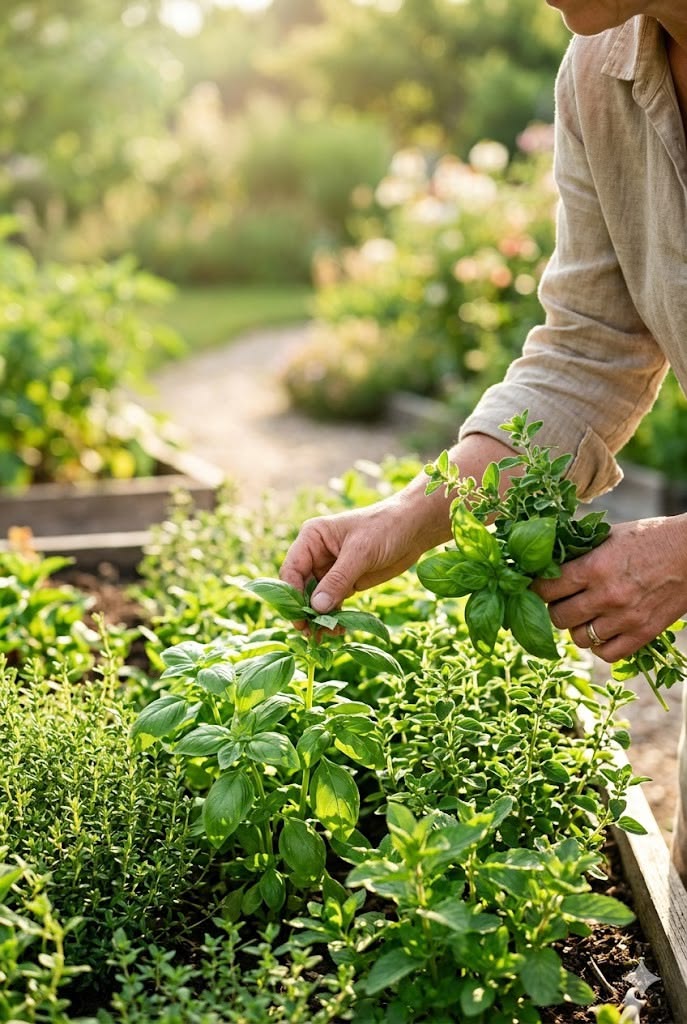
Plants that grow well in clay soil:
Rose of Sharon
Viburnum
Spirea
Petunia
Verbena
Salvia
Phlox
Coneflower
Daylily
Ornamental grasses
And many more!