A soil conditioner, additionally referred to as a soil improver, enables you to improve the overall quality and shape of your soil. via enhancing aeration, water retention, and nutrient stages, soil conditioners create a more favorable environment for vegetation to grow and thrive. Healthful soil is the foundation of successful farming. But, over time, soil can lose its structure, vitamins, and water-protecting capacity. That is where soil conditioners play an essential role. knowing how to observe soil conditioners can notably improve crop yield, soil fertility, and long–time period farm productivity.
When to Apply Soil Conditioners:
Before Planting :
Making use of soil conditioners before planting is considered the most effective and scientifically recommended level in present-day agriculture. This phase, additionally called land education, lays the foundation for healthy crop increase and directly impacts the average yield and soil performance.
Why is this stage vital:
Earlier than seeds are sown, the soil is in its maximum attainable and responsive situation. At this factor, farmers can without problems incorporate soil conditioners into the topsoil, making sure even distribution and maximum absorption. Unlike later tiers, there aren’t any plant roots to disturb, taking into consideration deeper soil improvement.
During Crop Growth:
The application of soil conditioners is not limited only to pre-planting but also to the crop growth stage if need be.

So, here is a proper explanation of the key points:
Apply in case of poor growth in plants. If your crops are not growing as expected, slow growth, yellow leaves, weak stems, and poor yield. This could happen because of
- Lack of necessary nutrients.
- Poor soil structure
- Roots cannot penetrate deep into the soil.
- Inadequate water retention or drainage.
In such cases, adding a soil conditioner can help in restoring soil balance and ensuring the plants remain healthy. It improves the availability of nutrients for plants and creates more room for the plant roots to grow.
After Harvest:
Rebuild soil health after nutrient depletion.
Prepares land for the next crop cycle.
Before Rainy Season:
Applying soil conditioners before the beginning of a rainy season or an irrigation cycle proves highly beneficial in enhancing the soil-water relationship. At this point, the soil conditioners optimize the soil structure to enhance moisture retention and percolation. Consequently, water is not trapped on the soil surface but can infiltrate deep into the root zone. As a result, plants can receive a water supply over a long time, and this limits the frequency of irrigation.
In addition, soil structure improvement is vital in reducing surface runoff and soil erosion in the case of a downpour. Instead of water washing away valuable topsoil and nutrients, the conditioned soil holds everything in place, protecting soil fertility and healthier crop growth.
How to Use Soil Conditioners:
To maximise the benefits of a soil conditioner, comply with these easy steps:
Compare your soil: Before adding a soil conditioner, examine your soil type. Is it clay-heavy, sandy, or lacking in organic fabric? know-how your soil will help you select the precise conditioner.
Pick the right conditioner: Pick a product suited to your soil kind and desires. For instance, use a conditioner that complements moisture retention in sandy soils or improves drainage in compacted, clay-like soil.
Put together the area: Take away any weeds and particles, then loosen the soil with a lawn tool. This could assist the conditioner blend frivolously with the soil.
Follow the conditioner: Spread a layer of soil conditioner flippantly over the prepared soil. Depending on your soil circumstance and product instructions, aim for a layer between 1 and three inches deep.
Combine it in: Use a rake or fork to combine the conditioner into the top few inches of soil. An intensive blend guarantees constant nutrient distribution and soil development.
Water very well: After blending, water the soil properly to activate microorganisms and encourage nutrient release. This units the stage for a strong plant boom.
Reveal and maintain: Check your vegetation often for moisture needs, and hold, including organic count, to sustain long–term soil health.
Best Soil Conditioners Based on Soil Type:
It is important to choose a suitable soil conditioner according to the type of soil, as the two different soil types have different problems.
Sandy Soil:
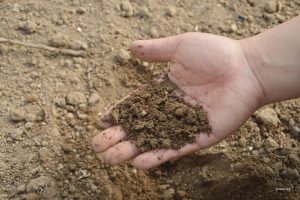
Sandy soil has large soil particles, and water drains very fast, and the nutrients are lost quite easily. Adding organic compost is highly effective because it improves the soil’s ability to retain water and nutrients. Compost acts like a sponge and holds moisture for a longer time, keeping it accessible to plant roots. This raises the microbial activity in the soil, leading to increased soil fertility and making the soil more favorable for plant growth.
Clay Soil:
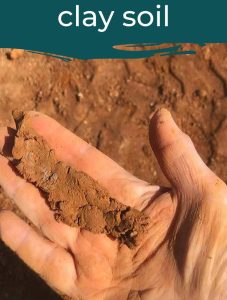
Clay soil is dense and compacted, thus providing poor drainage and limited air circulation. This crowds the roots and retards the growth process. Gypsum application helps to aggregate soil particles to improve soil structure; As a result, water drains faster, and air moves better in soil. This ensures that roots have enough space to grow deep and strong.
Saline Soil:
Excess salts in saline soil are harmful to plants because they reduce their ability to extract water from the soil. Saline soil has excess salts that can reduce the plants’ ability to draw water, and using a combination of organic soil and soil conditioners can reduce salt concentration. The consideration of organic matter and a soil conditioner lowers the salt concentration because organic matter improves the soil structure, resulting in increased water infiltration, which washes the salts down below the soil depths away from the root zone. This ensures that the soil is well adapted for plant growth, thereby improving crop productivity in the long term.
Benefits of Soil Conditioners:
Let’s break down how soil conditioners benefit your garden:
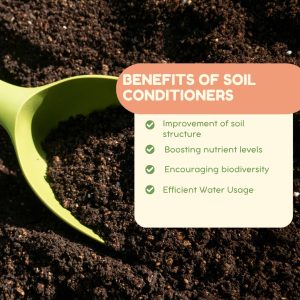
Improvement of soil structure: Organic conditioners increase the soil structure to hold water under its surface and control drainage for clay soils and conserve soil moisture for sandy soils.
Boosting nutrient levels: Organic matter helps to bind important nutrients, nitrogen, phosphorus, and potassium, making them available to plants and preventing nutrient loss. This minimises the need for chemical fertilisers.
Encouraging biodiversity: Organic conditioners promote the growth of beneficial microorganisms that are responsible for breaking down organic material, boosting the soil fertility, while helping to suppress diseases.
Better Root Development:
- The soil conditioners improve soil structure so that roots can penetrate deeper into the soil.
- They support aeration to ensure that roots have efficient access to oxygen.
- Such root systems are more efficient in nutrient and water absorption.
- The overall result is healthy plants with better growth and resistance capabilities.
Increased Crop Yield:
- Plant growth is enhanced under improved soil conditions.
- Nutrient availability guarantees uniform crop growth.
- The healthy roots and the balanced moisture levels increase productivity.
- Hence, farmers get improved produce in terms of quantity and quality.
Efficient Water Usage:
- Soil conditioners enhance moisture retention capacity in the soil.
- They prevent this water loss that is caused by evaporation, especially in hot climates.
- An improved soil structure is that the distribution of water is not concentrated in one area.
- This helps farmers save water without compromising the soil’s health and crop maintenance.

Leave a Reply