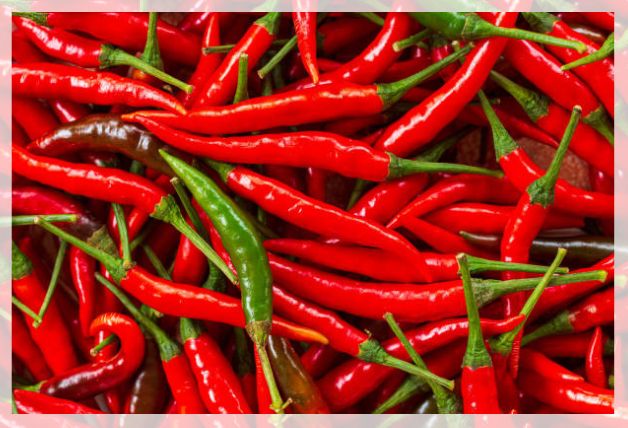
You will be surprised to learn that growing chili pepper like jalapeno, cayenne, or ancho did not originate in Asian countries.
The chili pepper, often associated with Thai, Chinese, and Indian cuisine, tends to hail from Mexica.
This spicy member of the pepper family has gained popularity worldwide for the pungent sensations it infuses into food.
Moreover, chili pepper and hot sauce, are commonplace everywhere from snack foods to diner booths.
The competition to produce the hottest peppers has resulted in new varieties coming to the marketplace every few years.
Whether your tastes run to just a little heat or a pepper that makes your eyes water, there are a number of varieties to choose from.
This helps to make chili peppers popular around the world.
Scroll down to learn more about the types of chili pepper you can find.
Types of Chili Pepper
You cannot always tell a hot pepper by its name.
All peppers tend to be in the same genus, Capsicum, however, there are five species of Capsicum in cultivation.
Most of the commonly grown varieties such as cayenne, jalapenos, and serranos, are Capsicum annuum.
Moreover, a number of Asian hot peppers as well as tabasco peppers, are C. Frutesceans.
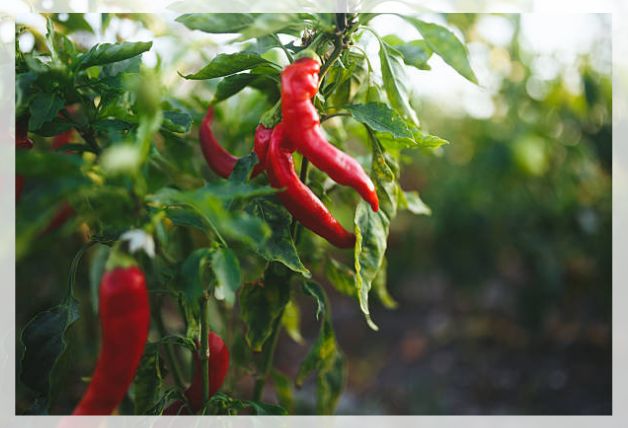
Habaneros and Scotch Bonnet are C. Chinese.
The Fiery ‘Aji’ peppers, like ‘ Aji Amarillo’, ‘Aji Colorado’, ‘Aji Cristal’, belong to C. baccatum.
Furthermore, the wild peppers, chiltepins, and chillipiquins, from the regions around Mexico are C. glabriusclum.
However, they are classified, and there is a lot of variety you can find.
Growing Chili Pepper
You can grow chili pepper, just like growing bell peppers.
All peppers tend to grow best in warm soil when the ambient temperature tends to remain above 50 degrees Fahrenheit.
Moreover, exposure to cooler temperatures tends to inhibit flower production and impedes proper fruit symmetry.
It is important to note that many climates do not afford a sufficient growing season to direct-seed peppers into your garden.
You can start chili pepper indoors or purchase seedlings.
Make sure to start chili peppers 6 to 8 weeks prior to the last frost date in your region.
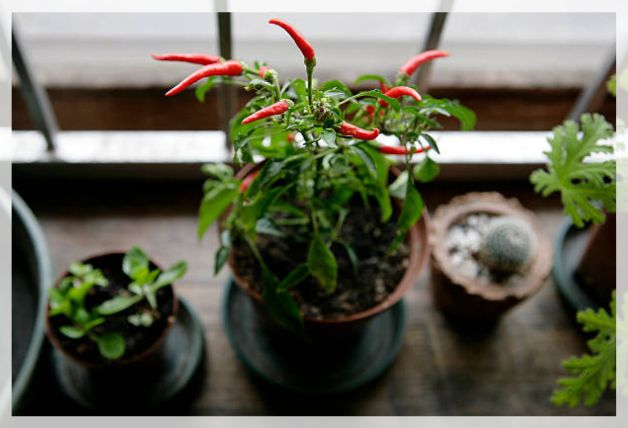
Sow the seeds about 1/4 inch deep in a quality seed starting mix or you can use soil-based pellets.
Make sure to place the seedling trays in a warm location.
A number of varieties of chili peppers tend to sprout within 7 to 10 days.
However, hot peppers can be harder to germinate than bell types.
Once they germinate, make sure to provide plenty of light and keep the soil evenly moist.
Old seeds and moist, cold soil can cause damping off in chili seedlings.
Chili Pepper Care
When you are growing chili pepper indoors, make sure to regularly fertilize and repot your plant as it is beneficial in producing larger, healthier transplants.
However, it is important to note that aphids can be a problem at this stage.
In this case, you can use an insecticidal spray to keep these pesky insects from damaging young plants.
Moreover, after the danger of frost, you can transplant chili peppers to a sunny spot in your garden.
In ideal cases, chili pepper tends to thrive best when the nighttime temperatures remain between 60 and 70 degrees Fahrenheit and the daytime temperature is about 70 to 80 degrees Fahrenheit.
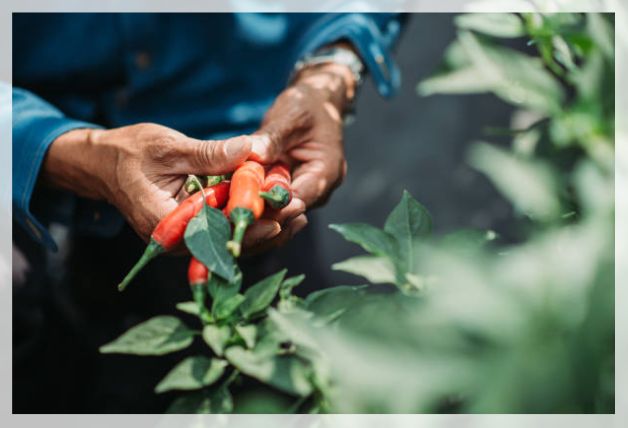
Make sure to choose a location with organic-rich soil and good drainage.
Also, space your chili pepper plants 18 to 36 inches apart in rows that are 24 to 36 inches apart.
Place peppers closer to provide more support for neighboring peppers, however, will need more available nutrients for good yields.
When you intend to transplant them, you can bury the chili peppers to a depth equal to one-third of their stem.
How Hot is Hot?
It was not until 1912 that a pharmacologist names Wilbur L. Scoville came up with a rather ingenious, method for measuring the relative hotness of chili peppers.
He diluted the oils from a number of peppers in sweetened water and had volunteers taste it.
Scoville names how diluted the oil of the peppers had to be before the tester could not detect any heat.
The sweet bell pepper comes in at zero Scoville heat units, SHU, and sets the starting bar.
Moreover, Jalapenis rates about 2,000 SHU, which means 2,500 parts of sugar water to 1 part of Jalapeno extract.
The higher the SHU, the hotter the pepper.
Habenero scored 350,000 SHU.
However, today’s researchers tend to use a chromatography machine, which is much more accurate than Scoville’s model.
The same type of chili peppers that you grow under different conditions can vary widely in heat level.
In fact, two hot peppers harvested from a single plant may have different degrees of heat.
Furthermore, most varieties tend to change from green to either red, yellow, or orange when fully mature.
Anaheims, are often harvested while they are still in their green stage.
However, when you allow jalapenos and serranos to turn red before harvesting, they often sweeten the flavor along with the heat.
Smoke red jalapenos are pepper you can use to make the famous chipotle pepper.
Though some chili peppers are merely hot, most tend to have a distinct flavor, from fruits to smoky.
Habaneros come in fairly high in SHUs and tend to have a distinct citrusy flavor.
The poblano pepper, which is mild like the anaheim, tends to have a dark hint of smoke and is the pepper you can use in the dish chile rellenos.
In addition to the taste appeal of the varieties, the heat and the resulting pain to thought to stimulate the production of endorphins.
This produces a sense of well-being, once the pain wears off.
Common Types of Chili Pepper you can Grow
Other than the botanical classifications above, chili peppers are often grouped by their SHUs and by the shape of their fruits.
The following are some of the most popular varieties, in order of heat ratings:
Anaheim: It is a long, tapered fruit with moderately thin walls, and has medium to mild heat, i.e. 1,000 to 5,000 SHU.
Jalapeno: It is a short, stubby pepper with a slight taper and thick walls, and has medium to mild heat, i.e. 2,000 to 5,000 SHU.
Serrano: It is a short and slim pepper with medium thick walls, and has medium to high heat, 10,000 to 25,000 SHU.
Cayenne: It is a long, thin, curving fruit with thin walls which is perfect for drying and has medium to high heat, i.e. 25,000 to 50,000 SHU.
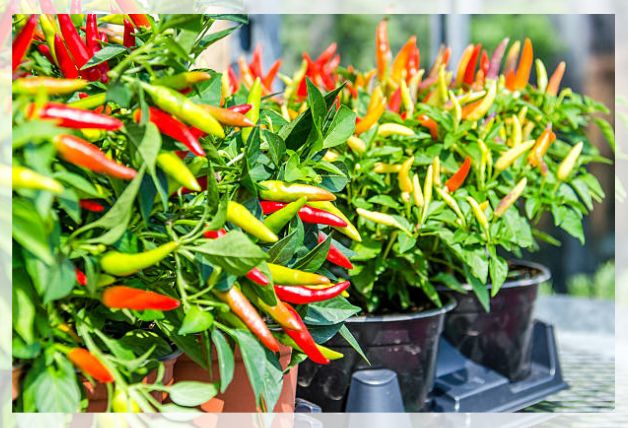
Tabasco: This one is a very short and pointy variety with thin walls, and has medium-high heat, i.e. 30,000 to 60,000 SHU.
Thai: Small and slender, this variety has thin walls, has more heat than flavor, and has medium-high heat, about 50,000 to 00,000 SHU.
Habanero Short and squared fruit with thin walls, this one has high heat, about 150,000 to 350,000 SHU.
Ghost: This one is short, squat, and slightly tapered fruit with thin walls and ha extremely high heat, about 1,000,000+ SHU.
Tips for Growing Hot Peppers
Though the choice of variety tends to certainly play a big part in how hot the chili peppers that you grow will turn out to be, there are, however, a few growing conditions that tend to improve their heat.
1# Choose a variety that has a shorter growing season.
Some hot peppers do not start setting flowers and fruit until days begin to shorten, in the fall.
Moreover, peppers with shorter growing seasons tend to have time to fully mature and develop their heat.
2# Hot sun and warm air, and soil temperatures tend to increase the heat level in peppers.
While you cannot control the weather, you can cover the soil with black plastic to trap and increase the soil temperature.
3# Make sure to grow your plants on the dry side.
Do not withhold water totally, but be stingy with it.
Allow your plants to remain dry for a number of days before watering again.
4# Go easy on the fertilizer, especially nitrogen fertilizer, and even compost.
Along with minimal water, make sure to grow your plants on the lean side.
Do not stress your pepper plants, however, do not temper them as well.
Get them established in spring, then let your plants fend for themselves.
5# Do not be afraid to crowd your pepper plants and they will fight all the harder to set fruit.
Final Thoughts
When growing chili pepper, it gives you different levels of heat and it also gives you a lot of options for using your peppers. It is perfectly ok to use a number of varieties in your salsa which is one of the most popular uses for chili peppers.
You can stuff them, grill, bake, and saute them, and add them to soups, stews, and marinades. Most varieties tend to dry well and can be ground, and used as a condiment to punch up just about any dish that you can prepare in your kitchen.

Leave a Reply