
Ficus microcarpa is a small bonsai plant you can easily grow. They will not need much care or a complicated procedure for growth.
These plants are also popular by the name Malayan Banyan, Curtain Fig, Chinese Banyan, and Gajumaru.
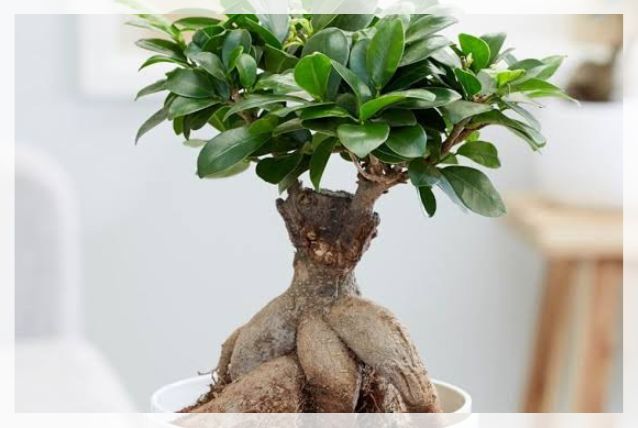
Moreover, it is a tropical plant with a light gray bark.
This bonsai plant is a member of Moracaea, the fig family, and the Fiscus genus.
You will see slightly rounded leaves on Ficus Microcarpa which tends to have a number of varieties.
Furthermore, variations tend to occur in leaf sizes, thickness, leaf, bark color, etc.
While some distinguishing varieties of the Ficus Microcarpa are Green Emerald, Moclame, Green Island, and Tiger bark.
Keep on reading to learn more about ficus microcarpa.
History of Ficus Microcarpa
This plant goes by the common name Chinese Banyan which has a native range extending over a large part of china, through tropical Asia and outlying Australian islands.
This tree has a history of use in traditional medicine throughout Asia.
Moreover, it was used to treat flu, malaria, and bronchitis and tends to have anti-diabetic properties.
The medicine is often harvested from the roots, bark, and leaves of the tree.
Furthermore, ficus microcarpa is one of the most planted street trees in the last few centuries.
It is widespread planting on streets in temperate cities
This is due to the fact that it produces a great canopy of large leaves and provides a huge amount of shade for its often-slender trunk.
You can find this tree on the streets of L.A., Japan, the Mediterranean, and Northern Africa.
However, it is important to note that Ficus Ginseng Tree has fallen out of favor in recent areas.
This is due to the fact that they have a strong root system that can displace concrete sidewalks.
Learn more about Bonsai Trees: 6 Types, Growing and Styling Them here.
Typical Appearance
The appearance of this plant is highly irregular for a tree.
For instance, you can see that the root system of ficus microcarpa will take place in spaces as small as cracks in the pavement.
Chinese Banyan will present multi-trunked and stemmed trees that tend to be evergreen.
Moreover, they feature showy, dark green, glossy, lanceolate, shaped leaves, while the truck is smooth and regular.
During pollination, they are capable of creating fruit.
Like most ficus trees, their leaves are extremely fragile and are also prone to falling off when you shake or move them.
Learn more about Greenhouse Irrigation: Best Watering System here.
Planting Ficus Microcarpa
If you follow the requirements of ficus microcarpa in mind, it is easy to care for them.
Light: You can find ficus microcarpa in the upper canopy of the rainforest when you provide them with the right conditions.
Indian Laurel Fig will require full sun and at least 6 hours of direct sunlight each day.
When you are growing this plant indoors, you need to keep it in place in a window with maximum sun exposure.
Make sure to supplement your plant’s natural amount of light with artificial grow light if you deem it necessary.
However, when you intend to grow them outdoors, make sure to create space for shady undergrowth as it matures.
Temperature: As this plant is native to the tropical climate, you may think that this plant is intolerant to cold.
However, it can tolerate a wide range of temperatures.
This tree will thrive best outdoors when the temperature tends to remain consistently above 68 degrees Fahrenheit.
But it can also handle cold snaps i.e. freezing points with little adverse effect.
When you grow them indoors, your tree will thrive best at a constant 65 to 75 degrees Fahrenheit.
Moreover, it is important to note that this ornamental tree tends to be more fragile than others, therefore, make sure to keep it out of drafty areas to protect them.

Soil: Though this plant can survive in any kind of soil, it does not mean that you can place it in any less fertile soil.
Studies indicate that the tree shows the ability to grow in poor-quality soil when with toxins like lead or salt in the soil.
The roots do not like to stay wet therefore, make sure that there is proper drainage in the soil.
Moreover, you can place gravel in the substrate before planting the tree to help the roots take hold.
This will be simple. Any gritty to fine potting soil with do. Once you plant ficus microcarpa, you will need to add mulch over the roots.
This plant is a fast grower and will be happy when you repot it to a larger pot every two or three years.
Humidity: As long as you keep the temperature within the range, your ficus microcarpa will perform well under varying humidity conditions.
When planting them indoors, make sure to place them in a spot that is not too dry, damp, or heated.
This is because, at such spots, your tree will dry out.
On the other hand, if you leave them in such places, they can develop root rot or fungal growth.
Heat tends to dry out the soil which can cause a lot of issues.
To encourage the tree to sprout aerial roots, you can plant the tree in a high-humidity situation.
To do so, you can mist the surrounding area less frequently with water.
Learn more about Types of Soil: Understanding your Garden Soil here.
Caring for Ficus Microcarpa
Keep the following in mind:
Watering your Plant: Plant your ficus microcarpa regularly. This means a good soaking will be necessary whenever the soil drys out.
Since it is a tropical tree, it will need more water than most other plants, though a little less if you grow them indoors.
In such cases, you will need to water them twice every one to two weeks.
Fertilization: Feeding your plant depends on the place where you plant ficus mircrocarpa.
Indoors: When planting indoors, you will need to feed a mild liquid fertilizer or slow-release pellets on a monthly basis during summer.
However, if you are unable to find fertilizer pellets, you can use coffee grounds to give nutrients like nitrogen.
During winter, you don’t need to fertilize your plant at all, though you may find it helpful to encourage further growth.
Outdoors: When you plant Chinese Banyan outdoors, you will need to use an appropriate liquid fertilizer every two weeks during the growing season.
While during winter, your tree will be dormant, however, in warmer climates when it’s not cold enough, fertilize infrequently.
Learn more about Liquid Fertilizers: And How To Use Them here.
Varieties to Consdier
Common varieties to consider are:
Ficus Microcarpa “Green Emerald”
This one has small, pointed oval-shaped leaves, that are at least 3 to 4 cm long.
Due to its small ad neat leaves, it is a well-suited bonsai tree.
Ficus Microcarpa “Moclam”
This variety tends to have leaves-like drops and rounded tips.
Moreover, the leaves grow close and make for a mid-sized houseplant. It tends to be a bushy leaf ball and grows to about 1 to 2 feet tall.
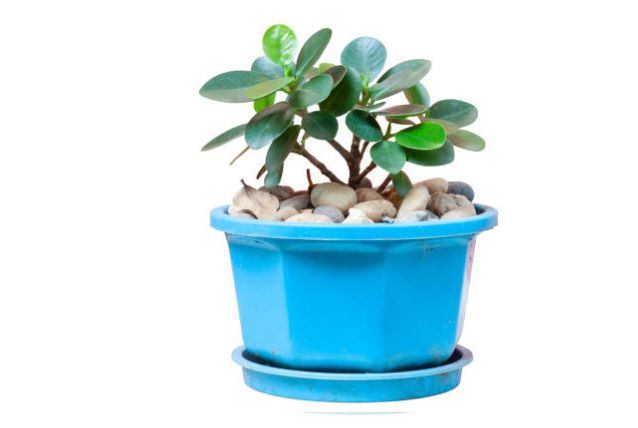
Ficus Microcarpa “Green Island”
This variety has small and round leaves that are about an inch long.
Ficus Mircocarpa “Tiger Bark”
This plant tends to have beautiful patterns on the bark with aerial roots.
However, these patterns tend to fade away with time. Tiger Bark is a well-suited bonsai plant.
Pruning and Propagation Tips and Techniques
Ficus microcarpa is a fast-growing plant that will need regular pruning to maintain its shape.
If you leave the plant without pruning, it will produce off-shoots.
Moreover, it is also known to grow as an epiphyte on other trees.
This means that you will need to prune it as part of regular maintenance.
Some tips to prune your tree are:
Look for young suckers when growing this plant outdoors. Remove them before they begin to mature and harden into more substantial branches.
If you are planning to saw off, do so only about an inch or two into the branch first.
Then saw down into the previous mark to make sure there is a clean-out to avoid chances of infection.
While pruning your tree indoors, make sure to be careful when doing so.
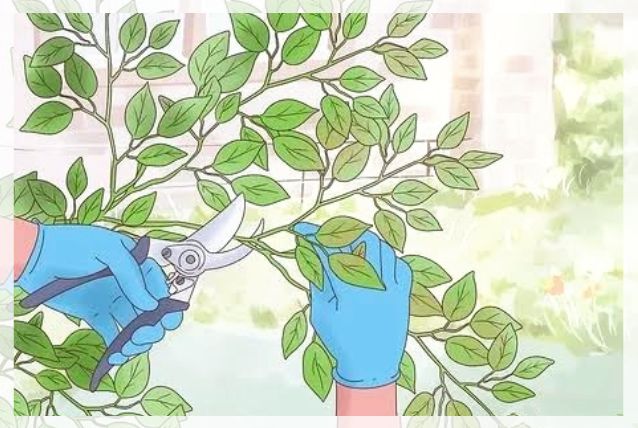
It is important to always use clean and sharp tools and be conservative as it will not grow back quickly.
Furthermore, you should limit pruning to 3 times a year at minimum for a young tree and 5 sessions max for mature Ficus.
On the other hand, propagation is a simple process that will only require taking a cutting.
Then you will need to place it in water or sterile soil to take root.
Experts recommend that you should take a cutting off of a branch or during spring from a naturally occurring off-shoot.
Then place it in room temperature water in a warm part of your house.
Make sure to change the water frequently. Wait for the shoot to put off roots before removing them from the water and planting.
Learn more about Pruning Tips and Techniques here.
Common Pests and Diseases
According to recent studies, ficus microcarpa is suspectable to psyllid which leads its leaves to curl.
The best management is to be vigilant along with manual removal of pests and affected parts of the tree including leaves or stems.
Other than this, Chinese Banyan tends to be hard against most pests.
For this very reason, if your tree looks sick or its leaves are turning yellow, it may be due to overwatering.





Leave a Reply