IoT in Agriculture: Smart Farming in the Gulf Region
The Internet of Things (IoT) has permeated nearly every aspect of modern life – from health and home automation to smart cities and industry. It’s only natural that this wave of connectivity and automation would extend to agriculture. Smart farming, powered by IoT technology, is transforming how we grow crops and raise livestock globally. In the Gulf region (UAE, Saudi Arabia, Oman, and neighboring countries), where extreme desert climates and water scarcity pose unique challenges, IoT-driven agriculture is emerging as a game-changer. By equipping farms with networks of sensors, automated systems, and data analytics, Gulf farmers can achieve productivity and resource efficiency previously thought impossible.
IoT in agriculture (often called smart agriculture or AgriTech) brings significant improvements to the farming industry. In an era of self-driving cars and AI assistants, relying on traditional methods like guesswork or manual labor for critical farm decisions is increasingly antiquated. Advanced technologies now allow farmers to monitor soil and weather in real time, automate irrigation and feeding, and make data-driven decisions that boost yields. In a region that once depended on horses, plows, and extensive imported food, such modernization is revolutionary. Today’s smart farms leverage connected devices to make agriculture more efficient, predictable, and sustainable – bridging the gap between ancient practices and the digital age.
[Image 0: Smart IoT farming 5]
In recent decades, farming worldwide has become more industrialized and technology-reliant. From GPS-guided tractors to automated greenhouses, technology gives farmers greater oversight and control over their operations. IoT-based pest management, precision fertilization, and climate-controlled greenhouse farming are making it possible to grow more with less. These advances are especially critical in the Gulf, where harsh weather and limited arable land demand innovative solutions. Thanks to smart agriculture gadgets and software, a farm manager in Saudi Arabia can now remotely track livestock health on a ranch, or a greenhouse operator in the UAE can automate cooling and irrigation systems based on sensor feedback. Farming is becoming more predictable and resource-efficient than ever before.
The rising demand for food (driven by population growth and food security goals) is one reason IoT adoption in agriculture has spread globally. Farmers everywhere are under pressure to produce more with fewer resources. IoT offers a way to meet that challenge. By 2022, the global market for IoT in agriculture had grown to roughly $13.7 billion in value, and it continues to expand rapidly each year. The Middle East is among the fastest-growing regions for IoT deployment, fueled by government initiatives and the need to conserve water and energy. In the UAE alone, the agriculture IoT market is already hundreds of millions of dollars and projected to double in the coming years. Gulf countries are heavily investing in agri-tech startups, digital infrastructure, and training to capitalize on these technologies. IoT-based smart farming is not just a futuristic concept – it’s becoming a cornerstone of Gulf agriculture today.
[Image 1: Smart IoT farming 1]
In this comprehensive guide, we will explore how IoT is revolutionizing agriculture with a focus on Gulf region insights. You’ll learn what smart agriculture means in practice and the key benefits IoT offers to farmers. We’ll look at real-world applications – from climate-monitoring sensors and automated irrigation to drones and AI analytics – and highlight examples of how Gulf farms are adopting these innovations. Specialized sections delve into smart irrigation for water savings, new desert farming techniques, and sustainable agriculture solutions for arid environments. Finally, we discuss future trends shaping smart farming and how Gulf nations are positioning themselves at the forefront of this agricultural transformation. Let’s dive in.
Table of Contents
- What Is Smart Agriculture (IoT Farming)?
- Benefits of IoT in Agriculture
- IoT Applications in Agriculture
- Smart Farming in the Gulf: Regional Innovations
- Future Trends in IoT-Based Farming
- Conclusion
What Is Smart Agriculture (IoT Farming)?
“Smart agriculture” refers to the application of IoT solutions and modern data technologies in the agricultural sector. In simple terms, it means farms are becoming digitally connected and data-driven. Networks of sensors gather information on everything from equipment performance to environmental conditions in fields and barns. These devices – measuring soil moisture, weather, livestock vital signs, and more – send data to cloud platforms where farmers can monitor conditions in real time. With the insights gained, farm managers can make informed decisions and even automate responses to optimize their operations. Smart agriculture (also called smart farming or precision agriculture) thus transforms traditional farming by infusing it with intelligence, connectivity, and precision.
Smart farming encompasses a range of practices across crop cultivation and livestock management. For example, IoT soil sensors in a field can alert a farmer when moisture levels drop and trigger an automated drip irrigation system to water plants just the right amount. In dairy farming, wearable collars on cows can monitor health indicators and send an alert if an animal is sick or stressed. GPS and satellite connectivity allow tractors and farm machinery to operate autonomously or be tracked remotely. All these are examples of IoT-based agriculture in action – farming systems that “sense and respond” to their environment automatically.
[Image 2: Smart IoT farming 3]
Although agriculture IoT is not yet as ubiquitous as consumer smart home gadgets, its adoption is accelerating year by year. The COVID-19 pandemic actually sped up interest in farm automation, as labor shortages and supply chain disruptions highlighted the need for more resilient, tech-enabled agriculture. Governments and enterprises around the world (including in the Gulf) are investing heavily in agri-tech innovation. As a result, the market for IoT in agriculture is dynamic and growing. New startups are introducing farm robotics, AI-driven analytics, and specialized sensors for agriculture. For businesses and investors in the Gulf region, this means abundant opportunity to get involved early in a transforming industry. Embracing smart agriculture not only helps farmers overcome current challenges but also sets the stage for a more productive and sustainable farming future.
Benefits of IoT in Agriculture
Real-Time Data-Driven Insights
IoT sensors generate vast amounts of data on farm conditions that were previously difficult to measure continuously. Devices can monitor weather conditions, soil quality, crop growth stages, and livestock health in real time. All this information can be aggregated on a dashboard to give farmers a 360° view of their operations at any moment. For instance, a network of field sensors might reveal subtle differences in soil moisture or nutrient levels across different plots. Armed with these insights, farmers can respond with targeted actions – watering only the areas that need water or adjusting fertilization for a particular zone. Data-driven farming takes the guesswork out of cultivation. It also helps in assessing labor performance and equipment efficiency by tracking outputs and conditions automatically. In short, IoT provides a constant stream of actionable data that enables smarter, faster decision-making on the farm.
[Image 3: Smart IoT farming 2]
Reduced Risks and Predictability
Having better control over internal processes and timely data allows farmers to significantly reduce production risks. IoT systems improve predictability by detecting issues early and forecasting outcomes more accurately. With sensors and historical data, a farmer can anticipate how many crops are likely to be harvested and when, rather than relying on rough estimates. This foresight helps in planning everything from planting schedules to market distribution – ensuring that the right amount of product is harvested at the right time and delivered to buyers without surplus or shortage. Early-warning alerts (for example, a sudden drop in greenhouse temperature or a spike in pest activity) give farmers a chance to intervene before a small problem becomes a big loss. By minimizing the uncertainties of weather, pests, and other variables, smart farming makes agriculture a more stable and predictable business.
Automation and Operational Efficiency
A key advantage of IoT in farming is the ability to automate labor-intensive tasks. Irrigation systems, fertilization, and even certain pest control measures can be controlled by smart devices, reducing the need for manual intervention. Automation not only saves labor costs but also optimizes the timing and execution of farm operations. For example, IoT-controlled drip lines can water crops at the optimal times of day, and autonomous drones or robots can perform precise spraying of fertilizers or pesticides. In greenhouse operations, ventilation and lighting can adjust automatically based on sensor readings. By automating repetitive and time-sensitive tasks, farmers in the Gulf can maintain productivity even with limited human workforce availability (a challenge during hot summers or pandemic-related labor shortages). Overall, IoT-driven automation boosts efficiency, allowing one farmer to manage much larger areas and more processes than was previously feasible.
Cost Savings and Waste Reduction
IoT sensors provide an unprecedented level of control over production, which helps farmers cut costs and reduce waste. Continuous monitoring can quickly highlight irregularities – such as a section of crops not receiving enough water, or livestock feed being over-distributed – so that corrective action can be taken before resources are wasted. By applying water, fertilizers, and other inputs only as needed (and exactly where needed), farms avoid the excess that leads to runoff, nutrient leaching, or wasted supplies. Preventative maintenance is another cost saver: IoT can monitor equipment health (like pump pressure or tractor engine metrics), alerting managers to perform maintenance before a breakdown occurs. The ability to catch plant or animal health issues early also prevents the loss of yield or livestock that would result from undetected problems. In essence, smart farming trims the fat from operations – conserving resources and cutting unnecessary expenditures across the board.
[Image 4: Smart IoT farming 6]
Improved Crop Yield and Quality
With more precise control over growing conditions, IoT-based agriculture can achieve higher crop yields and better quality produce. By tailoring irrigation and fertilization to each crop’s exact needs (a principle of precision agriculture), plants grow in optimal conditions and often produce more abundant harvests. Automation and sensor feedback ensure that factors like soil nutrients, moisture, and temperature remain in the ideal range, which leads to healthier crops. The result is often both an increase in volume of output and an improvement in the consistency and size or taste of the produce. In livestock farming, sensors that monitor animal health and adjust feeding regimes can lead to healthier, more productive animals (for example, dairy cows giving more milk). Collectively, these technologies allow Gulf farmers to boost productivity, which is crucial as countries in the region strive to improve food self-sufficiency.
Environmental Benefits
Beyond productivity and profits, IoT-powered smart farming also offers significant environmental advantages – a key consideration for sustainable agriculture in the Gulf. Automation enables more judicious use of inputs like water, fertilizers, and pesticides. By delivering water directly to plant roots and using sensors to avoid over-irrigation, technologies like smart drip systems conserve precious water in desert environments. Precise, targeted application of fertilizers means fewer chemicals seep into the soil or groundwater, helping maintain soil health and reducing pollution. Smart pest control (for example, using sensor-triggered traps or targeted biopesticide spraying) minimizes the need for broad chemical pesticide use, which is better for local ecosystems and food safety. These practices cut down on greenhouse gas emissions as well – for instance, less pumping of excess water and lower production of chemical inputs both reduce the carbon footprint of farming. All told, IoT in agriculture aligns with the Gulf’s sustainability goals by enabling farmers to produce more food with fewer natural resources and less waste.
Ultimately, all of the above benefits translate into higher profitability and resilience for farms. A more efficient, data-informed, and sustainable operation yields more output at lower cost while safeguarding the environment. Smart farming technologies thus help Gulf farmers achieve both economic and ecological goals, ensuring agriculture thrives for the long term.
IoT Applications in Agriculture
Smart farming can take many forms depending on the particular needs of a farm. Below are some of the major IoT applications and tools being used in agriculture today:
Monitoring Climate Conditions
One of the most common IoT setups on farms is a network of smart weather stations distributed across the fields. These units contain sensors for temperature, humidity, light intensity, rainfall, wind, and other climate factors. By collecting granular environmental data from multiple points, farmers can create detailed microclimate maps of their land. The data is sent to the cloud and analyzed in real time. If certain areas of a farm are drier or cooler than others, farmers can adjust crop choices or farm practices accordingly. In the context of the Gulf, where weather can be extreme, having on-site IoT weather stations helps predict conditions like heatwaves or sandstorms and prepare accordingly. Monitoring climate conditions through IoT is the foundation of precision farming – it ensures decisions (like when and how much to irrigate) are based on actual field conditions rather than averages or guesswork.
Greenhouse Automation
Traditionally, greenhouses require constant manual adjustments to vents, fans, shading, and irrigation to maintain ideal growing conditions. IoT sensors offer a smarter alternative. In a smart greenhouse, sensors continuously measure parameters like temperature, humidity, light levels, and soil moisture inside the structure. Farmers or greenhouse managers can monitor these readings remotely on their phones or computers and receive alerts if anything drifts out of the desired range (for example, if humidity gets too high at noon).
[Image 5: Smart IoT farming 7]
Beyond just monitoring, IoT enables automated control of greenhouse systems. The sensors feed data into a central controller that can open roof vents, switch on misting fans, adjust lighting, or activate heating as needed – all automatically. For instance, if midday sun causes temperatures to rise, the system can turn on cooling fans or draw shade cloth without waiting for human intervention. This level of automation is crucial in Gulf countries where outdoor conditions can change rapidly and get extremely hot; a delay in response could stress or damage crops. With IoT-driven greenhouse automation, optimal conditions for plants are maintained around the clock. The result is higher yields and more consistent quality in produce grown under protected cultivation, all while freeing farmers from constant manual tweaking of greenhouse settings.
Precision Farming
Precision farming (precision agriculture) is an approach that uses IoT data to treat different parts of a farm according to their specific needs. Instead of managing a whole field as one uniform area, farmers can use soil sensors, GPS mapping, and IoT devices to understand variations within the field. For example, one corner of a field might have sandier soil and need more frequent watering, while another area has richer soil that holds moisture longer. IoT soil probes can measure moisture and nutrient levels at various locations, and drones or satellite imagery can assess plant health through spectral imaging. Using this data, farmers apply water, fertilizers, and pesticides variably – giving each section of the field exactly what it requires for optimal growth. This prevents under- or over-treating any area. Precision farming techniques, powered by IoT, lead to better crop performance and resource savings. Many Gulf farms, for instance, use IoT-based soil monitoring and automated drip lines to ensure each date palm or vegetable bed gets customized care, maximizing overall farm productivity even under tough environmental conditions.
Livestock Monitoring & Health Tracking
IoT has also made inroads into livestock and animal husbandry. Ranchers and dairy farmers are using connected sensors to keep tabs on their animals’ health, location, and activity. Wearable IoT devices – such as smart collars, ear tags, or ingestible sensors – can relay vital information about each animal. These gadgets can track metrics like heart rate, body temperature, rumination (chewing) patterns, and movement. If a cow becomes less active or a camel’s body temperature spikes (potential signs of illness), the system sends an alert to the farmer’s phone. IoT-based tracking also helps manage herds spread over large pastures; GPS-enabled collars show exactly where the animals are, reducing the labor needed to physically check on them. Automated feeding systems can dispense feed or water when animals approach, identified by their RFID or sensor tags. In the Gulf region, where livestock (such as camels, goats, and cattle) are culturally and economically important, these technologies ensure healthier animals and more efficient farm management. Early detection of sickness and precise feeding regimens both improve productivity and animal welfare.
Agricultural Drones & Aerial Imaging
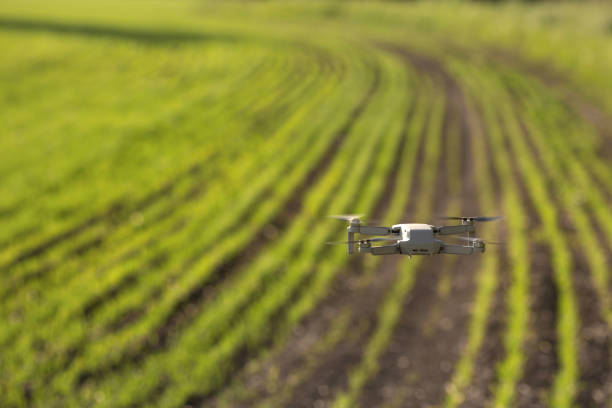
Drones equipped with cameras and sensors have become invaluable IoT tools for modern agriculture. Unlike satellite imagery, drones can fly on-demand and at low altitudes to capture high-resolution snapshots of fields whenever needed. Farmers use agricultural drones to scout large areas quickly, identifying issues such as pest infestations, nutrient deficiencies, or irrigation problems from the sky. Multispectral cameras on drones can even detect plant health indicators (like chlorophyll levels) that are invisible to the naked eye – highlighting crops that are stressed or diseased early on. Beyond monitoring, drones can perform active tasks: some models are designed to spray crops with pesticides or fertilizers in a targeted way, or even to seed cover crops and pollinate flowers. In the Gulf, where farms and plantations can be widespread and labor can be costly, drones significantly cut down the time and effort required for field inspection and treatment. A single operator can survey hundreds of acres in a day using drone technology, making it an efficient tool for precision agriculture. As drone hardware and automation improve, their role in tasks like reforesting desert areas or planting new crops (via “drone seeding”) is also expanding, further integrating into the smart farming toolkit.
Data Analytics and Predictive Insights
Collecting data is only half of the equation – making sense of that data is equally important. IoT in agriculture goes hand-in-hand with advanced data analytics and AI (Artificial Intelligence) to turn raw sensor readings into actionable predictions and recommendations. Farm management software platforms aggregate the data from all IoT devices (soil sensors, weather stations, drone imagery, livestock trackers, etc.) and use algorithms to find patterns and trends. For example, machine learning models can analyze years of crop data along with weather forecasts to predict when a pest outbreak is likely, or to forecast crop yields weeks before harvest. These predictive insights let farmers plan proactively – whether it’s ordering additional feed because analytics foresee a harsh season, or deploying preventative pest control measures because conditions are ripe for an infestation. AI-driven analytics can also optimize processes: for instance, recommending the ideal irrigation schedule by factoring in upcoming weather, soil moisture trends, and crop growth stage. In the Gulf, where efficiency is paramount, such analytics help farmers get maximum output from each drop of water and each unit of input. As the volume of farm data grows, predictive analytics will become even more accurate, essentially giving farmers a “crystal ball” to make informed decisions and improve their operations continually.
Smart Farming in the Gulf: Regional Innovations
The Gulf Cooperation Council (GCC) countries have embraced IoT-based agriculture as a strategic solution to their food security and climate challenges. Despite harsh desert environments, there are numerous success stories of smart farming projects across the UAE, Saudi Arabia, Oman, Qatar, and beyond. In this section, we highlight how Gulf farmers and organizations are applying IoT and other advanced technologies to local agriculture – from intelligent irrigation systems that conserve water to high-tech indoor farms that turn deserts green.
Smart Irrigation in Arid Climates
Water scarcity is the defining challenge for Gulf agriculture. Smart irrigation technologies, therefore, are at the forefront of the region’s IoT farming adoption. Traditional flood irrigation wastes huge amounts of water – a luxury desert countries cannot afford. Instead, Gulf farms are rapidly shifting to drip irrigation and other micro-irrigation methods controlled by IoT sensors. Soil moisture sensors buried in fields or date palm groves continuously measure how wet the soil is at various depths. These sensors connect to automated pump systems and weather forecasts. When the soil in a zone gets too dry, the system can automatically open valves to drip-feed water directly to plant roots, and then shut off once optimal moisture is reached. This precision ensures not a drop is wasted. For example, in Abu Dhabi, the government company Silal has outfitted dozens of local farms with IoT sensor networks to monitor soil and climate conditions; farmers receive real-time data on an app and recommendations for exactly when and how long to irrigate. Some farms have cut water use by 30–40% while maintaining or improving crop yields.
Beyond soil sensors, smart irrigation systems in the Gulf often integrate with weather data APIs or on-site weather stations. If rain is expected or humidity is high, the system can delay scheduled watering. Conversely, during especially hot and dry periods, watering frequency can increase automatically to prevent crop stress. Large-scale date farms in Saudi Arabia have adopted IoT irrigation controllers to manage hundreds of acres of palm trees with minimal human intervention – a few technicians can oversee an entire plantation’s watering through a central dashboard. The impact of these innovations is significant: smart irrigation conserves scarce freshwater resources (often groundwater or desalinated water) and reduces the energy costs of pumping and distribution. For Gulf nations investing in sustainable agriculture, these technologies are essential in making farming viable in the long run.
Desert Farming Innovations
In addition to improving open-field farming, Gulf countries are pioneering controlled-environment agriculture to overcome their harsh climates. IoT plays a big role in these desert farming innovations. One notable trend is the rise of high-tech greenhouses and vertical farms across the region. These facilities create optimal growing conditions indoors, insulated from the desert heat, while IoT systems manage their climate and hydroponic systems. The UAE, for instance, is home to several large vertical farms (stacked indoor farms) like Emirates Crop One and those by local startup Pure Harvest Smart Farms. Within these operations, thousands of sensors monitor temperature, CO2 levels, nutrient solution pH, and more on each grow shelf. AI algorithms then adjust LED lighting and nutrient flow to maximize plant growth. A prime example is the Vertical Farming in Dubai initiative, which has demonstrated how leafy greens can be grown year-round in the desert by using IoT-controlled environments that use 90% less water than traditional farming.
Saudi Arabia is also investing heavily in agri-tech to turn its deserts green. The megacity project NEOM has plans for sustainable, tech-driven agriculture, and already companies like Red Sea Farms (now part of Pure Harvest) have developed greenhouses that use saltwater for cooling and IoT automation to grow tomatoes in the Saudi desert. Another Saudi example is Mishkat, a farming company near Jeddah that combines vertical farming towers with advanced greenhouses; its facilities are packed with IoT sensors and climate controls to produce pesticide-free, water-efficient fruits and vegetables. In Riyadh, the Bather Farm vertical farming project leverages planning software and iFarm IoT technology to optimize production of leafy greens inside an urban warehouse. Oman and Qatar are not far behind – government-backed projects are introducing hydroponic greenhouses equipped with remote sensors and automated feeders, allowing year-round cultivation of crops like lettuce, cucumbers, and strawberries in climate-controlled oasis environments. These innovations show that, with the help of IoT and intensive technology, even the most arid landscapes can become productive farmland.
It’s worth noting that many of these high-tech farms also incorporate renewable energy and resource recycling – solar panels to power IoT devices and farm operations, and systems to recirculate water and nutrients. By combining IoT with sustainable design, Gulf innovators are creating farming systems suitable for the desert that have a minimal environmental footprint.
Sustainable Agriculture in Arid Zones
The goal of smart farming in the Gulf isn’t just to increase production – it’s to do so sustainably. Arid zone agriculture must be resilient and environmentally conscious to succeed long-term. IoT solutions contribute to sustainability in several ways. One is by enabling precision resource management, as discussed earlier: using only as much water, fertilizer, and energy as needed for optimal growth. For example, IoT-based hydroponic farms recycle water within closed loops, losing very little to evaporation – a crucial advantage in dry climates. Sensors constantly check water quality and nutrient levels in these systems, ensuring plants get the right nutrition without excess waste.
Another aspect is integrating renewable energy and smart grid technology with agriculture. In remote farming areas of the Gulf, IoT sensors and automation devices are often powered by solar panels, which are abundant under the desert sun. This reduces reliance on fossil fuels and makes off-grid operation feasible. Some experimental farms use IoT to coordinate energy use (pumps, cooling systems, grow lights) with on-site renewable energy production and battery storage, optimizing consumption when solar energy is available.
IoT also aids in tracking and improving soil health over time – important even for desert soils or managed oasis fields. Soil moisture and salinity sensors help farmers implement techniques like controlled irrigation and soil amendments to combat salinization (a common issue when irrigating in hot, dry regions). By preventing overwatering and chemical overuse, IoT helps maintain soil fertility and prevent land degradation.
Finally, IoT contributes to lower carbon emissions in agriculture. Localizing food production in high-tech farms means Gulf countries can import less produce by air or ship, cutting down the “food miles” and related emissions. Smart farms themselves run more efficiently, requiring less fuel for tractors or generators thanks to automation and electric-powered systems. Some projects are exploring IoT and blockchain for supply chain transparency, so consumers can trace produce from a Gulf smart farm to their table, verifying its sustainable journey. Collectively, these efforts align with the GCC’s broader sustainability and climate goals. By leveraging IoT to make farming precise, efficient, and clean, the Gulf region is turning its agricultural weaknesses (extreme climate and scarce water) into an opportunity to innovate and lead in sustainable farming practices.
Future Trends in IoT-Based Farming
Looking ahead, the integration of IoT in agriculture is expected to deepen, with new technologies further boosting efficiency and resilience. Several key trends are on the horizon:
- AI and Predictive Analytics – Artificial intelligence will play an increasingly prominent role in farm management. Machine learning models (fed by IoT sensor data) will predict crop diseases, yield outcomes, and optimal resource usage with greater accuracy. “Digital twin” simulations of crops or livestock could allow farmers to test decisions virtually before applying them in the real world.
- Advanced Automation & Robotics – The coming years will likely see more autonomous farm machinery and robots. Self-driving tractors, robotic harvesters, and automated weeders – guided by IoT sensors and GPS – can operate with minimal human oversight. Drones may evolve into fully autonomous fleets handling tasks like continuous crop monitoring and even pollination. Such robotics can particularly benefit Gulf farms by addressing labor shortages and working efficiently in extreme climates.
- 5G Connectivity – The rollout of 5G networks (and eventually 6G) in the Gulf will provide the high-speed, low-latency connectivity needed for real-time agricultural IoT applications. With 5G, thousands of sensors can stream data simultaneously, and remote-controlled machinery will respond almost instantaneously. This will enable more sophisticated IoT deployments on large farms and enable technologies like swarms of agricultural drones or instant analytic feedback during field operations.
- Renewable Energy Integration – Future smart farms will increasingly tie into renewable energy sources. Solar-powered IoT sensors and irrigation pumps are already used in the region; next steps involve smarter energy management. IoT systems will coordinate farm energy use (for water pumping, lighting, cooling, etc.) with solar or wind energy availability. This could make high-tech greenhouses and vertical farms carbon-neutral or even carbon-negative, an important goal for sustainable development.
- Blockchain and Traceability – To complement IoT, blockchain technology is poised to improve transparency in the food supply chain. Produce grown with IoT monitoring can be tagged and its journey recorded on a blockchain ledger. Consumers and regulators would then be able to trace the origin and conditions of any food item (for example, verifying that a vegetable was grown pesticide-free under certain IoT-tracked conditions). This trend responds to rising demand for food safety and quality assurance, and IoT provides the data needed to feed into such traceability systems.
- Government & Policy Support – Gulf governments are actively supporting the proliferation of smart farming. We can expect more public-private partnerships, innovation incubators, and funding programs to develop agri-tech tailored to local conditions. Policies favoring water-saving irrigation, renewable energy use, and domestic food production will further drive IoT adoption. Initiatives like the UAE’s “Food Tech Valley” (aiming to triple the UAE’s food production by 2031) and Saudi Arabia’s Vision 2030 emphasis on technology indicate that smart farming will move from pilot projects to mainstream practice, backed by national strategies.
The convergence of these trends will shape an agricultural landscape in the Gulf that is highly efficient, technologically advanced, and sustainable. The next decade could see fully automated desert farms, AI-managed crop cycles, and a significant reduction in the region’s dependence on food imports. IoT will be the central nervous system connecting all these innovations. Farmers who adapt to these changes stand to benefit greatly, as they will be able to produce more with less and guard against the uncertainties of nature through data-driven foresight.
Conclusion
The Gulf region’s foray into IoT-based smart farming demonstrates that innovation can surmount even the toughest agricultural conditions. By adopting IoT sensors, automation, and data analytics, Gulf farmers are gaining unprecedented control over their crops and herds. This control translates into higher yields, lower costs, and more sustainable use of resources like water – outcomes that were once out of reach in traditional desert agriculture. Smart irrigation, climate-controlled greenhouses, precision farming, and other IoT applications are already proving their value in countries like the UAE and Saudi Arabia, and their use will only become more widespread in the coming years.
IoT in agriculture is not a one-size-fits-all solution, but rather a toolkit that each farm can tailor to its needs. Whether it’s a small date orchard using sensors to perfect its watering schedule or a large vertical farm in Dubai leveraging AI to optimize every aspect of production, the common theme is improved decision-making and efficiency. Crucially, these technologies align with the Gulf’s broader goals of food security and sustainability. By investing in smart farming, Gulf nations are reducing reliance on imports and building a more self-sufficient future where local fresh produce is available year-round despite the challenging climate.
In summary, IoT-powered smart agriculture offers a path for the Gulf region to achieve agricultural productivity that defies its environmental limitations. As more success stories emerge and technology costs come down, we can expect to see even traditional farms upgrading to connected, intelligent systems. The knowledge and best practices developed in the Gulf’s smart farming initiatives may also serve as a model for other arid regions of the world. For farmers, entrepreneurs, and policymakers in the Middle East, the message is clear: embracing IoT and innovation in agriculture is not just an option, but a necessity to cultivate a prosperous and sustainable future.

Leave a Reply