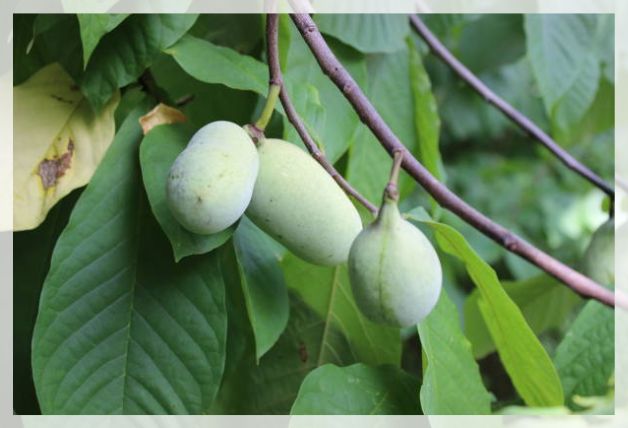
If you are looking for a guide to the paw paw tree you have landed on the right page.
The aromatic pawpaw fruits tend to have a tropical flavor that resembles the creamy custard made from bananas, pineapples, and mango.
Moreover, the tasty fruit is popular with raccoons, birds, squirrels, and other wildlife as well as humans.
Ornamental qualities of this plant include an attractive shape that can either be pyramidal or conical.
And the leaves often tend to turn brilliant yellow in autumn before dropping from the tree.
Pawpaw tree care includes watering to keep the soil moist, a regular schedule of fertilization, and hand pollination of the flowers.
It is important to note that this is a deciduous tree than can fit into almost any landscape.
Keep on reading.
Paw Paw Tree
The paw paw tree is a small, deciduous tree that yields the largest fruit native to North America.
It is part of the Anonaceas family which is the largest family of the magnolia order.
Moreover, it features mainly tropical plants.
However, Asimina triloba is native to the eastern United States and is found in 26 states, with the exception of Florida and most northeastern states.
Pawpaw tree tends to grow to a height of about 25 feet and feature maroon-colored blossoms with 6 petals in spring.
When you grow them in shady, protected areas of established forests, they only get to be about 2 to 12 feet tall.
Moreover, the leaves are dark green, shiny, and oval-shaped, with pointy ends.
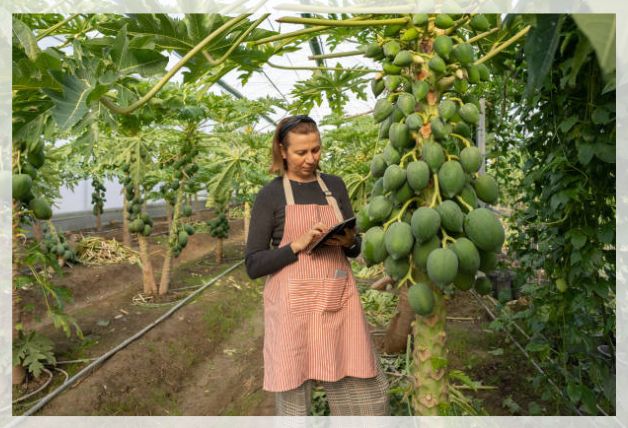
They can grow to about 12 inches in length.
In the fall, the foliage tends to turn in varying shades of yellow.
These trees are famous for their fruit, which tends to ripen in the fall.
The paw paw fruit is frequently described as custard-like with a flavor that is a cross between a banana and a mango.
Though some think that it tastes plainer, more like a raw potato.
It is important to note that while the fruit of this tree is edible, you should never eat the skin or seeds of this fruit.
Paw Paw contains annonacin, which is toxic to nerve cells.
Quick Facts about Paw Paw Tree
Some quick facts about this tree are:
| Common Name | Pawpaw, paw paw |
| Botanical Name | Asimina triloba |
| Family | Annonaceae |
| Plant Type | Tree |
| Mature Size | 15-25 ft. tall, 15 ft. wide |
| Sun Exposure | Full, partial |
| Soil Type | Moist but well-drained |
| Soil pH | Acidic, neutral |
| Bloom Time | Spring |
| Flower Color | Purple |
| Hardiness Zones | 5-8, USA |
| Native Area | North America |
| Toxicity | Toxic to humans |
Paw Paw Care
You can successfully grow a paw paw tee with basic knowledge about its growing requirements, as a tropical-looking addition to your garden, or for its delicious fruit.
Paw paw tree needs adequate irrigation, however, must be in well-draining soil conditions to prevent root rot and fungus.
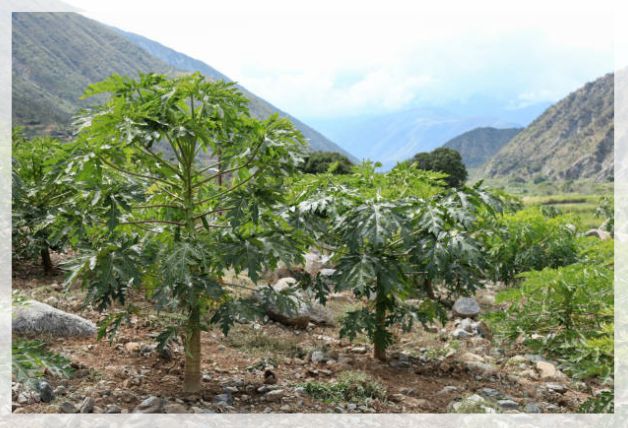
Make sure to protect your young trees from too much sun exposure and wind.
It is important to note that these trees have a suckering habit and will grow into a stand of this tree.
However, if you are hoping to yield fruit from this tree, make sure to plant a number of genetically different trees in close proximity.
Light and Soil Requirements
In its natural habitat, the pawpaw tree is found in the understory of forests.
As a result, these trees tend to flourish in partial shade.
Young trees especially benefit from shady conditions, as bright, direct sunlight can scorch the leaves.
When mature, you can grow this tree in full sun conditions.
These trees will have a more pyramid-like shape, while this tree in shade has spreading branches and fewer lower limbs.
Soil conditions for this tree must be rich and well-draining.
For nutrient-poor soil, you can add compost to boost soil quality.
The pawpaw tree can grow in heavy, clay soil, however, only if there is sufficient drainage.
Slightly acidic to neutral soil pH levels are best for the growth of this tree.
The young paw paw tree will need regular watering.
However, it is important to make sure that the soil is draining efficiently and that you do not allow this tree to become waterlogged.
Mature, established paw paw trees near a water source or that receive regular rainfall often will need little supplemental water.
Moreover, paw paw trees plants in an orchard or in a full sun location in your yard may benefit from additional irrigation to prevent dry soil conditions.
A cold-hardy fruit tree, this tree is hardy to USDA zones 5 and it can withstand temperatures of -20 degrees Fahrenheit.
At the same time, the warm, humid summer of its native habitat tends to provide this tree with the right conditions for growth and fruit production.
You will be most successful in growing the paw paw tree if your climate provides the seasonal swing that these trees are accustomed to since the dormancy of winter prepares the tree for a productive growing season.
Furthermore, it is important to note that nutrient-rich soil is important for healthy growth and fruit production.
So it is generally recommended to fertilize these trees at least twice a year, once in spring and again in early summer.
You can use a well-balanced fertilizer, like a 10-10-10 formula.
Apply with granules or in a liquid formula.
However, your best option is to add organic matter to the soil using compost, fish emulsion, manure, or a combination of all three.
Propagation Tips
You can propagate paw paw trees by grafting and cuttings.
Many nursery scions are taken from dormant trees that are at least a few years old.
You can graft the scions onto pawpaw rootstock.

This method tends to yield good success, however, is a more advanced method of propagation.
Moreover, propagation by cuttings is also possible for this tree but has a high failure rate.
Thus, it is not considered the most surefire way to propagate these trees.
In most cases, propagation by seeds is the most successful way to start this tree.
Growing from Seeds
Growing paw paw trees from seed are often the easiest way to start these trees.
A simple plan is to plant an entire paw paw fruit into the ground in the fall.
I will often send up shoots during the next spring season.
However, if you want to enjoy its tasty fruit rather than plant it in the ground, you can harvest the seeds from the paw paw fruit and sow them in the ground.
Follow the steps below to grow paw paw trees from seed:
- scoop out the seeds from a ripe paw paw fruit
- scarify the seeds which involves scratching the shell of the seed but not the seed itself, you can use sandpaper or a file for this process
- in fall, you can direct sow the seeds outside where they will naturally stratify over the winter and sprout the following summer
- on the other hand, you can stratify the seeds indoors by placing them in a cold spot for 90 to 120 days
- when you choose indoor stratification, Perdue University recommends placing the seeds inside a plastic bag with moistened sphagnum moss to prevent the growth of mold
- you can plant the seeds once the soil temperature is between 75 and 85 degrees
Overwintering Tips
It is important to note that paw paw trees are no strangers to winter weather.
The cold season tends to provide a period of dormancy necessary for fruit production in the following year.
As these trees are hardy to -20 degrees Fahrenheit, there is often no additional care your tree will need for the successful overwintering of mature paw paw trees.
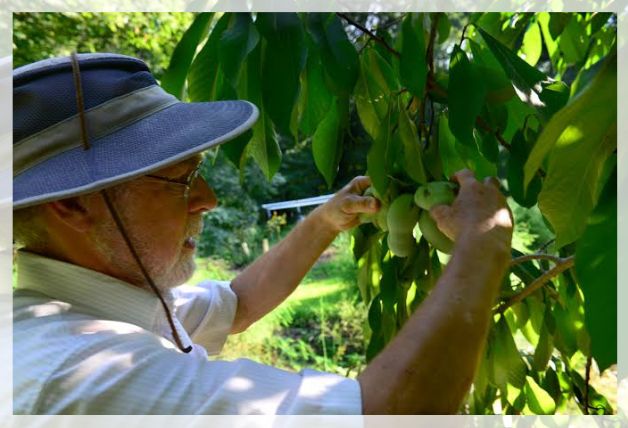
Moreover, there is no need to water during the dormancy of the tree.
However, a young paw paw tree in a pot should only be placed in spring.
In order to overwinter a young tree, you will need to place it in a sheltered location where temperatures will remain above freezing.
Common Pests and Plant Diseases
Paw paw tree is relatively hardy and pest free.
However, the occasional fungal diseases like powdery mildew or black spot can affect this tree that experiences high humidity or very damp conditions.
In the case of black spots, the fruit is still edible, and it is only an aesthetic issue.
Moreover, the pawpaw peduncle borer, Talponia plummeriana, in some cases tend to invade trees and causes the blossoms to drop prematurely.
This affects the fruit yield significantly.
In addition, the larvae of Zebra Swallowtail butterflies tend to feed on the leaves of the paw paw tree.
But it rarely causes a serious threat to the health of your tree.
Common Problems
Paw paw tree experience relatively few issues and are hardy enough to grow unattended in the wild.
However, if you plant this tree in your yard or garden, you can come across several problems.
Moisture management is one of the key problems that growers encounter, as these trees like moist but well-draining conditions.
Additionally, this tree is not a self-pollinating tree and lacks abundant natural pollinators, causing issues with fruit production.
Yellowing Leaves: This is a sign of overwatering or poor drainage soil.
You will need to check the soil to make sure it is well-draining.
You may need to add compost or peat moss to improve drainage.
In case overwatering is causing problems, make sure to withhold water to allow the soil to dry out.
Be sure to only water once or twice a week, depending on temperature and humidity conditions.
Lack of Fruit Production: Even when you plant genetically varied plants near each other, it can be hard to attract pollinators to paw paw trees.
As the result, the flowers may not become pollinated and as a result, fail to bear fruit.
To solve this issue, one suggestion is to pollinate paw paw trees by hand.
Find male flowers, which will be wide open and deep maroon color.
The stamen will be visible and should be covered with pollen.
Then place a small plastic bag underneath the bloom and gently tap the back of the blossom to drop the pollen into the bag.
Right away, find a female blossom on another paw paw tree.
Mature blossoms will also be maroon, however, may still be partly green and will always be partially open.
Gently open the blossom with your fingers enough to reach the paintbrush inside.
Then, after dusting the paintbrush with harvested pollen, dab the stigma inside the flower.





Leave a Reply