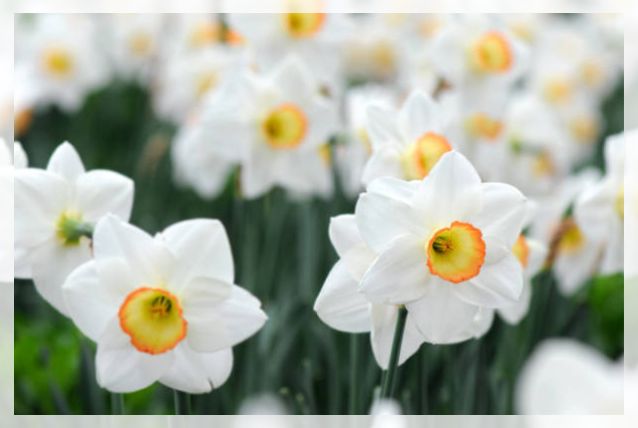
Do you know that daffodil flowers makes a great addition to your garden?
Nothing competes with the beauty of daffodils flowers and they just pop the bulbs into the ground during fall.
These sunshine-yellow flowers emerge at the end of the winter to lift your spirits.
One of the fun things to note about daffodils is that they are deer and rodent bulbs, unlike tulips.
These plants are hardy perennials that come back year after year, that spread, and often naturalize.
They are fall-planted bulbs that you will plant in October and the flowers bloom in late winter or early spring.
Furthermore, they tend to grow easily in most regions of North America, except in the hottest, wettest areas of the country like South Florida.
Keep on reading to learn more.
Daffodil Flowers
Daffodil flowers or Narcissus spp. are one of the most famous flowers of all spring-flowering perennial bulbs in growing regions where there is winter chill.
This is because they need this type of weather to reset themselves.
Even in warmer regions, you can purchase daffodils as prechilled bulbs and plant them as annuals.
Moreover, clusters of strappy basal leaves tend to appear after the winter snow melts, followed by flowers that have a trumpet shape corona, or cup.
These are encircled by a size-lobed Corolla.
Depending on the type of daffodil you are growing, the corona can be pronounced large, small, split, or even lampshade-like.
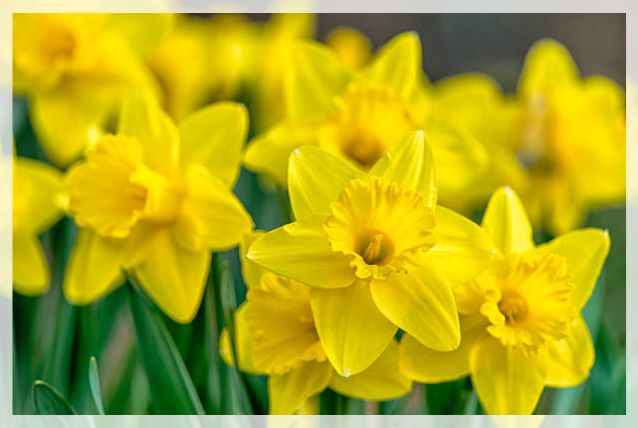
Furthermore, most varieties tend to blossom in shades of yellow, however, there are also white, orange, pink, and bicolor cultivators.
It is important to note that there are more than 40 Narcissus species and over 32,000 registered cultivators.
This plant is native to areas of Europe and North Africa, and you can plan them in mid to late autumn and they begin to rear their heads in the early spring.
These can reach peak bloom about a month before the average last frost date.
Another important thing to note is that daffodils contain phenanthridine alkaloids and calcium oxalate crystals.
These make them toxic to both humans and animals.
Fatalities are also possible if you eat large quantities of bulbs and can also cause severe skin reason when you handle the bulbs.
Quick Facts about Daffodils
Some quick facts about Daffodil flowers are:
| Common Name | Daffodil, narcissus |
| Botanical Name | Narcissus spp. |
| Family | Amaryllidaceae |
| Plant Type | Bulb, perennial |
| Mature Size | 6–30 in. tall, 6–12 in. wide |
| Sun Exposure | Full, partial |
| Soil Type | Rich, moist but well-drained |
| Soil pH | Neutral, acidic |
| Bloom Time | Late Winter, Spring |
| Flower Color | Yellow, white, orange, pink |
| Hardiness Zones | 4–8 (USDA) |
| Native Area | Europe, North Africa |
| Toxicity | Toxic to humans and animals |
Learn more about Poisonous Plants for Pets here.
Daffodil Flowers Care
Considering all things, daffodil flowers are entry-level plants for beginner gardeners that are developing their plants.
When choosing daffodil bulbs, choose the ones that have a large, firm shape with a dry paper covering.
Moreover, you should plant the bulbs that are pointing up, about 3 to 5 inches deep.
For a deeper effect, you should leave a space between bulbs of about 5 inches.
However, if you are more patient, you will need to space them about 12 inches apart as bulbs will spread and fill in spaces within a few years.
It is important to note that your flowers will not bloom more than once in a season, so when you notice the petal fading, allow the foliage to turn yellow and dry up.
Make sure to avoid cutting the foliage.
It is important to leave the leaves of the plant, as they absorb sunlight that will help to feed the bulb for the blooms of the next year.
Like some gardeners, you can use this opportunity to dig up the bulbs, and then save them until fall replanting time.
However, most gardeners may choose to leave the daffodil bulbs in the ground, lift, and divide them every fourth year or so.
These plants are easy to care for, other than watering during the active growing season and topdressing the bulb in situations where the bulbs are not producing enough flowers.
Light and Soil Requirments
When you plant them in a full sun location that receives at least six hours of light, they will thrive best.
However, they can also withstand a bit of partial shade or dappled light.
Daffodil flowers are spring bloomers that are done with their display by the time deciduous trees leave out.
So they can work well when you plant them in areas that will be shady by midsummer but which have enough sun in the early season.
Moreover, daffodils plants prefer neutral to slightly acidic soil with a pH of around 6.0 to 7.0.
They tend to grow best in rich, moist soil, but as with most bulbs, they will need excellent drainage or they can rot.
You should not allow your plants to sit in waterlogged soil.
Water, Temperature, and Other Requirements
You will need to water daffodil flowers regularly in the spring and fall.
However, make sure to stop watering in mid to late spring, starting about three to four weeks after the flowers fade.
Moreover, they go dormant during the summer and tend to thrive in drier soil at this time.
It is important to note that the hardiness of the daffodils tends to vary slightly depending on the variety.
However, most are reliable within USDA hardiness zones 4 to 8.
Most types of this plant are not suitable for warm southern climates unless you plant them as annuals.
However, certain divisions of daffodils, like division 8, the Tazetta group will grow in a warmer climate, if you give them enough water.
Overall, daffodils will do well in humid and arid atmospheric conditions, when you provide them with soil moisture.
Another important thing to note is that these plants are self-sufficient.
However, if you have poor soil, or the plants are not flowering as they should, you will need to top-dress them when the leaves first emerge.
Make sure to lightly feed them when they flower.
Follow the product label instructions for the right amount of usage.
Types of Daffodils
Many breeders classify daffodils into 13 different divisions with a number of cultivators within each division, depending on the form of the flower.
These include:
Trumpet Division 1: These boast a center cup at least as long as its petals, with one bloom per stem.
Large Cupped, Division 2: The cup on this variety of daffodils is more than one-third the length of the petals.
However, they are not as long as them, with one bloom per stem.
Small Cupped, Division 3: The cup on this one is no more than one-third of the length of the petals, with one bloom per stem.
Double, Division 4: This daffodil varietal tends to feature clustered cups and petals, with one or more blooms per stem.
Triandrus, Division 5: The flowers on this variety have a hanging bell shape, often boasting two or more blooms per stem.
Cyclamineus, Division 6: This one features swept-back petals and one bloom per stem.

Jonquilla, Division 7: These are small, fragrant flowers with flat petals and narrow leaves.
Moreover, you can see one to five blooms per stem.
Tazetta, Divison 8: This one tends to have fragrant clusters of florets ranging from 3 to 20 blooms per stem.
The leaves and stems of this varietal are also broader than usual.
Poeticus, Division 9: Pure white petals tend to surround a flattened, crinkled cup of this type.
Moreover, the cup often has green centers circled in yellow and rimmed with red, and one fragrant bloom per stem.
Bulbbocodium, Division 10: This varietal features small petals and a ‘hoop petticoat’ shaped cup.
Split-cupped, Division 11: The cut on this cultivator is split open, often at least halfway.
Miscellaneous, Division 12: These do not fit into other categories, including inter-division hybrids.
Species, wild variants, and wild hybrids make up Division 13.
All these divisions might include cultivators described as ‘Miniature’.
These all tend to have the same features as their full-six counterparts but have smaller blooms, often less than 2 inches in diameter.
Pruning and Propagating Tips and Techniques
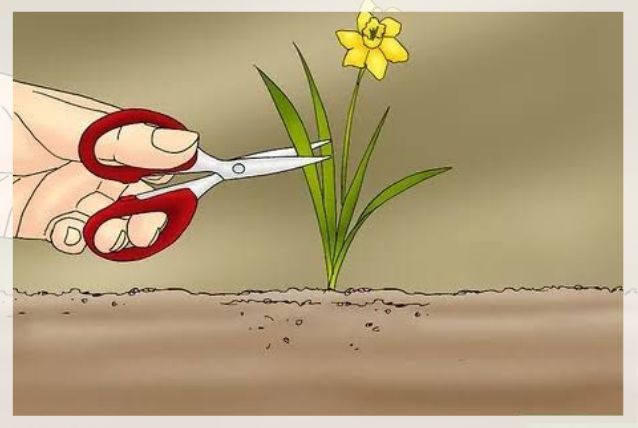
As the blooms fade, you can remove the top portion of each daffodil flowers stem to prevent seed formation.
However, you will need to leave the foliage in place until it begins to yellow, as the plants are restoring the bulbs during this time.
The easy way you can propagate your plant is by lifting and removing the offshoot bulbs that tend to form underground.
This division is often not needed for the health of the plants, however, you can do it every fourth year or so.
Make sure to do so if colonies are becoming overgrown.
You can take the following steps:
- during summer when the daffodil leaves turn yellow and die, you need to carefully dig the clump and shake off the dirt
- then set the bulbs in a shady spot for at least two days to dry
- use your hands to carefully separate the bulblets from the parent bulb
- make sure to discard the bulbs that are soft or notably damaged
- you can replant the parent bulbs and offsets immediately at a depth of 2 to 3 times their diameter, spacing 10 to 12 inches apart
- or you can store them until late summer and fall planting time which can begin in late august
It is important to note that small offset bulbs can take a few years to develop the vigor to produce flowers.
Small bulbs tend to produce foliage for a number of years as they gain size, then begin to flower once they are large enough.
Learn more about Pruning Tips and Techniques here,
Growing Daffodils from Seeds
When growing daffodils, it can take as much as five to six years for daffodil seeds to grow into plants that have viable bulbs.
So many gardeners rarely undertake this method, except for professionals or very serious amateurs that are experimenting with hybridization.
However, you will need the patience to try it, seed propagation begins with harvesting seeds from the marble-sized pos that are left behind after daffodil flowers fade.
When these pods shrivel and turn brown, you can break them open to extract the seeds inside.
Moreover, you can save the seeds until fall, then plant them about 1/2 inch deep in small pots or seed trays.
You will need to fill the trays or pots with potting mix or seeds starter mix.
Then set the pots in a sheltered or shady location to receive a winter chill period.
During spring, the seeds will germinate and sprout into ting, grass-like seedlings.
After this, your plant will have small bulbs that you can systematically repot into increasingly large containers each year.
By year 5 or 6, you can see bulbs that are large enough to plant in the garden.
Learn more about Annuals vs. Perennials: Overview here.
Potting, Repotting, and Overwintering Dafoddil Flowers
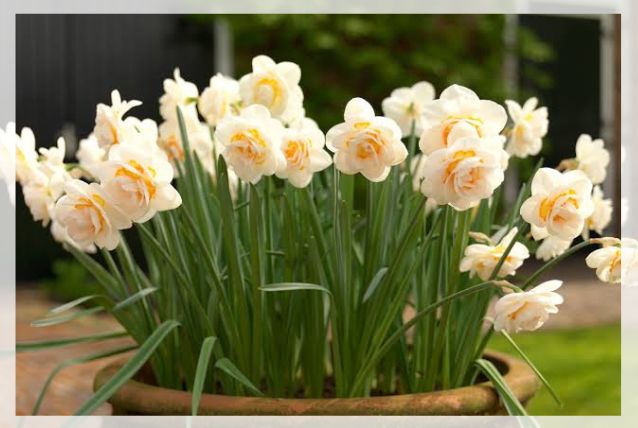
You can grow daffodil flowers in containers for at least 3 years if the pot is deep enough for its roots to fill out.
With the right timing, you can grow them for indoor winter flowering, by controlling the timing of the chill period,
To plant daffodil flowers in containers, follow the steps below:
- choose a pot that is about 2 gallons for standard daffodils and 1 gallon for small bulbs or miniature daffodils.
- make sure that the pot you choose has drainage holes
- fill the pot about 2/3 with a commercial potting mix.
- disperse the bulbs in the pot and make sure they are not touching so that their points are below the rim of the pot
- lightly cover them with soil and water well
- move the container to a cool, dark spot where the temperature remains constant around 40 to 45 degrees Fahrenheit for 12 to 16 weeks
- water when the soil feels dry, however, in colder regions, you can conduct this chilling period outdoors or you can chill the pot in the refrigerator for the required time
- when the yellow shoots emerge after the chilling period, move the container to a sunny but cool spot with temperature around 50 to 60 degrees Fahrenheit and continue to water
- when the shoots turn green, you can move the container into brighter sunlight with 60 to 70 degrees Fahrenheit.
- Make sure to topdress the plant with a handful of fertilizer or bone meal and continue watering when the soil feels dry while turning the container to promote even growth
When the leaves die, you will need to place the pot on its side and let it dry.
Start all over again after this.
Moreover, potted daffodils can bloom for 2 to 3 years in the container.
However, will thrive better when you move them to a spot in the ground and pot fresh bulbs.
When they are in the pot, make sure to remember that daffodils will still need the required chilling cycle each year.
You cannot grow them as perpetual houseplants.
When you plant daffodils flowers in their hardiness range, they will not need any winter protection against cold.
However, you will need to follow overwintering recommendations according to the region.
In regions where there is cold winter, but no snow cover, you can add a layer of mulch to make sure that your bulbs survive.
Learn more about Container Gardening: Everything you need to Know here.
Common Pests and Plants Diseases
Daffodils are pest-resistant plants and disease issues, however, in some cases, one of the following problems can occur:
Bulb rot takes plant when you plant daffodils in badly drained soil.
Moreover, the narcissus yellow stripe virus can also affect them which can cause brown and yellow stripes on the foliage.
You will need to remove and destroy the affected plant.
Narcissus Flies lay eggs at the base of the plant which hatch and can cause the larvae to brow down into the bulbs.
You can notice soft bulbs with worms inside during routine bulb division.
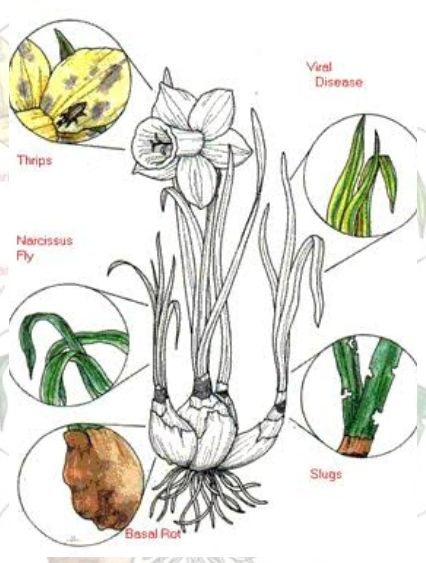
Make sure to throw away the affected bulbs.
Bulb Mites can cause the weakening of daffodils and occurs in most cases when you grow daffodils indoors for seasonal display.
With the help of spray pesticides, you can control them.
Furthermore, Nematodes can cause lumpy lesions on the foliage of your plant.
There is no treatment for this microscopic soil worm and may even need to give up growing daffodils in such soils.
How to get Daffodils to Bloom
It is important to note that daffodils are spring bloomers if you provide them with basic cultural needs.
However, if they fail to bloom, it can be one of the following reasons:
Cutting back the Foliage too Soon: The foliage of the daffodils often persists for 4 to 6 weeks after the bloom fades.
During this time, the bulbs will replenish as the leaves continue to photosynthesize.
When you cut back the foliage too soon, it results in weakened bulbs that fail to bloom the following spring.
This can be an issue when you plant naturalize in a lawn setting.
It occurs when you mow the lawn too early in the spring, it can cut the foliage before they replenish the bulbs.
Planting the bulb Upside Down: When you plant large bulbs, if they fail to flower in the first season, it is quite possible that you planted them upside down.
Remember that the right orientation is the pointy side facing up.
Bulbs are too Young: After division, the smaller offset bulbs will not flower for a year or so.
Moreover, with extremely small bulbs, it can take even longer.
Soil is Poor: Though daffodils will not need rich soil, they still need some nutrition.
Make sure to topdress the bulbs with a handful of fertilizer in the fall for prompt flowering for the following spring.
Be careful as too much fertilizer can also damage the daffodil bulbs.
Not Enough Sunlight: When the surrounding shade trees grow larger, it can increase the amount of shade can cause your daffodils to bloom less.
In such cases, prune the surrounding bushes and trees to restore sunlight.
Common Problems
Daffodils flowers are very reliable plants with few problems.
However, one common complaint is that the plants are not at all attractive once the flowers fade
This will leave gaps in the landscape and wilted floppy foliage.
This is unavoidable, as it is important to allow the foliage to die back naturally before removing it.
One solution is to plant them within gaps between other late-developing perennials, whose leaves often cover the gasp left once the foliage has finally died back.


Leave a Reply