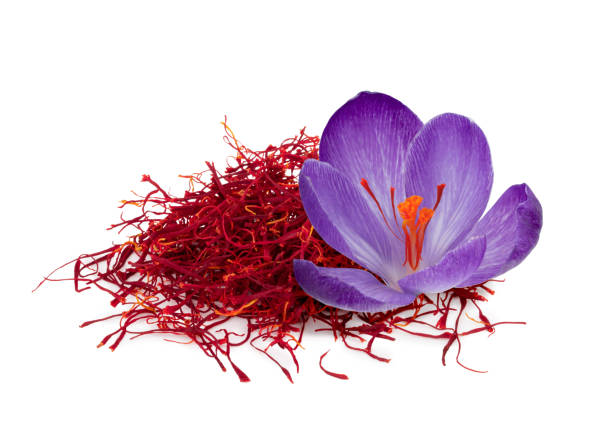
If you are looking for a guide to a Saffron flower, you have landed on the right page.
Saffron is often described as one of the most expensive spices in the world.
Moreover, often it is described to have worth more than its weight in gold.
It is so expensive, that you may think ” Can I grow saffron crocus bulbs and harvest my own saffron?”
The answer is yes, why not.
You can grow saffron in your home garden easily.
The saffron flower is famous for its aromatic flavor and the beautiful color of its spice.
It is a common ingredient in Spanish dishes like seafood paella.
You can use saffron threads to enhance the flavor of rice, couscous, and stews.
Keep on reading.
Saffron Flower
Saffron is one of the spices that are highly prized, a crimson red spice you can use in cooking.
It is one of the most expensive spices by weight anywhere in the world.
Moreover, it is commonly harvested in the Mediterranean and then all the way to the mountains of Kashmir
Many people do not realize this spice is produced from the dried stigma of a crocus variety.
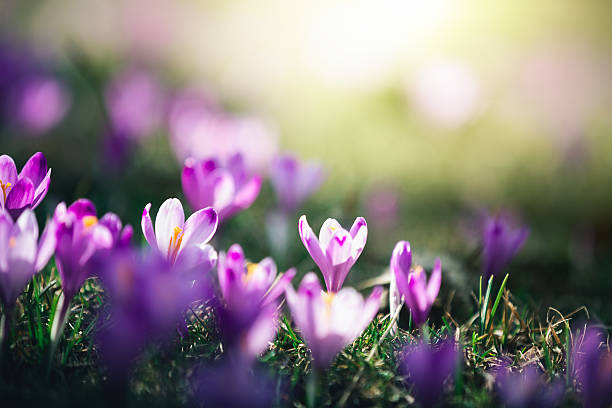
The Saffron Crocus, Crocus sativus is easy to grow as a flower.
It helps to add a splash of color in the fall when the plant blooms.
You can collect the stigmas to produce your own saffron.
However, be aware that it tends to take at least 150 to 200 flowers to produce about 1 gram of this spice.
Do not expect a bumper harvest.
Quick Facts about Saffron Flower
Some quick facts about the saffron flower are:
| Botanical Name | Artemisia dracunculus (Sativa subspecies) |
| Common Name | Saffron Crocus |
| Plant Type | Perennial herb |
| Mature Size | 24 inches |
| Sun Exposure | Part Sun/Part Shade |
| Soil Type | Sandy, well-drained |
| Soil pH | Neutral (6.5 to 7.5) |
| Bloom Time | Summer |
| Flower Color | Light green leaves |
| Hardiness Zones | 4 and above |
| Native Area | Temperate Europe and Asia |
Learn more about Growing and Caring for Sweet Peas here.
Growing Saffron Flower
The best time to grow saffron crocus blubs is fall.
It is also the time when you can expect to see the first bloom of this perennial flower.
In order to get the best results with this plant, you will need to pick a site that tends to get plenty of direct sunlight and has well-drained sandy, loamy soil.
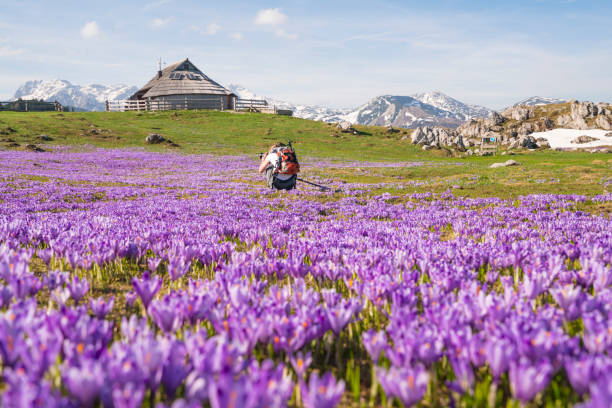
This easy-to-care plant will not need a lot of attention or watering.
Moreover, it is important to note that saffron flowers do not tend to be available in many run-of-the-mill garden centers.
So you will need to order them from a specialist.
Light and Soil Requirements
The saffron flower tends to thrive best in full sun or very light shade locations.
Without at least four to six hours of direct sun during bloom time, you can risk being disappointed with the crop.
Moreover, this plant is not incredibly picky about the soil type you plant it in.
It does, however, needs to be in well-draining soil.
You will get the best results in a loamy, hummus-rich type of soil.
Water, Temperature, and other Requirements
The saffron variety tends to go dormant in the summer.
Thus, in such cases, you should not water them throughout this period.
As you can expect from a plant this grows in arid regions, they will not need a lot of watering in general.
Once they establish, they are relatively drought tolerant, and too much moisture can damage or rot the bulbs.
In case you have a particularly dry spell, light watering will be needed by the plant.
However, other than this, they tend to cope with just natural rainfall.
Moreover, saffron crocus tends to thrive in continental climates.
This is where there is a definite difference in the seasons.
They tend to do best when summers are hot and dry. Too much humidity can be a big issue for this plant.
In case you subject them to very harsh, freezing winter conditions, the bulbs will not grow as well.
And this can result in poor flowering.
Mulching around the plant with either straw or compost can help to protect the plant if you expect the temperatures to drop significantly.
You will need to incorporate an organic fertilizer into the soil when you are planting saffron crocus bulbs.
This can be advantageous for the plant.
They will establish themselves, you can treat them annually with fertilizer.
But with the right conditions, they probably will not need any fertilizer to be added.
Propagating Saffron Flower
It is important to note that a sterile plant cannot reproduce by seeds.
It tends to propagate through the multiplication of its bulbs also known as corms.
This means that more corms will naturally develop underneath the soil.
It is a good idea to dig up the bulbs and separate the old corms from the new ones every few years.
Replanting after this tends to encourage healthy growth by preventing overcrowding.
Moreover, this will help to make sure that the bulbs remain deep enough in the soil.
Any replanting can be done in the summer when the plant is in the dormancy period.
Harvesting Tips
After the first year of planting, your saffron flower will not produce its best bloom.
However, if you plan to harvest the stigmas, experts advise that it is best to wait until the second or third year.
By then, the plant will be more established.
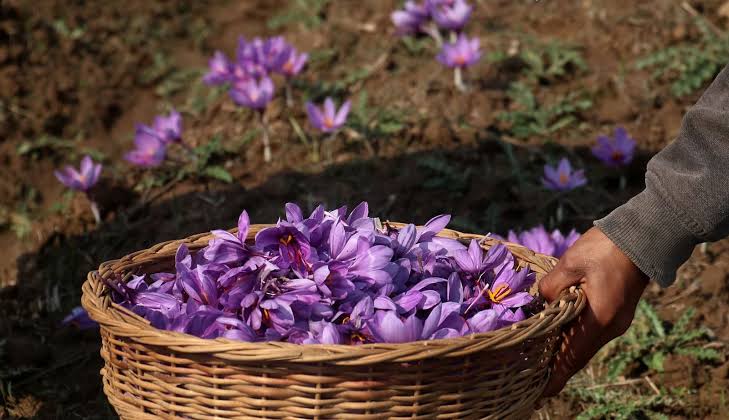
And the flowering will likely be optimal.
Moreover, harvesting just after the flower opens on a dry morning is important.
Each flower tends to have three stigmas that you can carefully remove with the help of a pair of tweezers before you dry them out for use.
Growing in Containers
It is important to note that you can easily grow crocus bulbs in containers.
Moreover, it can actually be handy if you experience a particularly harsh winter.
It will allow you to move the containers to a warm location when the frost hits your region.
Moreover, you can plant the bulbs in a pot in the fall, before the frost arrives.
The pots will need to be relatively deep and spacious.
You will want the bulbs to sit at least three inches apart.
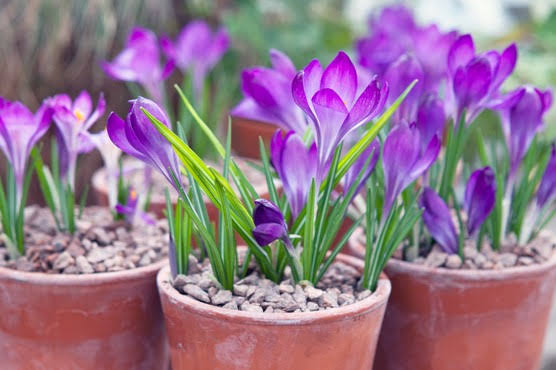
Furthermore, there should be at least 5 inches of soil on the base and a further three inches over the top of the bulbs.
You can choose to bury the pot in the ground at this point.
However, make sure to always likely out the pot so that you can store them indoors before freezing temperature arrives.
Once your plant is indoors, it will not need additional watering during this dormancy period.
Common Pests and Plant Diseases
One of the main problems that saffrom may encounter is the presnece of diverse pests. These include:
- rodents
- insects
- plant mites
While diseases like crom rot and weeds can effect the plant.
During winter, when the temperautre is belw 32 degrees Fahrenheit, rodents like voles and rabbits tend to feed on leaves and corm as a source of food.
With the help of organic rodenticides, you can help get rid of rodents.
It is important to note that once the temperature increases in late march, the activity of the rodents tends to decrease gradually.
Moreover, plant mites tend to attack saffron corms through wounds.
By producing tunnels and cavities in corms, the mites tend to start reproduction within this cavity.
You will notice shorter, thinner leaves, and yellow leaves when there is mite infestation.
In order to prevent them, you will need to avoid watering during the spring.
Make sure to control the weed with care, and choose healthy and uniform corm for planting.
Moreover, you can treat corms with fungicide, before planting.
Thrips can also affect your plant and will leave white and yellow spots on the leaves of the saffron plant.
High moisture percentages along with high temperatures are ideal for the rapid growth and spread of nematodes and fungi like Fusarium, Penicillium, Rhizoctonia, etc.) and consequently corm rot.
These conditions often take place in a hot and rainy spring.
To avoid fungal infestation, the pest practice is crop rotation, the removal, and the burning of infected plants.
Corm treatment with anti-fungal plants before planting can also help.



Leave a Reply