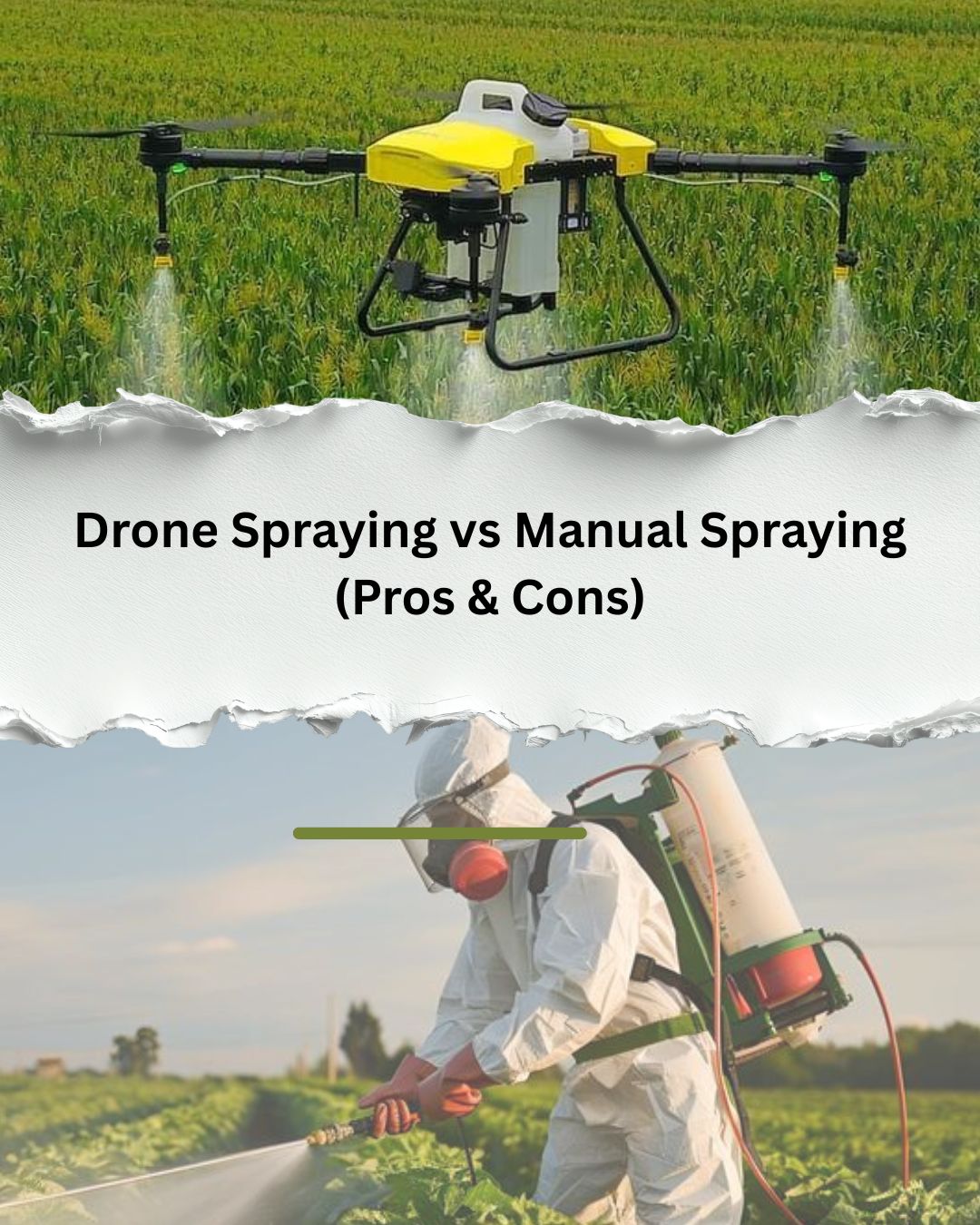
What is Drone Spraying?
Agriculture drone sprayers are frightened aerial vehicles (UAVs) that are designed to deliver liquids such as pesticides, fertilizers, and herbicides to crops. These drones have exclusive spray tanks, nozzles, GPS, and mapping equipment, which assist them in spraying in a precise and controlled manner on large fields.
Agriculture drones are superior in terms of speed, precision, and environmental friendliness to conventional technologies such as handheld sprayers or those that are fitted to a tractor.
One of the smart farming technologies that allows applying fertilizers to the required location and at the right time is the drone spray technology. Farmers will also be able to apply the correct amount of fertilizers in the correct sections of the field with the help of special agricultural drones.
Most farmers in countries such as China, the United States, and Japan are pioneers in using drones to spray fertilizers.
This industry is developing rapidly and is attracting farmers’ attention with new drone technology and special fertilizers targeted at drones.
How Drone Spraying Works:
Drones are driven at low altitudes and spray chemicals using nozzles on their arms.
They will be able to keep an eye on crops in real time with sensors and cameras and adjust the spraying amount accordingly. They also have spray management, where all the work that has been carried out is tracked, the system makes detailed reports, and they know where the chemicals have been and have records to make decisions in the future.
The precision and speed of drone work have unambiguous benefits in other aspects of agriculture.
What is Manual spraying?
Most spraying work is still done the gross way by hand. This is common in farming, especially among smaller and poorer farmers.
Despite the number of new spraying technologies, a few basic reasons are why people continue to predominantly rely on manual methods, such as their affordability and flexibility.
Manual spraying requires many workers. Manual spraying is a labor-intensive enterprise that involves carrying sprayers on the backs of farmers or workers walking through fields. This is usually done by farmers or laborers in the fields with the spraying apparatus strapped to their backs, most commonly the knapsack sprayer.
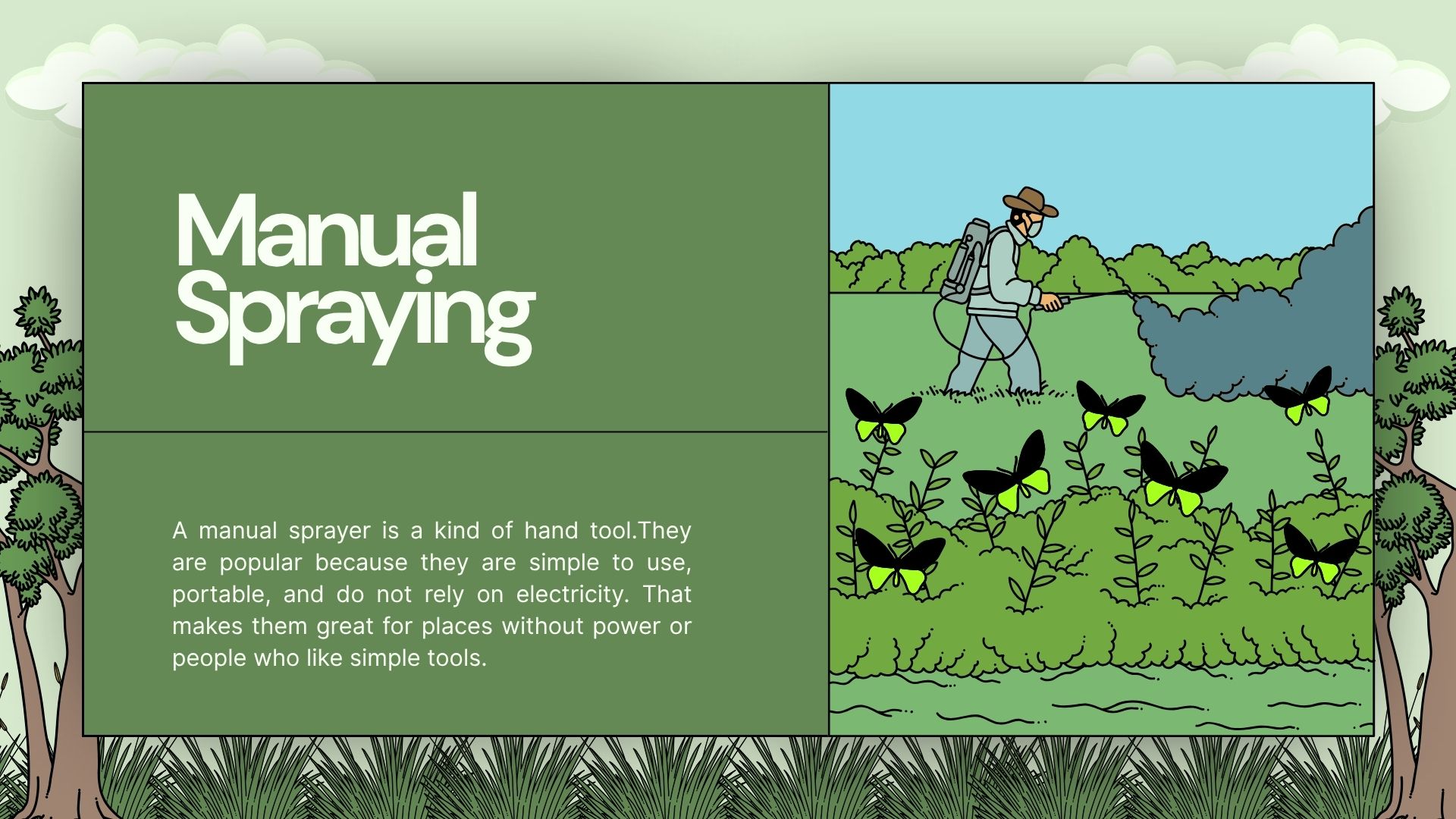
A manual sprayer is a kind of hand tool. The liquids that spread can be water, pesticides, or fertilizers. The basic components are a tank, a hand pump, a handle, and a nozzle. The handle is pressed, causing pressure buildup in the tank, which eventually sprays liquid from the nozzle. They are popular because they are simple to use, portable, and do not rely on electricity. That makes them great for places without power or people who like simple tools. Manual sprayers manufactured by the company are durable and ergonomically designed for short-term use or for individuals preferring handheld sprayers.
Drone Spraying Pros:
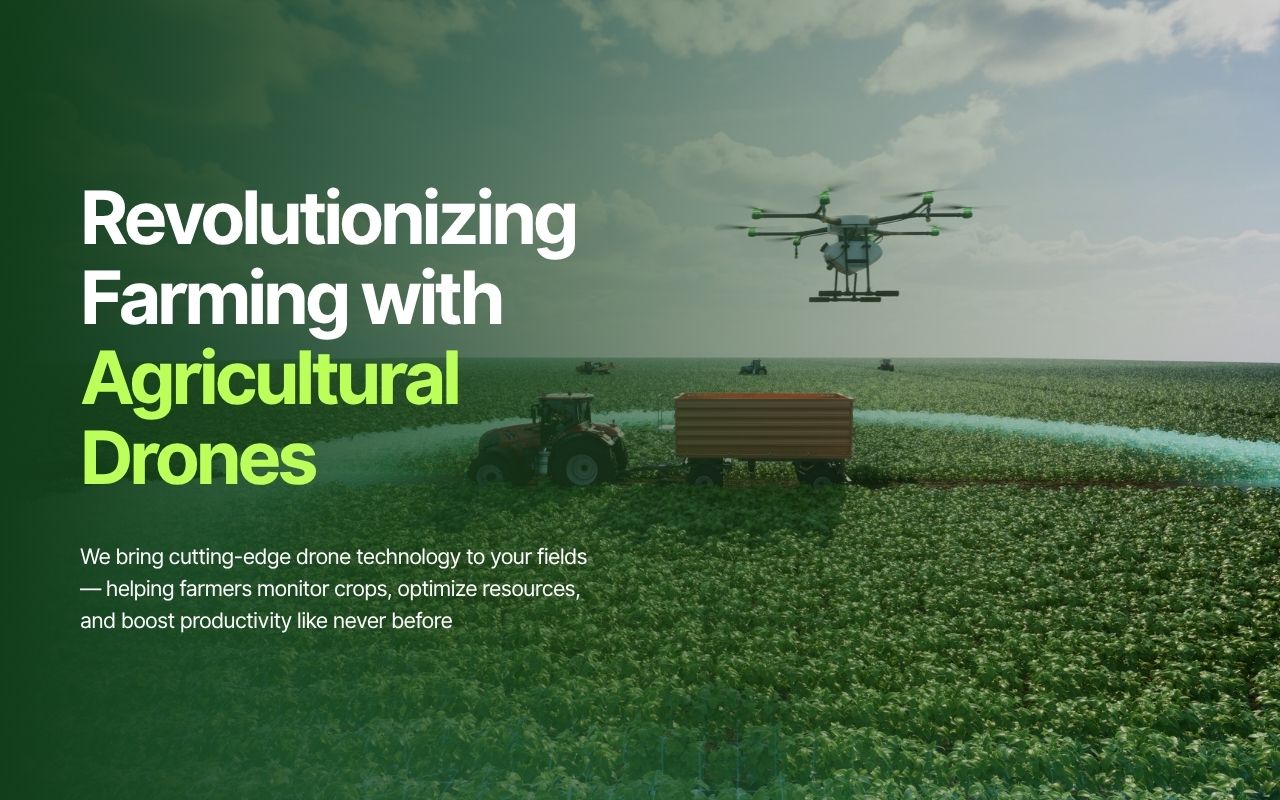
High Efficiency:
Drones are very fast and efficient in this regard; thus, chemicals can be applied in time, which is the primary goal of stopping crop loss.
Research shows that a drone can cover an effective field area of 4 hectares against a knapsack sprayer, which can cover a field of about 0.082 hectares per hour. The average speed for a drone sprayer is 13.201 km/h, compared to only 1.833 kilometers per hour for a knapsack sprayer. This capacity is paramount in contingency cases like a pest infestation, whereby a farmer needs to move with haste and precision.
Speed has a big say in ensuring crop loss is averted, you can take advantage of this efficiency.
Drones are best suited for small, scattered fields. Drones are built to work well in small and spread-out fields. For instance, it is a great option for those without a lot of time on their hands but have considerable land to oversee. Efficiency, precision, and accuracy are hallmarks of drones. This is demonstrated by monitoring plantations, spraying necessary substances, or collecting data.
Precision Application:
The main advantage of drone spraying is that it can precisely apply pesticides, herbicides, and fertilizers. The way traditional spraying processes are carried out usually results in the excessive usage of the chemicals or their concentration in certain areas, which do not necessarily need to be sprayed, yet drones can identify the specific places that should be sprayed. It is a high degree of accuracy is achieved using high-precision GPS, GIS route planning, and sophisticated imaging equipment.
The drones mostly fly a limited distance over the plants, enabling them to drop the chemicals where they are required.
Such a targeted approach reduces the number of chemicals wasted and the risk of getting into other unintended locations, as it is a common problem with conventional spraying. The final product is increased treatment and reduced environmental damage.
Application of pesticides using drones would not be possible without knowledge of the concept of precision agriculture.
Precision agriculture, sometimes known as smart farming or site-specific crop management, is the current approach to agriculture in which technology is utilized to monitor, measure, and make adjustments based on the various conditions in a field.
Precision agriculture does not apply the same approach to the entire field. Instead, farming practices are changed to suit the unique requirements of the various regions of the field. This gives rise to better, more efficient, and more sustainable agriculture.
Reduction in Labor Requirement Dramatically:
The number of people required in drone operations is less than that in traditional spraying.
One person can operate multiple drones, which reduces labor expenses and allows things to be safer as the chemical exposure is reduced to a single individual. Farmers can access precise information on the location and extent of weeds, pests, erosion, or waterlogging when using drone mapping. This enables them to plan better and deploy the appropriate crews to the appropriate locations. It saves time and effort; fewer field checks have to be repeated, and it assists in better decision-making. Conventional agriculture is characterized by high labor requirements, particularly the number of people who check crops or spray pesticides. Drones are able to reach large spaces within a significantly shorter time than manually. This reduces labor requirements, saving time and money.
Improved Crop Yield:
To ensure healthy crops, fertilizers and pesticides should be applied at the right time and at the right place.
Drones can use these treatments in the most necessary place with no excessive use or less use, which may cause harm to plant growth. Regular and precise spraying results in the healthiness of the plants and optimal utilization of the nutrients involved, resulting in productive harvests. Drones monitor the welfare of crops and administer appropriate treatments to enable them to produce better quality crops.
With the use of drones, farm operations are easier, more efficient, and inexpensive.
They are important instruments to large-scale farmers who seek to maximize their profits.
Water Conservation:
Drones assist in making water use more effective and efficient by spraying only the necessary amount that reduces waste and runoffs.
This ensures that irrigation is more sustainable, local water supply is safeguarded, and the impact of farming on the environment is minimized. Drones could reduce the water consumption of traditional methods by 90 percent or more. This is notably significant in places where there is limited water, which makes farming more environmentally friendly.
Quick Data Collection:
Unlike taking days or weeks to check your entire farm manually, drones can collect data in a few minutes.
This rapid data collection can help you solve problems at a faster rate, which increases the productivity of your farm.
Health Monitoring:
Drones capture detailed images of crops, which allow you to follow the state of crops, whether they use a lot of water, whether they are stressed out, or whether they are nutrient-deprived.
Early identification of such problems allows you to remedy them before they cause crop failure.
Early Pest and Disease Surveillance:
Drones include high-resolution cameras and thermal sensors that can detect crop health changes early to prevent the detection of pests and diseases.
Drone Spraying Cons:
1 – High Initial Cost:
The primary issue with such technologies, such as drone spraying or hi-tech agricultural equipment, is that it is expensive to begin.
These systems are not as expensive as regular tools because they are based on complicated hardware and technology.
Real equipment, such as drones in agriculture, sensors, GPS, and control units, can be expensive to purchase.
Farmers might also require additional tools and facilities like batteries, charging stations, software, and repair kits. This renders the initial cost very high compared to the manual methods.
The equipment cost is also increased by maintenance and repair.
Such sophisticated machines require a regular service, the updating of software, and parts replacement after a certain period. In case they are broken, they can be quite expensive due to the need for specialized parts for repair.
All these have led to the high initial cost being a major issue for small- and medium-sized farmers, who find it difficult to apply these modern farming technologies.
2- Weather-dependent operation:
Bad weather is something drones cannot work with.
Along with severe winds, rain, or haze, GPS signals may be disrupted, the delicate components may be broken, or spraying may not be as precise.
- Unexpected weather alterations can postpone such activities as spraying or making maps.
- When drones spray in rain, the task is normally repeated.
3- Technical Problems and Internet Connection Problems:
Similar to any electronic infrastructure, drones are vulnerable to issues such as GPS drift, application crashes, sensor failures, and the inability to maintain contact with the controller.
- Any minor error can spoil a spray job or cause the drone to crash in the air.
- The performance of the drone may be influenced in locations with no good signals.
4—Requirement of Competent Operators and Data Analysis:
Spraying, mapping, or thermal imaging with drones cannot be turned on and go.
Operators must be familiar with calibration, terrain mapping, and safe flow of the drone.
- Failure to train operators can result in safety hazards or crop loss.
- The NDVI or moisture maps are difficult to interpret and utilize without technical expertise.
5—Limited Payload and Range:
The average agricultural drone has a 10-15 liter capacity, and only can cover a few acres at a time.
A big mass will result in the shortening of the flight time and a drop in the drone’s balance.
The carrying capacity of a drone is not much; it can carry a few liters of chemicals (depending on the size of the tank).
When a single drone is used by farmers, depending on the size of the farm, it can be exhausting as the tank must be refilled numerous times before covering the entire farm area, and time-consuming.
- Larger fields require more than one flight, which is time and energy-consuming.
- Varied combinations of seeds or chemicals require some changes before each work.
6- Maintenance Needs:
Drones require technical abilities, which can be a problem for individuals who are not techies or are somewhat illiterate.
The drone can cease operation due to a lack of proper maintenance because agricultural drones handle different chemicals, such as herbicides.
These may obstruct the nozzles and pipes, resulting in blockages or wear.
Mist and dust may be chemical in nature and thus may harm the drone motor or propellers.
Proper cleaning is the major factor that prevents these problems.
Manual Spraying Pros :
Ease of Use:
Whilst choosing a sprayer, how easy it is to use is critical.
The guide sprayers have a sincere layout. You pump the handle with the aid of your hand to create stress. This will be tiring, especially if you are spraying at amassive location. Strength sprayers, especially those that are battery-powered, use a motor to hold steady pressure. Guide sprayers are easy to apply and use. Farmers don’t need any special training or technical abilities to effectively apply them.
This means:
Everyone can speedily discover ways to function the system
You don’t need professional exertions or professional operators
It reduces reliance on an era or outdoor guide
Cost :
Cost is a key factor while deciding on a sprayer. Manual sprayers are cheaper to buy. You do not need pay for batteries, fuel, or electricity. electricity sprayers value extra upfront. You might additionally need to invest money in batteries, gasoline, or upkeep.
Maintenance:
Looking after your sprayer is crucial to keep it operating nicely.
Manual sprayers require simple renovation. You can easily remove them after every use and check for leaks.
No electricity wished:
Works without electricity or Batteries. Manual sprayers work without electricity, gasoline, or batteries.
They depend on hand pressure or mechanical pumping, making them very reliable.
This affords several benefits:
They can be used in faraway or off-grid areas.
They don’t depend on a strong delivery or charging.
They eliminate the need for gas or energy costs.
Manual Spraying Cons:
Physical pressure and operator fatigue:
The usage of a manual sprayer requires loads of bodily work from the man or woman running it.
This may cause tiredness, specifically if they use it for a long time. The act of pumping the sprayer or carrying the load of a manual backpack or knapsack sprayer can place several strains on the palms, shoulders, and back, in particular while spraying for extended durations.
Restricted Insurance Location and Potential:
Maximum guide sprayers have smaller tanks compared to motorized ones. This means the user has to refuel regularly to fill up the tank, which makes the task less green and takes more time overall.
Labor-Intensive Responsibilities:
Working with a manual hand sprayer or a guide backpack sprayer may be very tiring.
The need to maintain pumping, sporting, and refilling the sprayer makes these tools difficult to use, mainly when masking large regions. For farmers or organizations that work on a huge scale, this can boost exertion costs and lower productivity.
Time-Eating Operation:
Guide sprayers take a greater time to use than motorized ones. The time spent pumping, carrying, and refilling the sprayer adds up, especially while coping with large regions. This can be a major hassle for large farms or operations that want to use pesticides, herbicides, or fertilizers quickly and successfully.

Leave a Reply