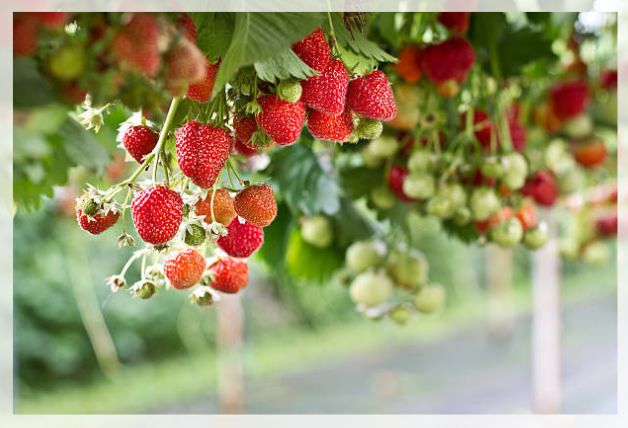
Do you know that the strawberry plant is one of the easiest fruits to grow?
The taste of this fruit is far more flavorful than what you can find in the grocery store.
Why? This is because sugar in berries tends to convert to starch soon after you pick them.
The best thing about the strawberry plant is that they are easy to grow in almost all climates and soils as long as you plant them in a location that gets full sun.
A strawberry plant comes in three types, June-bearing varieties that bear fruit all at once, often over a period of three weeks.
Everbearing varieties produce a big crop in spring.
Moreover, these produce lightly in the summer and then bear another crop in later summer/fall.
Day-neutral varieties tend to produce fruit continuously through the season until the first frost.
Keep on reading to learn more.
Strawberry Plant
The plant you know as garden strawberries are nearly all cultivators of a hybrid plant Fragaria x ananassa.
These were first bred during the mid-1700 in France by crossing a North American strawberry, F. virginiana, and a Chilean strawberry, F. chiloensis.
Technically, a strawberry is not a true berry with internal seeds, but rather an ‘aggregate accessory fruit’ that has seeds on the outside of the fleshy portion of the fruit.
Moreover, the garden strawberry plant is easy to grow perennial fruiting plant that will reward you with ample harvests for a number of years.
It tends to have a low-growing and spreading habit, with a lot of deep green, ridged leaves, and diminutive white flowers.
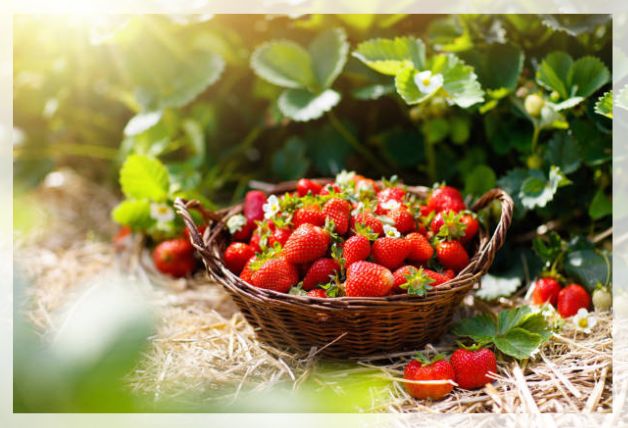
The fruits grow from the ends of delicate leafless shots and individual plants are not fast-growing, they, however, quickly spread outward with runners.
With favorable conditions, this plant can produce up to one-quarter of strawberries per season.
Furthermore, garden strawberries tend to produce fruit from late spring to early summer months, and even into fall, depending on the variety.
Though they may begin fruiting in early spring in the warm southern states.
However, in cooler climates, you will need to start the plant in spring, while in a warmer area, you can start the plant in spring or fall.
Quick Facts about Strawberry Plant
Some quick facts about the strawberry plant are:
| Botanical Name | Fragaria x ananassa |
| Common Name | Strawberry, garden strawberry |
| Plant Type | Fruiting perennial |
| Mature Size | 4 to 12 inches tall, 6 to 24 inches wide |
| Sun Exposure | Full sun |
| Soil Type | Loamy, rich, well-drained soil |
| Soil pH | Acidic (5.8 to 6.2) |
| Bloom Time | Late spring, early summer |
| Flower Color | White |
| Hardiness Zones | 4 to 9 (USDA) |
| Native Area | Europe |
How to Plant Garden Strawberries
You will need to plant a strawberry plant in rich, moist soil, spacing about 12 to 18 inches apart as they will shoot out runners quickly.
In zone 6 and further north, you will need to plant them outside during the spring months to make sure that the plants are well-rooted by the following year.
According to recommendations, you will need to pinch off all blooms the first year, especially the June-bearing varieties.
This will encourage the plant to put its energy into root growth.
When planting strawberries in zone 7 and further south, you will need to plant them in the fall and will produce edible fruit by the following spring.
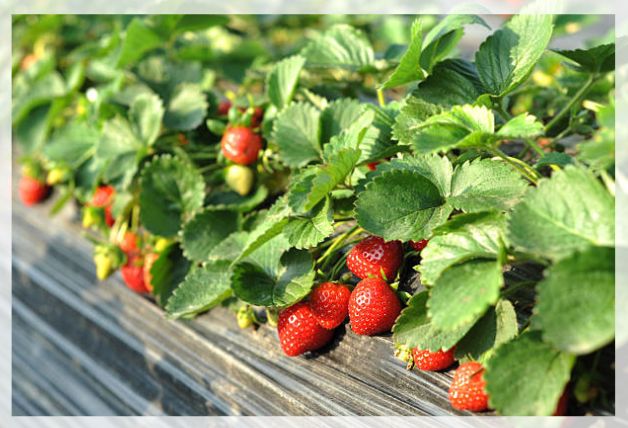
Make sure to mulch between the plant after planting to keep the soil temperature cool, retain moisture, deter weeds, and keep the fruit above the soil.
The traditional mulch for strawberries is straw.
Make sure to never use black plastic as it will rise the soil temperature and optimal fruit production requires cool soil.
It is important to note that you should not plant a strawberry plant where tomatoes, peppers, or eggplants have grown.
This is because these plants are susceptible to verticillium wilt, which can also affect strawberries.
Strawberry Plant Care
When growing a strawberry plant, keep in mind the following:
Light: Your garden strawberry plant will need 8 hours of full sun each day.
However, you can also plant them anywhere that gets between 6 to 10 hours of sunlight. If you plant them in less light, the harvest will be smaller.
Soil: These plants prefer soil that is rich and loamy with a pH between 5.8 to 6.2 for maximum production.
Make sure to plant the strawberries so that the roots are covered in soil.
However, the crown remains exposed to fresh air and light.
If you bury them deep, the plant will rot.
Water: For juicy strawberries, make sure to provide your plant with 1 to 2 inches of water per week.
Regular watering is especially important while the fruit is forming from early bloom to the end of the harvest.
Temperature and Humidity: The ideal temperature for a strawberry plant is about 60 degrees and 80 degrees Fahrenheit.
However, this plant is able to tolerate as low as 22 degrees Fahrenheit, as long as you protect the plant from frost.
Moreover, high humidity can encourage the development and spread of powdery mildew, so make sure to provide plenty of air circulation for your plant.
Fertilizer: Make sure, to begin with, compost-rick organic soil and apply a balanced fertilizer, 10-10-10 at planting time, at the rate of one pound per 100 square feet.
Then fertilize again after renovation of June-bearers or after the second harvest of day-neutrals and everbearing types.
Do not over-fertilize, as it can lead to excessive leaf growth and poor flowering.
Additionally, do not fertilize your plant late in the season in colder climates, as you will want to prevent new growth that can be damaged by frost.
Garden Strawberries Varieties
A strawberry plant is grouped by its fruiting habits.
Thus be sure to know what you are planting as the type of plant will help determine when and how much you harvest.
These varieties are;
June-Bearing: This variety tends to produce one large crop per year during a two or three-week period, often around June.
Though they will begin bearing earlier in warmer climates.
Moreover, these plants will especially benefit from removing all their flowers in the first year, to increase future yields.
Everbearing: These do not bear fruit continually, as the name implies.
Everbearing strawberries tend to produce beds when the days are long which often results in two main harvests, one in June and another in early fall.
Day-neutral: These produce fruit throughout the growing season, however, in smaller quantities than the June-bearing plant.
Moreover, they do not rely on day length for fruit production.
Instead, they will form fruit based on temperature, even forming buds when the temperature is as low as 35 degrees Fahrenheit.
However, in case the temperature increases by 75 degrees Fahrenheit, the production of the fruit stops.
Everbearing and day-neutral strawberries tend to have a longer season of harvest, but the fruits are somewhat smaller than June-bearers.
Day-neutral varieties often produce only a few runners.
Harvesting Tips
The garden strawberry plant will produce fruit over a period of about 3 weeks in the late spring, though the fruit tends to appear earlier in warmer climates.
It is important to note that the fruit is the sweetest when fully ripened on the plants.
For most varieties, this means leaving the berries on the plant for a day or two after they fully color, though the only way to know for sure is to taste them.
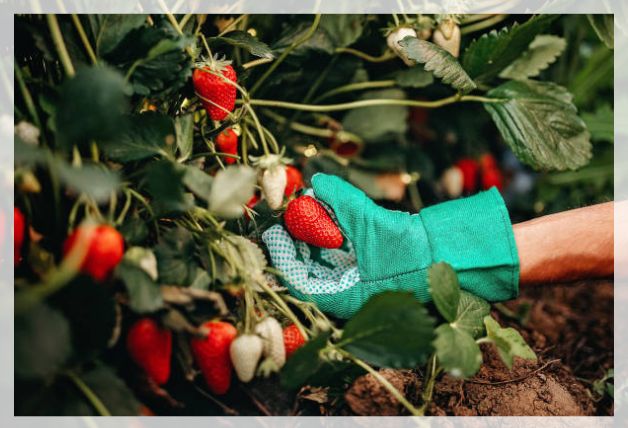
Moreover, it is important to note that strawberries tend to bruise easily.
Thus, make sure to be gentle when pulling the fruit from the plants.
Snap or cut the stem directly above the berry rather than pulling itself.
You can keep the harvested berries in a cool, shady location.
Pruning and Propagation Tips
June-bearing strawberries tend to produce a number of runners, which you will need to leave in place.
However, everbearing and day-neutral varieties produce only a couple of runners that produce inferior fruit.
On day-neutral and evergreen varieties, you can snip off these runners.
During the first year, pick blossoms off the plant.
This will help to increase the yield significantly in the second year as the plant will devote to developing healthy roots instead of fruit in the first year.
Moreover, the strawberry plant will naturally spread by means of stem runners that tend to spread out from the parent plant and root themselves in the surrounding soil.
As these runners will take root, you can snip the connecting stem and the resulting plantlet can be carefully dug up and transplanted to a new location.
Pinning the runners down into the soil can hasten the rooting process.
Early fall is often the best time to dig and move these plantlets.
Overwintering Strawberries
In colder climates, you will need to mulch over the strawberry plant in winter.
This will help to prevent injury to the crown.
Make sure to wait until the temperature drops to 20 degrees Fahrenheit.
Then cover the bed with a number of inches of straw, which is the best option, pine needles, or shredded leaves.
Be sure to use mulch that you can easily remove in the spring.
Common Pests and Diseases
It is important to note that strawberries are a high-maintenance plant.
Thus be prepared to face a variety of problems including leaf spot and other foliage diseases, root rot, fruit rot diseases like anthracnose, gray mold, viruses, and sun scorch.
Moreover, common pests include:
- tarnished plant bug
- mites
- aphids
- leafrollers
- slugs
- nematodes
- strawberry weevils
It is important to note that even birds can devastate a crop unless you protect the patch with netting.
As with any edible plant, it is best to be on the lookout for the least toxic solutions possible when treating diseases and pests.
Many gardeners resign themselves to the reality that they can lose some portion of the crop to such problems.
Furthermore, many cultivars are bred to be resistant to common diseases.
So make sure to consult a local expert for recommendations on the best varieties.
Growing Strawberries in Pots
In case you do not have space for a garden, or if you live in an area with soil that is naturally alkaline, it can be a good idea to grow strawberries in a container.
Make sure to fill the container with compost-enriched quality potting soil.
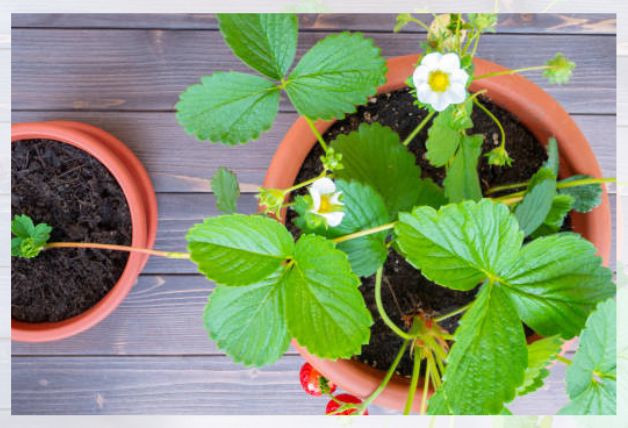
You can replace garden strawberries that you grow in containers in the late summer months.
Move your plant to a cool, protected place like an unheated basement or garage, during the chillier months.





Leave a Reply