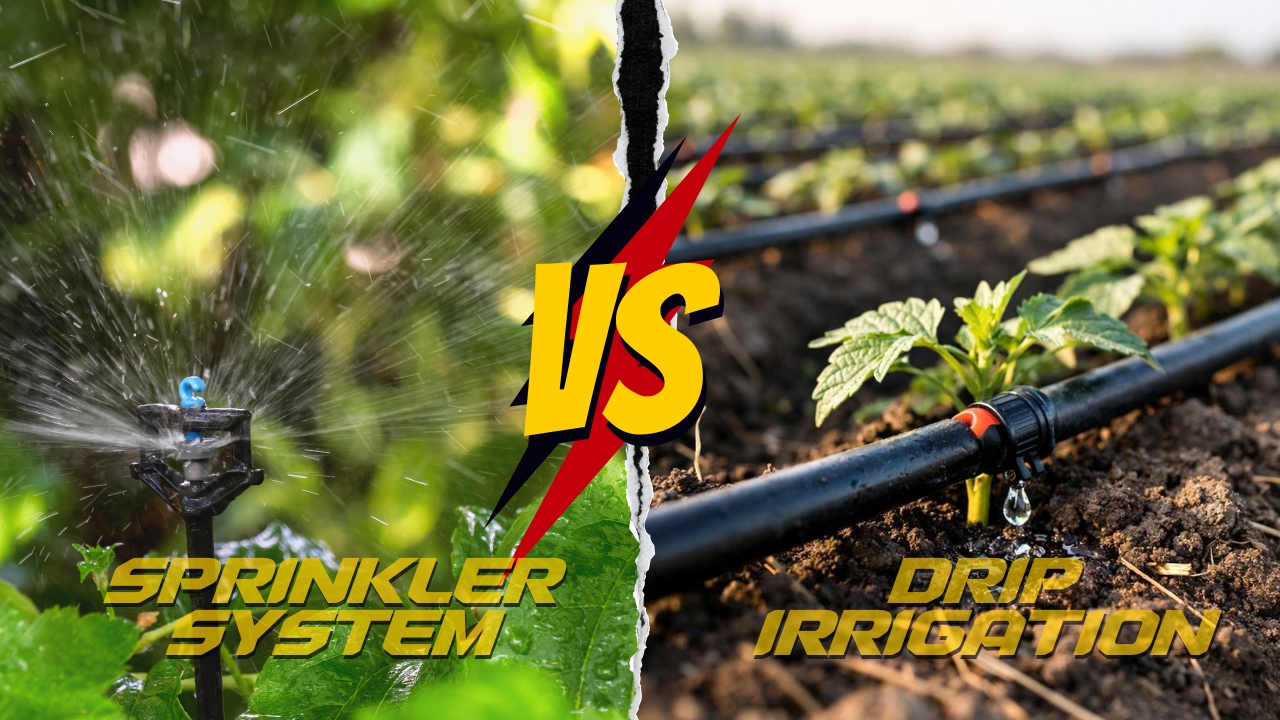
What is Drip Irrigation?
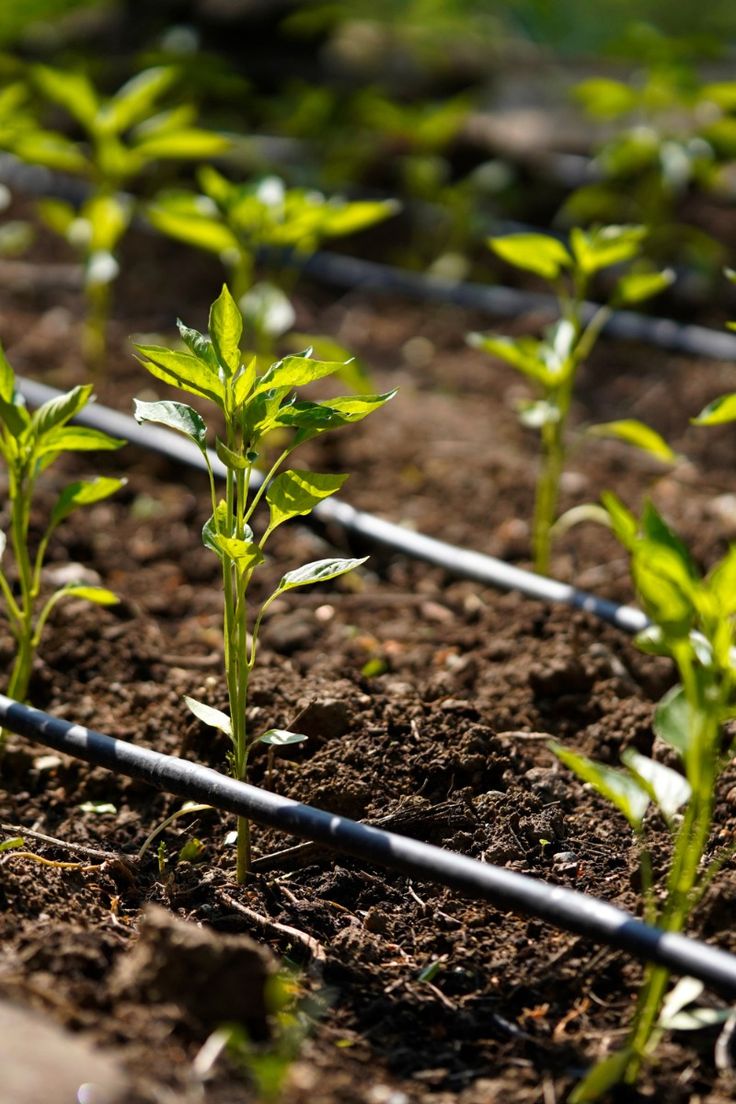
Drip irrigation, also known as trickle or micro-irrigation, is the most efficient way of watering plants. This watering procedure is delivered slowly and consistently to the roots of plants and trees. The tubing or driplines carry water through tiny holes that are known as drippers. This ensures that water reaches the soil exactly where it is needed with minimal wastage. Such a method is intelligent and efficient because it minimizes water loss through evaporation or runoff.
Depending on the need, drip systems can be set under the soil, termed “subsurface drip irrigation,” or on top of it. Targeted delivery of watering needs helps save water, leading to lower utility bills.
One big advantage of drip irrigation is that it allows the addition of fertilizer to plants at the same time as watering them.
What is Sprinkler Irrigation?
A sprinkler irrigation system is a water supply system for plants and grass that sprays water over a large area as if it’s raining. This overhead method involves buried pipes and sprinklers or sprayers positioned above the ground at various points.
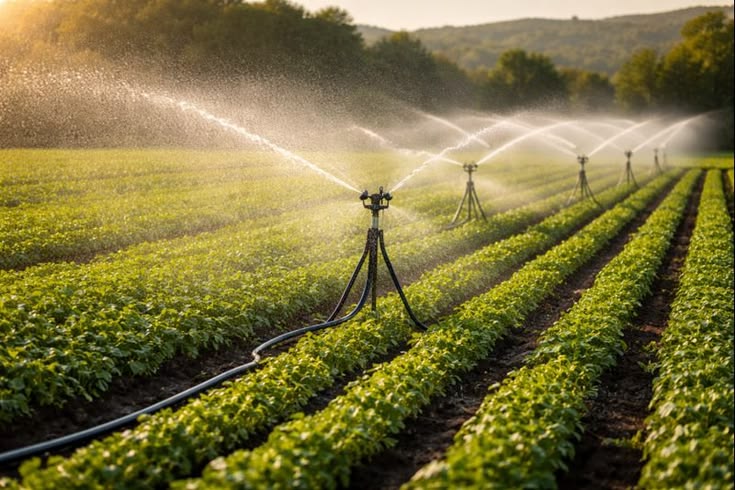
Sprinklers can be of the rotating, stationary, and oscillating types. They are used for landscaping at homes and businesses. However, sprinkler systems are inefficient compared to drip systems because of their propensity to lose water through evaporation or runoff. Also, sprinkler systems end up overspraying areas such as sidewalks and driveways, which wastes water.
1. Water Distribution
How Drip Irrigation Provides Water to Your Plants:
If you choose drip irrigation instead of a sprinkler system, water is fed directly into the soil at the base of the plants through a network of small emitters and flexible tubes.
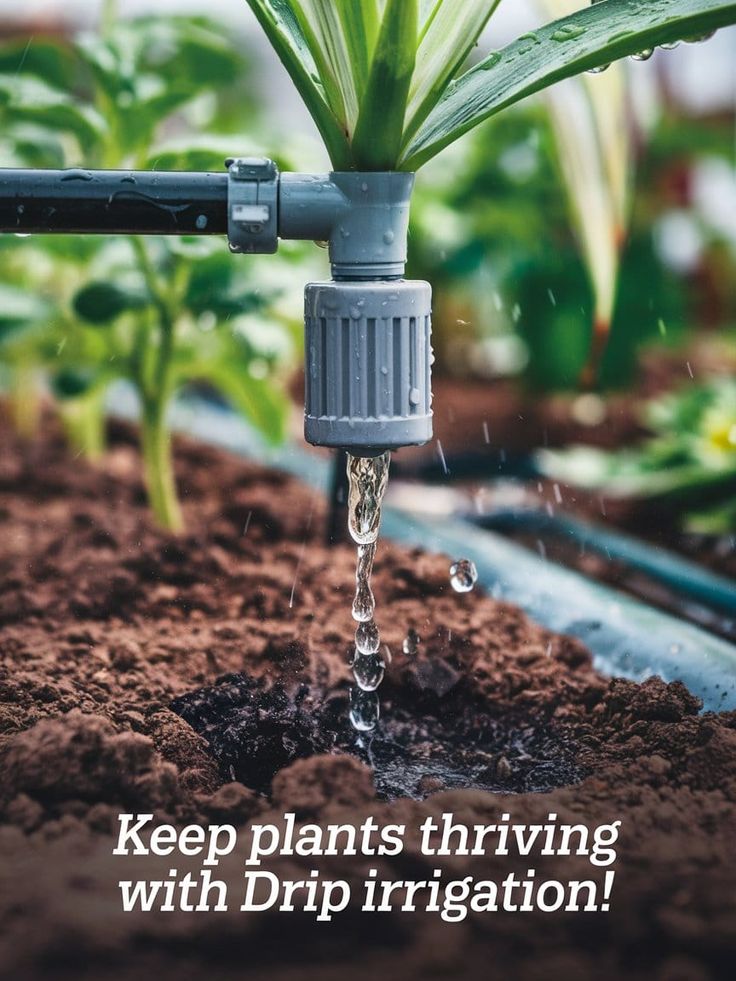
The flow of water through these emitters occurs at a slow pace, and the rate of flow varies between 0.5 and 4 gallons per hour. This is followed by slow movement of water through these emitters at a rate that usually ranges between 0.5 gallons and four gallons per hour.
This creates ideal growing conditions for your plants, providing the root system with a constant supply of moisture, but without oversaturating the soil. There is no erosion or washing away of nutrients as the soil structure is in its best shape. The seeds of weeds located between plants do not receive sufficient moisture to germinate.
Drip irrigation operates under low pressure, saving not only water but also energy.
It also avoids misting, evaporation, and runoff problems associated with other watering methods.
How Sprinkler Systems Spread Water:
In case a sprinkler system is chosen, instead of drip irrigation, the water is dispersed over larger areas using different kinds of spray heads.
These systems force water through underground PVC pipes before discharging it from sprinkler heads that emit sprays in various patterns.
Modern sprinkler systems include rotary heads that release water in streams rather than mist, reducing wind drift and water waste.
There are also MP rotators that produce several rotating streams at reduced output rates and pop-up mechanisms that are invisible when not deployed. There are also check valves to prevent water from draining out of low points, and pressure regulation to ensure proper droplet size and uniform water coverage over the lawn or garden.
Sprinkler systems provide uniform watering of lawns or large areas of plants when designed properly with head-to-head coverage and matching precipitation rates.
2. Water Efficiency:
Drip irrigation systems:
Drip irrigation systems are a way to water plants because they put the water right where it is needed at the roots of the plants. This way, we use less water overall because we do not lose as much to evaporation or overspray. Drip irrigation systems are especially helpful in places where water is scarce in dry areas, or in farming where the soil drains quickly, like sandy ground. With drip irrigation systems, we also avoid watering areas that we do not need to water, such as walkways or mulch beds. Drip irrigation systems are the choice when we want to use water wisely. Drip irrigation systems can be up to 90-95% efficient because they deliver the right amount of water to the plants with very little waste.
Drip irrigation systems also help cut down on evaporation by keeping the water from leaves and soil, and they stop water from running off even on sloped areas. Every drop really matters when we are trying to be kind to the environment and save money.
Sprinkler systems:
Sprinkler systems are not as targeted as drip irrigation systems. They can cover large areas quickly, making them good for lawns, parks, and sports fields.
They can be set up to work with weather conditions, helping to keep the grass even and healthy. While drip irrigation systems save water, sprinkler systems can save time and effort when we need to water bigger spaces.
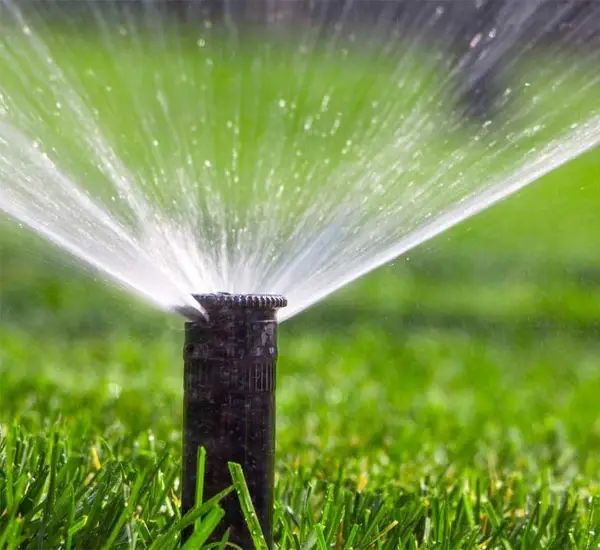
Traditional spray heads are about 65-75% efficient, but newer rotary nozzles have improved this, pushing sprinkler efficiency up to around 70-80%. However, factors like wind, evaporation, and runoff can affect how sprinkler systems work, as water can be wasted if it lands on hard surfaces, weeds, or exposed soil. If we have a lawn, sprinkler systems are often the most practical option.
For a landscape bed that is 1,000 square feet, the efficiency difference can save thousands of gallons of water each year.
This helps reduce our impact while keeping our water costs under control. Drip irrigation systems and sprinkler systems are both useful. Drip irrigation systems are better for saving water, and sprinkler systems are better for saving time.
3. Suitability of Crops:
Drip Irrigation:
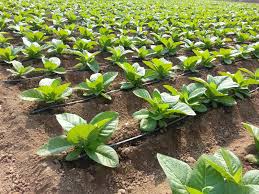
Drip irrigation is an excellent solution for sandy soils due to the fast drainage of water from these soils. This irrigation method is effective for keeping the soil moist, without the need to overwater the crop. Because drip irrigation allows one to apply water directly to the crop row, it is an effective method to irrigate crops grown in rows and to water areas of a garden that require water the most (e.g., around the base of plants and in the gaps between plants). Drip irrigation is ideal for growing high-value crops, such as vegetables, fruits, and trees.
Sprinkler Systems:
Sprinkler systems are ideally suited for large fields or lawns where one wishes to irrigate a broad area and achieve uniform application. Sprinkler systems can be used to irrigate several different crops; however, the main limitation of sprinkler systems is that they do not provide the same precision when watering as drip systems do. Therefore, the best irrigation system for you depends on both the type of crops you’re growing and the type of soil in which those crops are growing. Sprinkler systems exhibit a wide range of uses; however, grains, pastures, lawns, and vegetables are commonly irrigated with sprinkler systems.
4. Installation Cost:
Businessmen use a magnifying glass and a down arrow with decreasing stacks of coins for cost reduction in the factory and business cost savings to get more profit.
Drip Irrigation Investment and Operating Costs:
Depending on the area covered in our region, the cost to install drip irrigation can differ.
Long-term benefits are the real advantages. You can save a lot on your water bills—in some cases, the savings can be as high as 30-50% compared to the traditional watering methods, especially during the hot summer. Installing a drip system requires careful planning from the very beginning. This means that the initial costs involved in purchasing more drip emitters, pipes, and filters required for the entire installation process are higher than when using sprinkler irrigation. More efforts are required for maintenance. Emitting holes can clog or form leaks depending on the configuration of the irrigation system.
Its regular flushing prevents water wastage and guarantees regular irrigation for its plants.
Maintenance costs are low in general, but some parts may have to be replaced after every couple of years due to wear and tear.
Sprinkler System Investment and Operating Costs:
The costs to have a professional sprinkler system installed may also vary depending on the setup.
Sprinklers use more water (and, therefore, higher utility bills), but smart controllers can help cut down on that. One should also budget for additional costs of winterizing the system and resetting it in the spring.
5. Maintenance:
Both types of irrigation systems need care similar to front or backyard designs. If a low-maintenance lawn is your goal, think about how much effort it will take to keep it in good shape.
Drip System Maintenance:
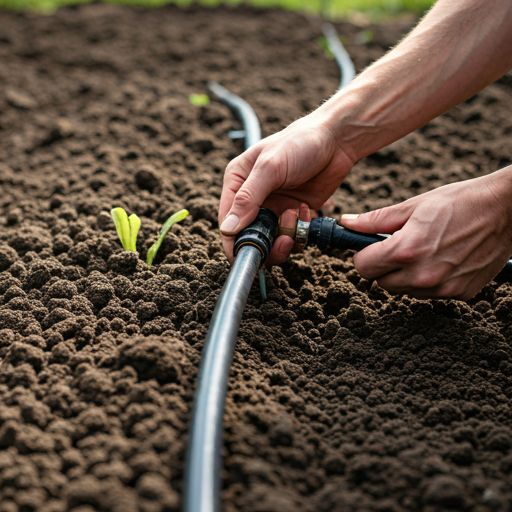
Drip system maintenance includes regular emitter checks for blockages, flushing the lines annually to remove debris, and protecting the system from frosts during the winter months.
In areas that are subjected to cold weather, you will have to check your lines annually for blockages and intend to protect your lines from freezing in the winter. Clogged or dirty emitters and damage caused by sun exposure to the line materials are frequent issues; therefore, you should routinely clean the lines to keep them free from blockages and working efficiently. In addition, if your water is “hard,” you need to clean your lines more often than if your water content is low.
Sprinkler System Maintenance:
Sprinkler system maintenance includes adjusting the sprinkler heads, especially after mowing.
The area should be prepped before winter to prevent pipes from freezing and causing costly damage. A spring check of your sprinkler system is also good to do to ensure that your system is running correctly; you can include a sprinkler system check in your spring yard clean-up.
6. Weed Growth:
Sprinkler Systems:
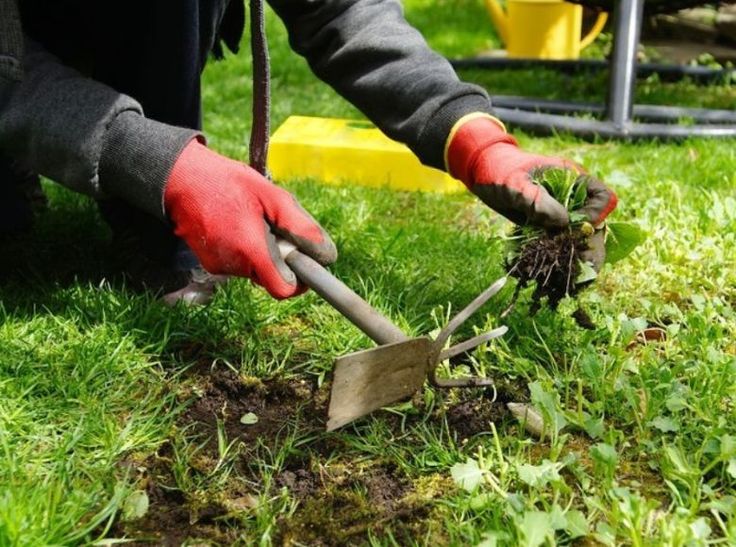
Sprinkler systems can water areas where weeds are growing. This helps the weeds spread and compete with the crops for water. In a sprinkler setup, water is spread over the field so the plants and the soil around them get wet. This creates conditions for weed seeds in the soil to start growing. They get water, air, and sometimes sunlight.
Sprinklers do not know the difference between crops and weeds. They spread water over the field, which means weeds can grow between rows along the edges and even where no crops are planted. As these weeds grow, they take away things from the crops like nutrients, water, and sunlight, which can make the harvest smaller and not as good.
When the soil is wet on the surface, it is easier for growing weeds to grow, making it harder to control the weeds. This means more work is needed, like pulling weeds by hand or using chemicals to kill the weeds.
Drip Irrigation:
Drip irrigation is different. It sends water to the roots of the plants so the leaves and stems stay dry. This helps stop weeds from growing and reduces the chance of plant diseases that spread on leaves. It can also help prevent problems, like powdery mildew. By giving water where it is needed, drip irrigation helps limit weed growth, especially in places that get a lot of rain.
The drip irrigation system is good because it gives water to the crops and not to the weeds. This means that the crops get the water they need, and the weeds do not.
Drip irrigation is a way to water crops because it helps the crops and does not help the weeds.
6. Climate Suitability:
Drip Irrigation:
Drip irrigation suits dry areas well, where water is a scarce resource. Drip irrigation helps in dry lands with scarce water by slowly delivering water directly to the plant roots to minimize wastage resulting from elevated temperatures. So, most of the water used in traditional irrigation methods evaporates within a short period in a hot climate, but with drip systems, the soil stays wet for a long time.
This means that drip irrigation can be used where water is limited or the rainy season is unreliable, since it does not lose any precious water and can sustain plant growth even in adverse conditions.
Sprinkler System:
The sprinkler system is most effective in areas where the weather is neither too hot nor too cold and has little or no wind. This means that water droplets have a higher chance of being influenced by the environment. Water droplets can move away from plants in windy areas, resulting in inadequate and inefficient watering. During hot weather, a significant amount of sprayed water evaporates before it reaches the ground, thereby downgrading the sprinkler systems’ efficiency and ensuring insufficient irrigation of plants. For that reason, sprinkler systems are not effective in extreme weather conditions.
Conclusion:
Choose Drip Irrigation:
If you want to save water and grow crops, drip irrigation is a great option.
It gives plants the amount of water they need right at their roots. This helps stop water from evaporating or running off. As a result, plants grow strong and healthy. You get more and better crops. Yes, setting up a drip system can be expensive at first. It saves water, fertilizers, and work eventually. This is especially true in areas where water’s scarce.
Choose Sprinkler System:
A sprinkler system is good when you need to water a lot of land cheaply.
It spreads water over the field. This makes it perfect for crops like wheat or grass that need lots of water. It’s usually easy and not too expensive to set up. This makes it a good choice for farmers on a budget. It uses more water and needs careful management. This is to prevent waste, especially when it’s hot or windy.

Leave a Reply