
Blueberry cultivation is thought of as a very rewarding pastime due to the numerous benefits it offers. Blueberries are highly nutritious, containing ample amounts of vitamins, antioxidants, and dietary fibers; thus, by eating them, you are benefiting yourself in many ways. The sweet and slightly tart taste of blueberries makes them a preferred choice for fresh eating, baking, and juicing.

Another benefit of blueberries is their adaptability to multiple methods of cultivation (i.e., flat gardens or in pots), so even small spaces, like balconies, can be used for producing blueberries at home. Blueberries grown at home tend to be fresher, sweeter, and contain an abundance of nutrients.
That said, blueberries aren’t your average plants; they have specific requirements for optimal culture.
Choose the Right Variety:
Types of Blueberries
Blueberries come in types like highbush, lowbush, rabbiteye, and half-high blueberries.
Each type of blueberry has its own needs when it comes to climate and soil for blueberries.

Northern highbush blueberries:
Northern highbush blueberries are originally from the northeastern United States, from the Appalachian Mountains to the Atlantic Ocean. These blueberry plants can grow up to 9 feet tall. One special type of blueberry called ‘Rubel’ was first introduced in the 1920s.
Many of the blueberry plants we see today in stores were developed through breeding programs for blueberries.
Rabbiteye blueberries:
Rabbiteye blueberries are a group of blueberry types that are native to the southeastern United States.
These blueberry plants are known for being hardy and able to grow in various conditions, making them a good choice for people in areas who want to grow blueberries. Rabbit-eye blueberries grow between 6 and 10 feet tall.
These kinds of blueberries were first developed in areas with hot summers.
However, rabbiteye blueberries act differently in places like the Pacific Northwest compared to where they come from. In this region, the blueberry plants tend to be smaller. The blueberry fruit ripens late in the summer and fall.
In some summer areas like the Pacific Coast and parts of northwest Washington, there might not be enough heat for the blueberry fruit to fully ripen.
Lowbush blueberries:
Lowbush blueberries, as their name suggests, are shorter and more compact than blueberries.
They usually grow taller than 1.5 feet. To get a harvest of blueberries, it’s best to plant more than one type of lowbush blueberry. These kinds of blueberry plants don’t need a lot of pruning. It’s often recommended to cut them back to the ground every 2 to 3 years for lowbush blueberries.
Top Hat is a small, lowbush variety that’s often used for decorating gardens and growing in containers with blueberries.
Ruby carpet is another lowbush type that grows well in USDA zones 3 through 7 for lowbush blueberries.
Soil Requirements:
Before you plant blueberries, get your soil tested. It’s best to collect soil samples at least a year before planting so you have enough time to resolve any issues if needed. Take samples from the top 12 to 18 inches of soil, where the roots will grow.
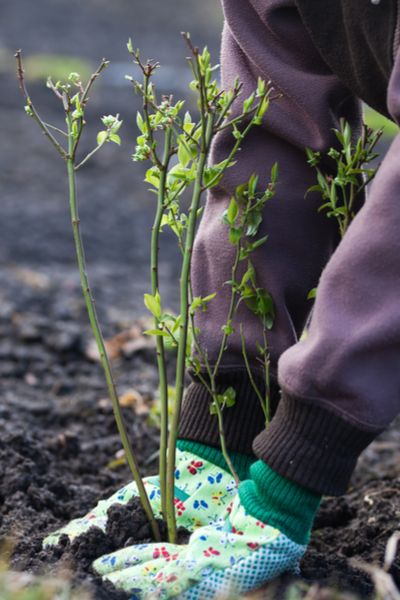
Blueberries need soil that’s acidic, called ericaceous soil, and should have a pH between 4.5 and 5.5.
Check your soil’s pH using a testing kit, which you can buy online or at a garden center. If the pH is too low or too high for blueberries, you’ll need to adjust it (see “Soil pH” below). A standard soil test also checks for nutrients like phosphorus, potassium, calcium, magnesium, and sodium. It also checks for organic matter and boron.
If you already have acidic soil, you usually don’t need to prepare it before planting.
But if the soil isn’t excellent, dig up a bucket of low-pH organic material like pine needles, leaf mold, composted conifer bark, or bracken. Mix this with the soil you take out of the planting hole and use it to fill the hole back in after planting.
This helps keep the soil undisturbed and gives your plant a good start. Don’t use well-rotted farmyard manure or mushroom compost, as these can make the soil less acidic.
If your soil is heavy, alkaline, or only slightly acidic, grow blueberries in large pots or raised beds filled with ericaceous soil or peat-free ericaceous potting mix.
Sunlight:
Well-grown blueberries bearing nutritious fruit require 6 to 8 hours of daily sunshine. Because it facilitates photosynthesis, sunlight is vital for the plant’s capacity to grow, bloom, and produce fruit.
Blueberries produce more blossoms and grow stronger when they get lots of sunshine.
Better harvests and sweeter berries result from this. Plants that get enough sunlight are usually healthier and less likely to get sick.
In exceedingly warm places, too much direct sunlight—especially in the afternoon—can damage the plant.
High temperatures can produce:
– Leaves for burning
– Soil to dry out rapidly and lose water more quickly
– Worse fruit quality
Giving the plant some afternoon shade helps one to avoid these issues.
One can do this by:
– Placing the plant where it gets morning sun but is shielded in the afternoon
– Employing a shade net
– Positioning pots near a wall or under some type of limited shade
Watering:
To help your planted blueberries grow well, you need to give them enough water, but you should not give them too much water. The goal is to give your blueberries about an inch of water each week. If it has not rained enough, you can add some water to make up for the lack of rain.
Drip irrigation is the way to water your blueberries and other shrubs. It slowly and evenly delivers water to your blueberries, which helps the roots of your blueberries absorb the water best.
Even though your blueberries like soil that drains well, they also need moisture because the roots of your blueberries are close to the surface of the soil.
So you should water your blueberries regularly. You should be careful not to overdo it when you water your blueberries.
Here are some tips to follow when you water your blueberries:
1. You can use a soaker hose or a drip irrigation system so the water goes into the soil without wetting the leaves of your blueberries.
2. You should water your blueberries once or twice a week, depending on how much it has been raining, to keep the soil moist but not soggy.
3. You should check the soil before you water your blueberries to avoid giving them too much water, which can cause root rot in your blueberries.
4. You should water your blueberries in the morning so any moisture on the leaves of your blueberries has time to dry before nightfall, which helps prevent issues in your blueberries.
Mulching:
The correct mulching is crucial, as it will help to retain the soil moisture level, protect roots from getting too hot or too cold, and prevent weeds from appearing. It is recommended to lay down a layer of 1-2 inches of mulch to create an effective barrier between the bush and any fallen berries that could contain spores of fungus.
Acidic mulch would be a great choice for blueberries, as they love acidic soil. Pine needles, oak leaves, and hemlock may be used for this purpose. You need to apply a layer 2-3 inches thick under blueberry plants, but do not place mulch directly next to the stem.
The final step is to lay down organic mulch on the soil surface to prevent its drying out and weed germination. As the blueberry shrubs have shallow root systems, they easily react to weeds.
Pruning:

Pruning your blueberry bushes will improve air circulation and sunlight penetration, which will decrease the risk of disease. Pruning is also one of the most effective ways to increase the yield of your bushes.
At the very beginning of the process, you need to get rid of dead, diseased, and damaged branches.
Afterward, you can trim away some old growth to allow new shoots to form. However, you should be careful not to cut too much old wood, as it bears fruit, which means the annual growth. This will help you to ensure a steady increase in the size of the crop.
It might be quite difficult, but many gardeners simply remove only the mentioned branches and trim away several branches that are undoubtedly old.
Old and new growths have different properties. The former tends to be lighter and rougher, while the latter is darker and smoother.
The optimal period for pruning is late winter or early spring.
During this period, it becomes easier to evaluate the condition of the bush and identify the necessary parts to trim away. Besides, it precedes a new season, during which new growth begins.
Growing Blueberries in Pots/Containers:
These fruits perform exceptionally well when grown in pots or containers, which makes them ideal for gardeners who grow plants in pots or on balconies.
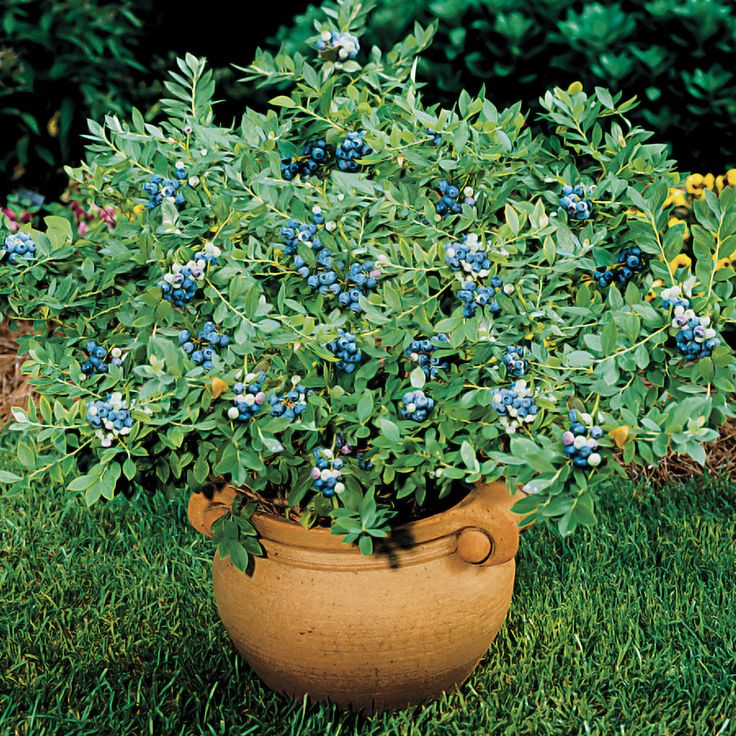
When growing blueberries in pots, gardeners can enjoy full control of the plant’s care process as opposed to direct ground planting.
Choose Big Containers:
The pot should be big enough to allow the development of an extensive root system in the plant.
An adequately sized container is crucial in fostering the growth of a robust root system, which will help produce healthy fruit yields.
Provide Proper Drainage:
The pot should have drainage holes at its base.
Blueberries cannot thrive in overly moist soils.
Fertilizing:
Fertilizers meant for acid-loving plants such as blueberries, azaleas, and rhododendrons are formulated to maintain the acidity of the soil. Such formulation is important in facilitating nutrient absorption by the plants. It is advisable to use small quantities of fertilizer when working with these kinds of plants since using excess fertilizer will have detrimental effects on the plant due to nutrient imbalance, root damage, or leaf formation rather than blossoms and fruits. Regular application of little quantities of fertilizer allows the plants to absorb the nutrients without causing damage to their roots.
Harvest:
The blue color does not necessarily mean that the blueberries are ripe. Rather, the blue color is an indication that they are nearing maturity. Just give them a little time and let them mature further on the shrub. They will be sweeter once they reach total maturity. The berries should practically drop into your palm with just a gentle touch.
If you need to forcefully pluck them off, then they could still be immature.

Ripening normally occurs around midsummer, although this varies based on the species of blueberries you are growing as well as climatic conditions.
It is recommended that you harvest blueberries during early mornings when they are most juicy and fresh. Take note that it could take two to three years after planting the shrubs before they produce abundant fruit yields.





Leave a Reply