
Do you know that watering can be one of the most important parts of a gardener’s arsenal?
It is simple and a efficient way of delivering water to your different types of plants, which is an essential part of their growth.
Moreover, the best watering can is easy to handle and use, precise, and built to reach those hard-to-reach areas with a minimum fuss.
Though watering can have the same basic design, there are subtle designs from model to model that make them suited to a particular task.
Furthermore, they are suitable for pots, planters, or small area beds, while also making them the best solution for small-scale watering.
Keep on reading to learn more about them.
Watering Can
A watering can is also known as a watering pot.
It is a portable container that you can use to water your plants by hand.
Moreover, you can find them:
- in materials of metal, ceramic, or plastic, they consist of a handle
- a container for holding water,
- a spout that often consists of a “rose” at its end.

A rose is a device with small holes, just like a showerhead that functions to break up the stream of water into droplets.
This helps to reduce water pressure on soil or more delicate plants.
Learn more about Water Sprinkler: Uses and More here.
Factors to Consider when buying a Watering Can
One of the important things to note is that watering cans come in different shapes, sizes, and styles, with each suited to particular functions.
As a result, getting a watering can that helps to meet your certain watering needs is important for an optimal gardening experience.
Moreover, with so many options, each boasting a different set of features, making the right choice is not always easy.
With this, the following are certain factors you should consider when buying a watering can:
Size and Large Capacity
This is one of the most important factors to consider when selecting a watering can.
A can that is either too small will mean that you have to make a lot of trips to the water source and then come back before you finish watering your plant.
On the other hand, a watering can that is too large will be inconvenient to carry around
Therefore, you will need to find a can that meets your particular size requirements.
When deciding the size of your watering can, you should consider the number of plants you plan to use it with.
And how much weight you are comfortable with carrying per time.
Moreover, for indoor watering, a small watering can be enough.
While for outdoor watering, you will want to use a larger watering can.
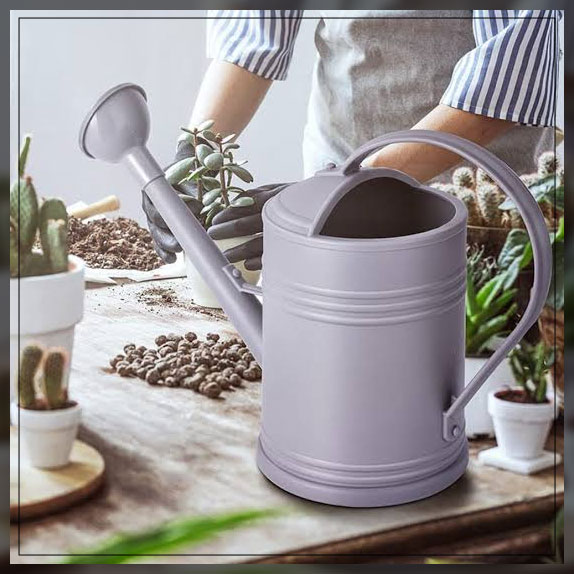
Material
Another important factor to consider when buying a watering can is the material it is made of.
There often are made from metal, plastic, or less commonly ceramics.
Plastic watering cans are often lightweight and easy to carry around.
Moreover, these cans are also translucent thus, making it easy to see how much water is left in them.
On the other hand, metal watering cans tend to be the most durable and are better suited for frequent and heavy use.
Metal cans, however, can rust, so, you should look for cans that are rust-resistant units if metal watering pails are your preference.
Therefore, make sure to get one with rust resistant.
While decorative indoor watering cans are made of ceramic and can feature pretty designs and artwork.
Other Factors to Consider
Other factors to consider are:
Spout Lenth and Configuration
With certain types of outdoor plants, especially the ones with rick foliage or plants suited in hard-to-reach areas, a watering can with a long spout will work best.
Moreover, a watering can lets you reach such areas that are normally difficult to reach like hanging baskets.
With ease and they give you better control over when you deliver water to them.
Some watering cans also come with spouts with detachable rose attachments.
These will let you choose between 2 watering modes:
- a steady stream when the rose is off,
- or a gentle spray of water that is less likely to disturb compost or damage delicate plants like seedlings and young plants, when the rose is on.
These models will give you a lot of control over the watering process.
However, they also have a tendency to leak from the point of attachment with time, particularly with frequent disassembly of an assembly.
In order to prevent this, you should only disassemble them when you absolutely have to.
Style and Color
Apart from functionality, aesthetics is another important factor to consider.
These cans come in a number of styles and configurations.
So you can choose one that suits your aesthetic performance for the best experience.
Benefits of using a Watering Can
Some benefits of using watering cans are;
Easier to water Houseplants: These cans are utilitarian and portable, thus making them convenient to use around your home.
For your houseplants, as they are specifically made for indoor plants, these will hold any amount of water.
It will be easy to pour water exactly where you want it.
Moreover, long spits that can reach down into the potted plants are deeper than average.
You can meet the watering needs of plants.
It is better than Overwatering: Another reason that makes watering cans a good option is they tend to be less likely to over-water than automatic systems.
As manual watering can do not depend on electricity or batteries, you do not have to worry about your plants losing water if there is an outage.
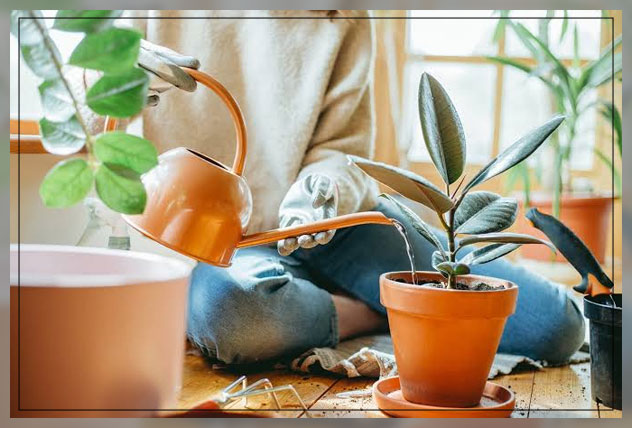
Distribute water more Evenly: With a watering can you can distribute water easily on your plants.
Moreover, if you want to water your plants by standing over them with a hose, most of the water will run off as it is nowhere for it to go.
However, with a can, you will allow the water to pour in a controlled manner.
No Water Wastage: Cans are an excellent choice if you want your indoor plants without losing too much water through evaporation.
This means that you can make sure that every drop is going to nourish the plant and help to keep it clean.
Furthermore, these cans will not leave your plants soggy and uncomfortable, as they will make the soil moist but also allow air circulation.
Other Benefits
Some other benefits of using a watering can are:
Perfect for Indoor Plants: Watering cans with perfect size and perfection allows great aesthetic value.
So you can easily water your indoor plants without making a mess.
Moreover, they are easy to carry and store water.
You can water your plants in one go and do not have to make multiple trips to the water source or continuously move your pots to water them.
Gentle Water Flow: These cans help to deliver water in drips rather than a stream.
This means that you can give plants just enough water to keep them healthy.
Moreover, these can also produce gentler and softer water flows than sprinklers, so they will not damage your plants.
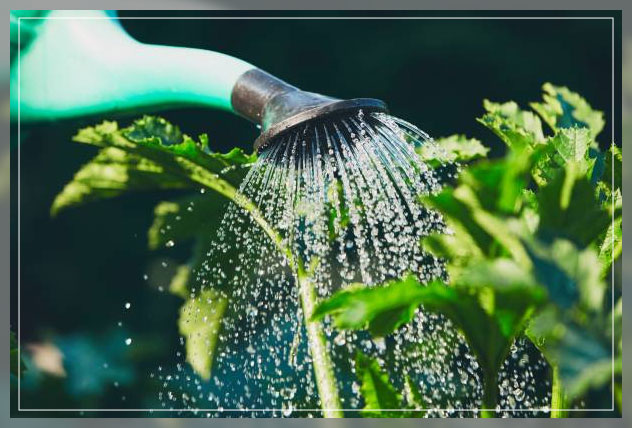
This will help preserve delicate foliage and reduce the risk that stems or leaves may rot.
The gentle flow will help keep the potted flowers from toppling over when you water them.
Comfortable to Handle: These cans often have straight handles that dig into your hand which makes it hard to get a good grip.
Thus avoiding water spill.
However, you can get cans with curved handles that are more comfortable to handle and cause less hand fatigue over time.
With these, you can get closer to plants without having to bend over and water them faster.
What are the Other Options?
Though using watering can have its advantages, you also have a number of other options to water your plants.
let’s discuss them as follows:
Automatic Watering
Without going into the complexity of a drip irrigation system, if you have a lot of land area.
With lots of plants or long borders, you can use automatic systems.
The majority of surface stems you can connect to a water point with a hose.
In comparison to an underground automatic irrigation system.
Moreover, you can directly source water from the domestic supply or pump from the water butt.
Also, you can set a timer so that watering starts and stops at specific times.
Depending on the layout of your landscape and the nature of the plants, there are a number of methods of automatic watering.
Oscillating Sprinkler
One of the most widely used types of automatic sprinklers.
It is often used in landscapes that are rectangular areas, and due to the pressure of the water, it will help distribute water in a “fan” formation.
Moreover, some models offer an option of adjusting the width and length of the jets which helps to maximize the target areas.
However, these types of sprinklers are not suitable for non-rectangular areas like borders, flowerbeds, etc.
Impulse Sprinkler
These are ideal for lands as these will water than plants on a uniform surface.
You can either set to spray water in a straight line or in a circle.
While the length of the jets is also adjustable.
This type of equipment will produce a watering effect just like that of rain, with the advantage of less water stagnation.
Due to its adjustable settings, you can adjust it to adapt to different types of land.
Final Thoughts
Whether it is for a vegetable outdoor garden, flower beds, lawn, or pot plants watering is an important part of the growth of your plants.
Manual or automatic, good watering is about making the least amount of water go as far as possible, however, the best equipment, like plant misters is the top picks, you choose is also important.
You can use watering cans for this purpose as there are multiple advantages to using them like they are easy to fill, easy to carry, etc. . But there are multiple other options in case you have large landscape and watering needs like spray bottles.

Leave a Reply