
If you love having houseplants in your home, then you have Dracaena Marginata or Madagascar Dragon in your home.
This plant belongs to the Dracaena Group and makes a stunning addition to your houseplants.
Its common name ‘Madagascar Dragon Tree’ is a combination of its native origin, Madagascar, and its famous cousin Dracaena Draco which means Dragon.
This plant is famous for its ability to ooze red blood resin when you cit or damage it, which gives it an “alive” quality,
Moreover, there is also a legend that once a hundred-headed dragon was killed and where its blood flooded, hundreds of trees grew which locals at the time called Dragon Trees.
However, before you go and cut or damage your tree, it is important to note that only D/ Draco has the red resin while the common houseplant does not.
Keep on reading.
Dracaena Marginata
Dracaena Marginata or dragon tree is a stunning plant with green sword-like, red-edged leaves.
It is native to Madagascar and has an eye-catching spiky tree which is popular as a great entry plant if you are a household gardener.
Moreover, this plant is easy to care for, drought-tolerant, and nearly indestructible.
It is important to note that this plant is a slow-growing plant and you can plant it year-round.

It also boosts tiny white flowers in spring, though they will rarely bloom indoors.
This small tree can grow to about 20 feet in warm outdoor climates, however, it will often grow well as a potted houseplant.
You can keep pruning the plant to 6 feet or less.
However, it is important that you keep the dragon tree away from pests as it is toxic to animals if they ingest it.
Learn more about Petite Houseplants for Any Home! here.
Quick Fact about Dracaena Marginata
Some quick facts about dragon tree are:
| Common Names | Dragon tree, dragon plant, Madagascar dragon tree |
| Botanical Name | Dracaena marginata |
| Family | Asparagaceae |
| Plant Type | Broadleaf evergreen |
| Mature Size | 15–20 ft. tall, 3–10 ft. wide |
| Sun Exposure | Full sun, partial shade |
| Soil Type | Loamy, well-drained |
| Soil pH | Neutral to acidic |
| Bloom Time | Spring (rarely flowers indoors) |
| Flower Color | White |
| Hardiness Zones | 10–12 (USDA) |
| Native Areas | Madagascar |
| Toxicity | Toxic to dogs, toxic to cats |
Learn more about Poisonous Plants for Pets here.
Dragon Tree Care
Due to their tolerance for a wide range of temperatures, dragon trees are famous as large potted plants for both homes and offices.
Moreover, you should make sure to plant them in well-draining soil and water them regularly during the growing season.
Though they can grow in various light conditions, they will thrive best in indirect bright light.
Learn more about Plant Nursery In Dubai here.
Light and Soil Requirments
Dracaena Marginata tends to thrive best in bright light, however, this plant can also thrive in partial shade.
It is important to keep in mind that you should keep the plant in lower-light situations as it tends to grow slower and produce smaller leaves with less intense color.
Moreover, you need to take care not to place the plant in a location that receives direct rays of sunlight.
Why? This is because it can burn the foliage of your plant easily.
When growing Dracaena Marginata as a potted plant, make sure that you are using a loose, well-drained potting mix.
While loamy soil that you can amend with peat moss is ideal for the growth of your plant.
Make sure that the container you choose has extra room for the intensive root system of the plant.
Some varieties are imported from Hawaii and can arrive with lava rock.
If this is the case, then you will need to remove one-third of the rock and replace it with potting soil.
Water, Temperature, and other Requirments
Just like a number of drought-resistant plants, it is easy to overwater the dragon tree.
To make sure that you are not overwatering or drawing your plant, wait until the top half of the soil is dry before watering it.
It is important to note that it can take three weeks or more for the topsoil to dry out completely.
However, if the plant tends to develop brown tips on its leaves, that is often a sign that your plant is either receiving too much water or that the water you are using has too much salt or fluoride in it.
This can often result in discolorations.

To avoid fluoride, you will need to use distilled or non-fluorinated water.
If the plant has yellow leaves, it often shows that your plant needs more water.
Dragon tree tends to thrive best in warmer temperatures between 70 and 80 degrees Fahrenheit.
Furthermore, regular household humidity is fine for them.
However, if your house is particularly dry, you can consider misting your plant lightly with a spray bottle every few days.
Another important thing to note about dragon trees is that they will need relatively low fertilizer and it is not important to have a thriving plant.
To boost their growth, however, you can feed them lightly at the beginning of the spring.
Do this with a balanced controlled-release liquid fertilizer.
Make sure to avoid fertilizing your plant in winter.
Learn more about Types of Organic Fertilizers here.
Types of Dragon Tree
Though there are a number of varieties of Dracaena Marginata, the most commonly found in plant stores and those you can use as household plants are:
‘Tricolor’ Dracaena Marginata: This one has dark red margins, green leaves, and an ivory stripe that runs down the leaf center.
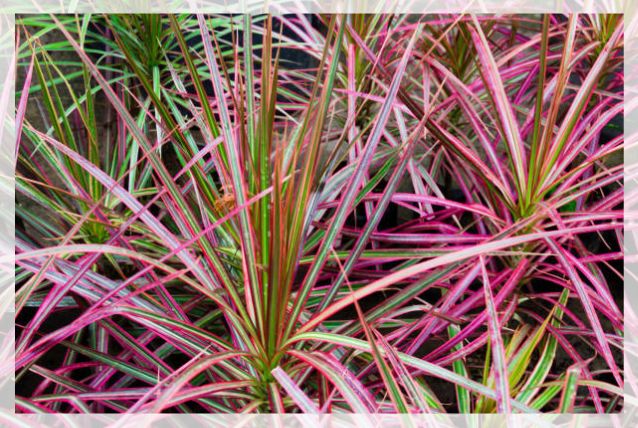
‘Colorama’ D. Marginata: This variety may appear to be completely pink, however, actually it is variegated with white and green stripes.
Moreover, this variety will need very bright light to keep its unique colors.
‘Bicolor” D. Marginata: True to its name, this one has varietal red and green stripes.
Pruning and Propagating Dracaena Marginata
It is normal for the plant to self-shed head leaves.
You will need to just pick them and discard them. To keep your plant trim and neat, make sure to remove the leaves that look like they are about to fall.
Or you can cut back stems with sterile, sharp pruning shears to tidy by Dracaena Marginata.
Make sure to sterilize the pruning tool with a clean rag doused in a common household item like rubbing alcohol or hydrogen peroxide.
Then rinse with water, and wipe the tool dry before using it on your plant.
Moreover, you can propagate the plant using stem cuttings that are rooted in water.
It is often done that you can use them in dish gardens and readily propagate by nurseries and retailers.
Do this during spring when the plant tends to grow vigorously.
It takes only three weeks for the cuttings to sprout leaves and using a rooting hormone is not important.
Dragon tree cuttings can make a thoughtful housewarming gift and you can use cuttings from your own houseplant to give a personalized touch.
Follow the steps below:
- with the help of sterile, sharp scissors, cut a long length of the stem that is about 8 inches
- remove any leaves and remember which end will go into the soil
- put the cutting in the potting soil that is moist
- then place the cutting in bright, but indirect sunlight
- leaves will sprout on the upper nodes of your cutting and the top of the cutting as a rosette.
Potting and Repotting
You will only need to repot the dragon tree if the roots are congested and the plant is suffering as a result.
The common sign of this is little to no growth for several months of the plant.

It is important to note that the roots of the dragon tree tend to go fast so if you follow this, you can end up repotting your tree twice a year.
Instead, experts advise that you only repot the tree every two years at most.
In the meantime, you can refresh the potting soil yearly to replace any of the mixtures that become compacted.
Common Pests and Problems
Though dragon trees are disease-resistant, they are, however, susceptible to the:
- scale insects
- mealy bugs
- thrips
Mealy bugs are easy to identify as they will leave small, sticky, cotton-like deposits on the leaves of the tree.
These plants are also at risk of spider mite infestation.
They tend to occur when the temperature is warm and the air is very dry.
However, mites can be difficult to deal with until they have already damaged your plant.
Moreover, some potential problems to look out for are:
Brown Leaf Tips: The possible cause can be dry air, cold drafts, or under-watering the plant.
Make sure to check room humidity and water levels and then see if there are any drafts to identify the cause.
Once you find the cause, you can provide the correct care or conditions that your plant needs.
Brown Soft Leaves: If the room becomes too cold for the plant, the soil can become waterlogged.
Make sure to provide higher temperatures and check the soil before watering the plant.
Spots on Leaves: The cause can be water. To remedy this, make sure to check the watering needs of your plant.
Yellowing of leaves: This is often common for a dragon tree.
The plant will shed lower leaves to allow for new growth.




Leave a Reply