
Green manure falls under the environmental protection trend that assists the agricultural industry to make steps towards sustainability through resource preservation while sustaining the food demand. However, these are some of the challenges that face modern farmers in their quest to switch to more effective and eco-friendly farming methods. One of the major issues is maintaining soil fertility with less chemical usage. Green manure crops are a solution to the problem.
What Are Green Manure Crops?
Green manure refers to plants whose primary purpose is to improve the soil. Often, the term is figurative since it is the legumes that play a real fertilizing role. These plants can form a partnership with nitrogen-fixing bacteria called nodule bacteria. These bacteria take nitrogen from the air and transform it into a usable form for plants. By cutting the plants and mixing them in the soil, nitrogen is naturally added to the soil. However, green manure is not exclusive to legumes. Not all legumes are green manure, as well as other non-legumes; the key factor is their influence on the soil structure.
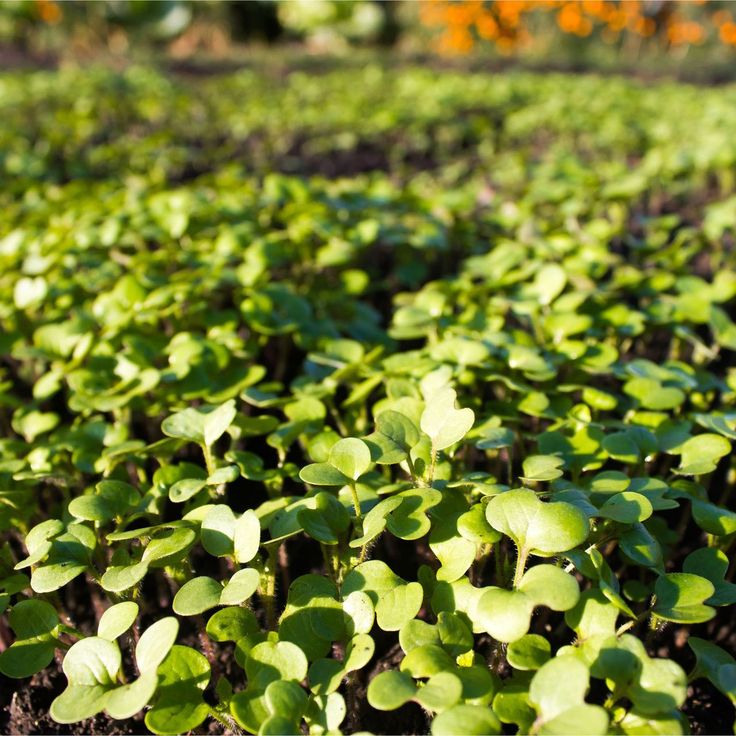
Green manure is a specific type of crop that is grown and rolled into the soil while still in its green state. Commonly, these crops are planted on fallow lands. Besides controlling erosion, this cover crop also protects the soil from it. Their root systems also help to trap the soil structure, prevent soil erosion, protect against nutrient leaching, prevent weed growth, and also contribute to nitrogen fixation in the soil.
The remains of these plants are added to the soil and break down to produce a substance known as green manure. Green manure can be either mixed with soil or used by mulching, which involves spreading a layer of organic material on the soil surface to enhance its organic content.
How do green manure cover crops improve soil fertility?
These crops are beneficial to succeeding crops and the soil. They are not grown for animals to eat or for harvesting, but mainly because of the benefits they provide.
They are used widely to improve the soil, control weeds, supply nutrients, and enhance the organic matter content.
Ideally, they should remain on the soil surface to be decomposed and incorporated into the soil instead of being cut or removed together with other crops. Both these processes give many benefits at very little cost.
Green manure had been encouraged for a long time but was later replaced by chemical fertilizers.
Now, with a better understanding, we know that these crops are very helpful because they provide the soil with an important nutrient.
In addition to feeding the soil, which in turn ensures that plants grow, these crops also feed the many organisms living in the soil, thus making it more fertile. Healthy soil results in healthy plants, which resist diseases and pests.
Also, healthy soil is more resistant to drought due to its capacity to retain water.
Which Plants Are Suitable for Green Manure?
Butterfly Plants (Fabaceae) as Green Manure:
Butterfly plants are fantastic for the soil because they have a way of working with certain bacteria that help build up nitrogen. This is great because it means they are perfect for growing before you plant things like cabbage that need a lot of food. Countless vegetable plants are part of the butterfly plant family, like peas and beans, so you need to think carefully about when you plant them to make sure you do not grow the same kind of plants in the same spot too often.
Green Manure With Plants (Asteraceae):
The Composite Plants family has many plants that people like to grow, like flowers and vegetables. Some examples of these plants are lettuces, chicory, salsify, and artichokes. So it is an idea to choose green manure plants that will work well with the other plants you want to grow.
This way, you can make sure that your soil is healthy and your plants will grow well.
Brassicaceae as Green Manure:
The Brassicaceae family has plenty of vegetables like cabbage, radishes, rocket, kohlrabi, and daikon. You need to be careful not to grow the same kind of plants too many times in a row because this can cause problems like disease in your plants. Also, if you keep growing the same kind of plants over and over, it can make your soil tired. However, there are still some green manure plants in the Brassicaceae family that you can use.
Other Plants for Green Manure:
Some plants are not part of the main vegetable families that can be used as green manure. These plants can be really useful because they are not like the plants you are growing, so you can fit them into your plan easily.
What are the most widely used green manure crops?
Legumes, which inherently create nitrogen, which they release into the soil via their roots, are the most efficient green manure plants.
Clovers, sulla, gorse, alfalfa, vetch, sainfoin, fodder peas, lupine, broad beans, and vetch in both sativa and hairy kinds are among these.
To boost biodiversity, it’s always wise to combine legumes with other kinds of flora.
Cruciferous plants, including brassicas, naturally repel pests and weeds.
Also, excellent choices are colza and white mustard.
Members of the grass family, rye and oats, absorb nitrogen to aid in keeping it in the soil instead of letting it wash away.
Other helpful plants include watercress, coriander, cumin, wild carrot, dill, mallow, marigold, phacelia, wild fennel, and many others.
– Legume plants:
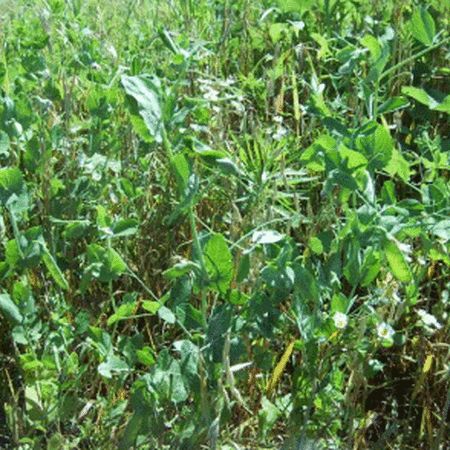
Function: Legumes owe their particular power to their root cooperation with nitrogen-fixing bacteria known as Rhizobium.
These bacteria convert atmospheric nitrogen into a form that plants can consume, hence improving the soil naturally.
Examples and Uses:
Growing fast and helping prevent erosion, cowpea also enriches the earth with nitrogen.
It grows a lot of plant material and breaks down fast to improve soil fertility.
Sesbania: Adds organic matter and nitrogen while tolerating wet soil.
A fast-developing, little crop appropriate for brief fallow periods: mung bean.
Benefit: Improves soil fertility for the upcoming crop and lowers the demand for chemical nitrogen fertilizers.
2. Grasses and Cereals:
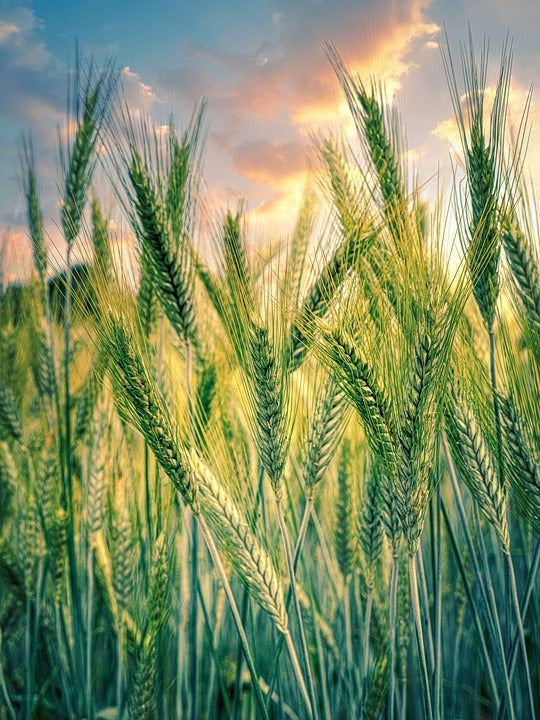
Function: Although these plants do not fix nitrogen, they are quite useful in adding organic material and enhancing soil structure.
Their roots assist in breaking up hard soil; their plant garbage buried into the ground boosts water retention and boosts nutrient availability.
Examples of Use:
Tall and quick, sorghum aids in weed control and enhances soil quality.
Good for long fallow times, maize provides a great deal of organic matter.
Grows rapidly and densely, covering the soil and helping stop erosion.
Benefit: Promotes good soil health, lowers erosion, and provides a solid foundation for upcoming crops.
3. Other Quick-Growing Plants
Functionality: These plants provide a lot of plant material that may be turned into soil and grow rapidly.
Furthermore, working as cover crops, they aid in weed management. Some, like mustard, have biofumigant qualities that aid in the management of soil pests and illnesses.
Use and examples:
Mustard adds nutrients once it decomposes and helps regulate soil-borne infections.
Grows quickly and inhibits weeds; improves soil organic matter.
Advantage: Helps to maintain soil health without chemicals, naturally suppresses weeds, and boosts soil fertility fast.
Advantages of Green Manure:

Using green manure can give you many advantages in your vegetable garden.
Some of the main ones include
- Deep loosening of the soil, including in places where it is heavily compressed.
- High density of plantings reduces weeds and protects soil from erosion and silting.
- The plant cover serves as insulation and shade for the soil surface.
Keeping it soft and fluffy, which creates favorable conditions.
When chopped, the manure becomes organic mulch that feeds the soil. Increasing the number of microorganisms in it and accumulating humus.
With more humus, the soil becomes better at retaining moisture. - The roots of plants make soil drainage easier and prevent its stagnation.
- Legumes, such as clover, increase soil nitrogen due to the symbiotic relationship between the plants and root bacteria.
- Flowers like phacelia and buckwheat attract bees and other pollinating insects.
Some types of green manure improve soil conditions. For instance, marigolds and tagetes ward off nematodes.
Drawbacks of Green Manure Crops
Occupies Space and Time
Producing green manure occupies the space and time that could have been used to produce profitable crops.
This may reduce the immediate profitability of the land.
Highly Labor Intensive
The cultivation, maintenance, and incorporation of green manure crops involve high labor requirements.
Proper management will ensure optimal use.
Slow Mineralization
The mineral release from the decomposition of green manure is gradual.
The next crop may not receive adequate nutrients immediately after planting.
Potential Pests and Diseases
Green manure crops may be potential hosts for diseases or pests that may affect the succeeding crop.
Rotation should be done to avoid perpetuating harmful organisms.
Needs Irrigation
Some green manure crops require excessive water in their production.
This may be difficult to achieve in arid regions.
Expenses Involved
The procurement of the seed, the preparation of the land, and the cultivation costs are incurred immediately upon cultivation.
Green Manure Is Not Universal
All crops do not benefit equally from being used as green manure.

Leave a Reply