
When you don’t have access to any outdoor space, hydroponic gardening is the way to go. In that case, hydroponic lighting will help the plants grow when there is no direct access to sunlight.
All you need to do is choose an artificial light with the correct color spectrum for your plants.
This can be helpful when you want to grow your own plants or food but in an indoor space.
In this article, know about hydroponic lighting and how you can grow plants with it.

Choosing Hydroponic Lighting
While choosing the lighting, look for the type of plants you are growing as well as the system size.
It is important that this artificial lighting imitate the direct and indirect sunlight requirements for a plant.
For instance, in outdoor space, a vegetable garden will need about 8 hours of sun. That is followed by darkness of the evening.
An artificial system should replicate that. Give them 14 to 16 hours of sun and 10 to 12 hours of darkness.
The darkness allows them to rest and metabolize.
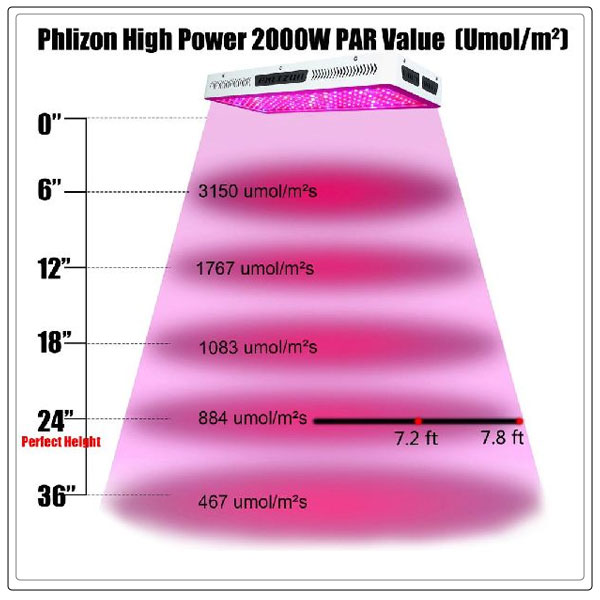
Considering Light Wavelength
The visible light spectrum has a wavelength of 380 nanometers i.e. violet light to 700 nanometers which is the red light.
The photosynthetically active radiation region that plants use for photosynthesis is only 400 nanometers to 700 nanometers.
However, they are able to detect far red radiation ranging from 700 to 850 nm and ultraviolet radiation 260 to 380 nm.
Grow lights usually include LEDs.
These can control the spectrum the emit.
It allows you to target light to the plants in a specific portion of their growth cycle.
For that:
- Far-red light i.e. 700 to 850 nm results in a shade avoidance response thus encouraging the leaves and stems to expand and stretch in order to seek bright light.
- Red light i.e. 600 to 700 nm is good for overall growth and stem development.
- Blue light which is 400 to 500 nm is good for increasing quality in the leafy greens.
Though, what you cannot ignore is that every plant has its unique needs when it comes to growth with sufficient light.
Let’s know more on this below.

Plant Needs
If you are growing different plants, they will have different needs of light.
Thus, following the general guidelines do not work for every plant especially if you are growing a variety of plants through hydroponic farming.
You can also use a tool such as the electronic timer to help with the calculation of the lighting schedule.
The three types of plants and their different needs include:
Short-day plants
These plants need plenty of darkness to photosynthesize and also produce flowers.
Thus, they should get no more than 12 hours of light in a day. Otherwise, they will not flower.
This includes the likes of strawberries, poinsettias and cauliflower.
These usually flower in the spring months.
Therefore the short day cycle mimics natural environment for these spring flowering plants.
Long-day plants
Most hydroponic plants have a long day schedule of needing sunlight.
They need about 18 hours of sunlight per day to grow well.
These are summer flowering plants. Hence the long day cycle mimics their natural environment of growth in summers.
These include lettuce, wheat, spinach, turnip and potatoes.
Day-neutral plants
These are flexible plants that produce fruit at any light exposure.
The level of the light exposure does not matter.
These plants include roses, corn, tomatoes, eggplant and rice.
Therefore, they are easiest to manage as they will thrive in any light condition you provide.
However, if you want to grow short and long day plants in one system reach a compromise for both.
Go for a lighting schedule in the middle such as 14 or 15 hours of light in a day to meet both of their needs halfway.
But first, let’s know the lighting system and its components for providing that light.
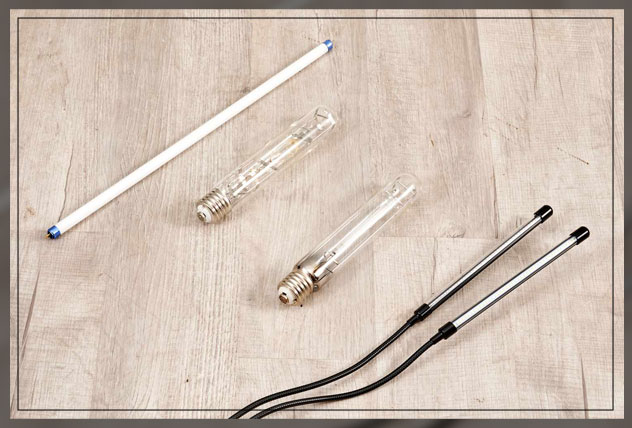
Hydroponic Lighting System
Grow lights
You cannot use a standard soft light for hydroponic gardening.
Instead, use grow lights.
These have a more consistent growth cycle.
In fact, they also result in increased growth rate and yield.
One huge benefit is how you can use it in several locations regardless of the weather conditions.
Grow lights also uses less energy compared to standard bulbs so you can easily use many of them.
Therefore, you will have less energy costs but an extended growing season.
You can also program grow lights in a way that they mimic natural light.
If accidentally any leaves touch the light, it will not burn them.
It is cool to touch so it will not scorch the leaves.
There are different types of grow light that are specifically for hydroponic gardening.
These include:
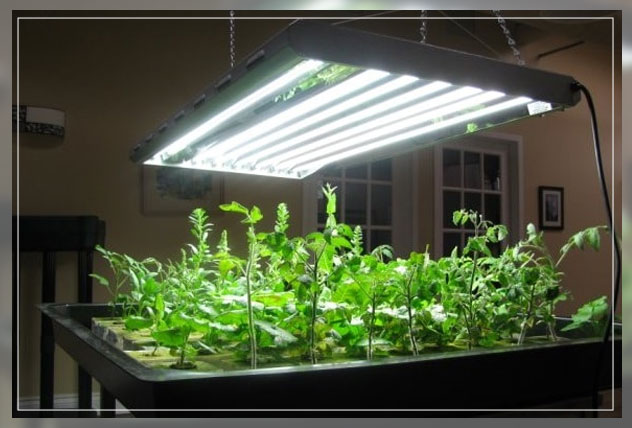
- Fluorescent
Fluorescent grow lights or bulbs generate less heat.
These hydroponic light bulbs are good for starting seeds as well as the early stages of the seedlings.
The low heat output enables the seeds to grow into a plant without getting burnt or dried out.
They work for flowers and salad greens.
However, the fluorescent light emits less light than other grow lights therefore, they are insufficient for all of your plants.
- High Pressure Sodium Bulbs
These bulbs produce a red orange light.
Hence, they are great for your plants when they are in the flowering and fruiting stage.
As these are expensive, you will need to use them with a Metal Halide bulb in the vegetative state in order to save money on the replacement cost.
High pressure sodium bulbs do not suit all plants but they are more efficient than a halogen grow light and as a result emit much less heat.
They can last up to 5 years.
However, their effectiveness will decrease with use and you may have to replace it after every 2 years depending on how much they have come in use.
Types of Grow Lights
Incandescent Grow Light
These hydroponics light bulbs are not as common as other grow lights.
That is because these are costly, generate a lot of heat and also be dangerous to the plants.
They can eventually damage plants so these are not the best option for hydroponic plant growth.
Metal Halide Light
Metal halide bulbs are good for long day plants as they are strong and can provide sufficient light.
These will help plants that have already finished sprouting and are beginning their growing and vegging state.
These are more efficient and emit lesser heat than the halogen grow lights.
Though, these are more costly, therefore, they do not suit all the plants.
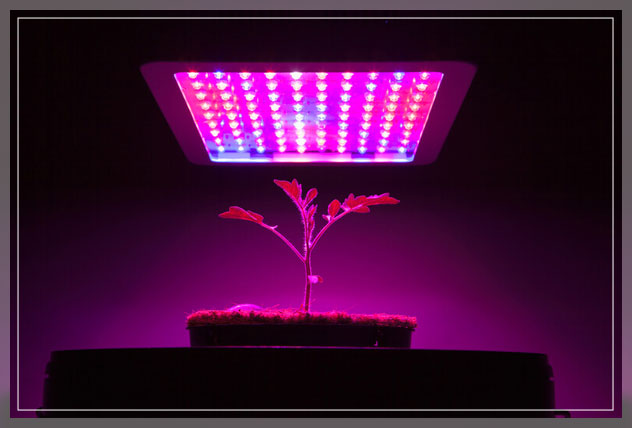
LED (Light Emitting Diodes)
LED grow lights are the cost-efficient and energy efficient option among the hydroponics light bulbs.
They are tubes or square panels just like fluorescent lamps, however, they are a newer addition in the indoor hydroponic system.
They use less energy and tend to last longer than the rest of the bulbs.
Additionally, they generate much less heat so they are generally safe for plants.
In fact, they also increase the productivity of crops up to three times better than sunlight.
Only a third of the power that lights fluorescent lamps is used to light hydroponic lights LED.
Halogen Light
The spectrum of a halogen grow light is similar to direct sunlight.
These are generally less expensive than many other options and also tend to emit lesser heat.
Though, these lights are not as efficient as LED.
Or even the fluorescent lamps.
Moreover, they are not suitable for all kinds of plants.
Select the grow light and bulb according to your requirements and the plants growing needs.
Consider the investment and replacement costs as well as the efficiency while choosing.
Hydroponic Lighting Components
An indoor hydroponic system with lights also contains other components such as:
- Timer
- Reflector Hood
- Remote ballast
A timer is an essential equipment while growing your plants through the hydroponics.
It is a crucial to time how much light and darkness do you need to give to the plants.
It can be manual or electric but the timer should be grounded by having a three prong plug as well also be heavy duty.
If you choose a manual timer, it will have pins and plugs on both sides allowing you to attach two growth lights at once.
A reflector hood is as its name suggests.
It is a reflective casing around the bulb that increases the efficiency as well as the effectiveness of the bulb.
It will reflect the light down at the plants at multiple angles giving it a more reflective spread.
Thus, you can use lights that give less heat and you can also save up on cooling and electricity costs.
A remote ballast is the most expensive item in the entire lighting system.
However, this is a heavy and hot power box that powers the light.
It should be kept off the ground so that it does not get any water on in case of a flood or leak.
The ballast should match the bulb in wattage.
Therefore, you should buy it as a set with the bulb and sometimes that are even sold as part of the lamp assembly.
Finally,
Hydroponic lighting will allow you to grow plants inside your space regardless of the weather conditions.
Grow your own vegetables and plants easily indoors by buying the bulbs and its components.

Leave a Reply