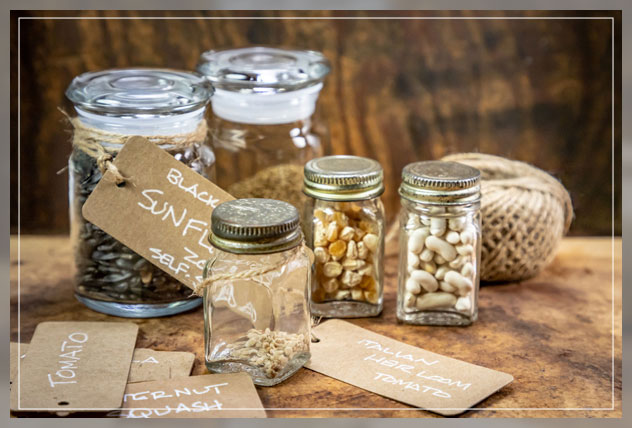
If you have an excess of seeds from plantations throughout the year, you are probably looking for seed storage ideas to keep them in a good condition.
These seeds are the key to plentiful food and foliage for the next growing season.
Hence, storing them well is of utmost priority in case they get damaged and you do not have seeds to plant.
This article discusses the ways you can save seeds and how you will collect them.
Keep reading below to know more!
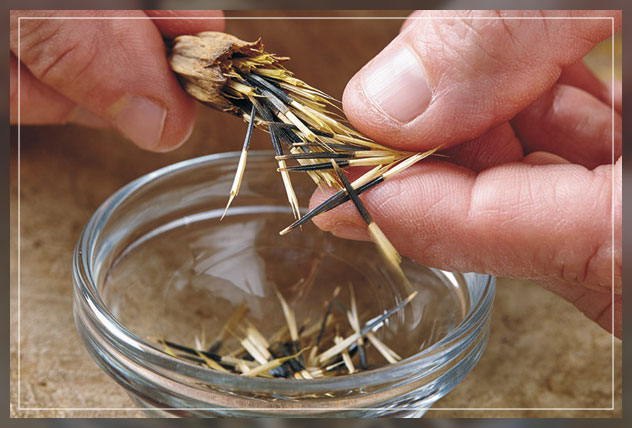
Vegetable Seed Saving
The first step for saving seeds is to find the suitable plants that you need to grow again in your garden.
Next, you have to harvest the seeds at the right time and store it for the winter.
When it comes to vegetables, you have to choose between:
- Self-pollinating plants and cross-pollinating plants
- Open-pollinating plants and hybrid plants
Self Pollinating and Cross-pollinated
The likes of peas, tomatoes, beans and peppers have self-pollinating flowers.
Their seeds also do not require much special treatment for storage.
Hence, these are good options for seed saving.
It is difficult to save the seeds of biennial crops like beets and carrots because they require two growing seasons to set the seed.
Cross-pollinated plants are different in this regard.
They have separate male and female flowers so that plants like vine crops and corn will not have a pure seed strain.
That happens because insects can also cross-pollinate pumpkins, cucumbers, squash and gourd.
Or for instance, popcorn can pollinate nearby sweet corn on a windy day.
The plant resulting from the pollination will neither be a good popcorn nor sweet corn.
Thus, it is hard to preserve the seed from cross-pollinating plants as the seeds grow into fruits and vines that are unlike the parent plant.
The overall flavor is thus inferior and it also influences other characteristics.
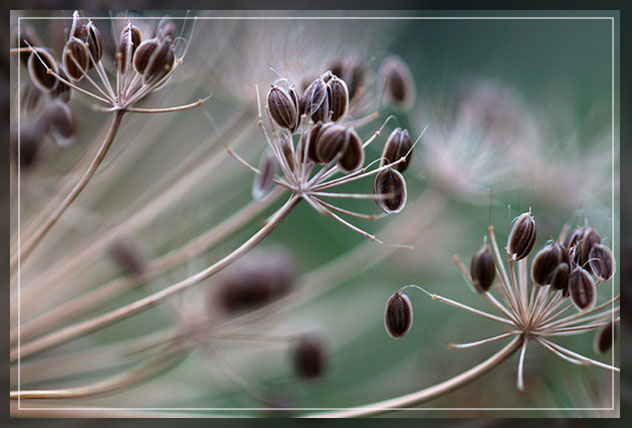
Open Pollinated or Hybrid Plant Varieties
Hybrid
These plants result from crosses between two different varieties.
As a result, it has traits from both of the parent plants.
This is at times good or bad for the seed and the plant.
The plants can either be disease resistant, have amazing vigor and productivity or are not identical to the hybrid parents.
Hence, they are an overall combination of the bad and good traits of the parent plant.
Moreover, it is difficult to predict how the seedling plant will result and whether it will have more good traits or bad ones.
Hybrid seeds are more expensive as their production is costly.
In that case, the better option is to go for the open-pollinated plants.
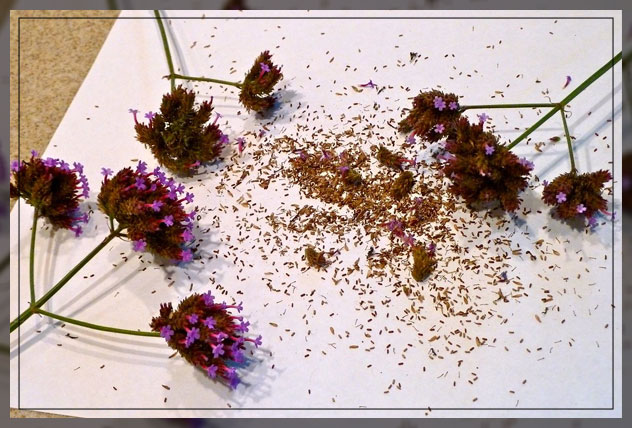
Open-Pollinated Plants
Even if open-pollinated plants self-pollinate or cross-pollinate they retain the characteristics of the parent plants.
They set seed and later grow into a plant that bears similar fruit.
Moreover, it sets seed that produces plants that are again alike.
Therefore, open-pollinated plant varieties are sometimes heirlooms.
They pass down through generations. Otherwise, they can also be recent selections that produce a similar seedling.
After you plant an open-pollinated crop, choose the plants from which you would like to save seed.
While making this decision, consider the most vigorous plants among all, especially the one with the best-tasting fruit.
These will be the parent plants for the next year’s crop.
Naturally, you do not have to save seed from off-type plants that are weak.
There are several open-pollinated plant varieties of tomatoes and beans that will produce identical fruit from the seeds.
Hence, your best option is to go for the open-pollinated plants over the hybrid ones to retain the original characteristics of the plant.
After you harvest the seeds, it is time to save them. Know how below!

Seed Storage Ways
Plastic Bags
Put the seeds in a plastic bag and then place them in your drawer.
Or you could simply put them in a basket after sealing them by clipping the plastic bag.
Glass Containers
Probably the best way to store seeds is in an airtight large container.
Put the seeds in different packets according to their kind and put them in an airtight container such as a mason jar.
You need to maintain dryness and coolness in the container.
Hence, putting it in a mason jar allows for proper sealing and storing it in a refrigerator is ideal.
The temperature the seeds will need is between 32 degrees and 42 degrees Fahrenheit.
In order to maintain the dryness, you will need to add a silica gel desiccant to each jar or container.
This helps absorb any moisture and keeps the jar overall dry.
However, that is not the only desiccant to use.
If you are worried about your child eating the packets, you can use powdered milk instead.
That too acts as a desiccant when wrapped in a facial tissue or cheesecloth.
Place it with the seeds and it can absorb any excess moisture in the container for up to 6 months.
There is enough space in these containers to hold a few packets of the gel.
Pillbox
Any household item with a sleeve or compartment to hold seed envelopes or packets can act as a storage space.
It is even better if they have any spot for labeling.
Hence, a pillbox can fulfill the need where you have a less quantity of seeds but need to place them in separate compartments with labels.
Use different pillboxes for your garden areas.
One for vegetables, another for cutting garden so that you can plant them easily later on.
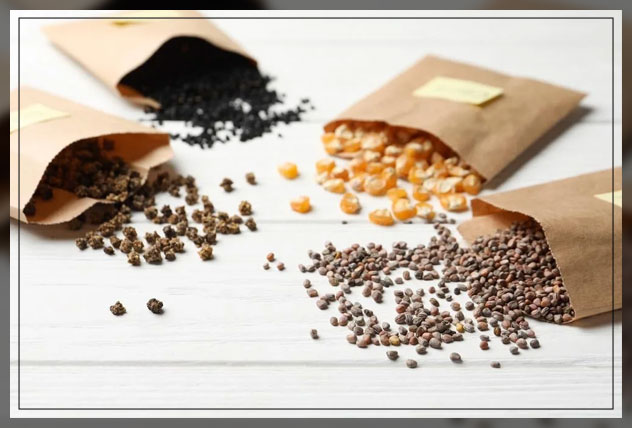
Home Items for Seed Storage
Photo Album
There must be some old photo albums lying around in your house.
After everything has gone digital, photo albums can house something other than photos.
Put the seeds into packets and slip them into the photo shelves in the album.
Additionally, add notes on the type of seeds ad you can arrange them according to their planting time to make the process easier.
You can also use the photo album later to take pictures of the landscaping and record the progress every season.
Organizers from Old Boxes and Foam Board
Are you artsy enough to make your own container?
It will not be a big deal for art fellows to make storage boxes using old boxes or foam board.
Repurpose old cereal and snack boxes.
Customize the container according to your needs and compartmentalize it accordingly.
Or you can use foam to make the customized and sturdier container.
8-Track Case
Do you remember the old 8-track case? I’m sure one of these is lying unused in your house.
Upcycle it to make a seed storage container that can hold the envelopes seeds.
A good alternative to this one can be a cassette tape storage case.
Filing Cabinet
Do you have a lot of seeds to store from a big garden?
In that case, your best option is to go for a filing cabinet.
Plastic three drawer shelves or a recipe box can be the filing box container.
Additionally, there is enough space to label the seeds, detailing information for each category.
Photo Case
The photo organizer can be a place where you store seeds as well.
Every sleeve can have a few packets with labels such as time of planting, family, flower or food.
After saving seeds, use them within a year to retain vigor.

FAQs about Seed Storage
How to store seeds for the long term?
If you are not intending to use the seeds within a year, then you will have to look into means that will keep the usable for a few years.
For that, you can look into the freezing method.
The seeds can remain viable by staying dry in a totally moisture-free dry container.
Should You store it in a Plastic or Glass Container?
We have discussed several materials to keep your seeds in.
There are cardboard, foam, glass or plastic containers, in fact also photo albums.
Thus the material of the container is not of utmost importance.
What is, is its environment.
The containers should be completely dry and stored in a cool as well as a dark place.
For how long can you store them?
Technically you should be using the saved seed within a year.
Plant it in your garden to enjoy the produce.
However, the viability of the seed tends to differ according to the plant.
Some seeds can naturally last longer than others.
Stored seeds will usually last between one to five years.
For instance, spinach seeds will only last for a year whereas tomato seeds can last well up to five years.
In order to have healthy plants, it is best to use the seeds earlier lest they go to waste.
Though, if the seed can last a long while then there is no hurry either.
Finally,
Now you know all the ways for seed storage.
Using these you can save yourself the hassle and expense of buying new seeds and planting seedlings every growing season.
Plus, you can get a good variety of plants similar to their parent plant by storing their seeds.

Leave a Reply